
This post may contain affiliate links. Please read our full Disclosure Policy.
Antique shopping in Provence is one of the best ways to find French brocante pieces, vintage home decor, café chairs, baskets, pottery, linens, and one-of-a-kind antiques with real history. This antique shopping in Provence guide shares what to know before planning a brocante trip, how to shop intentionally, and what to consider when shipping antiques from France to North America.
This trip was a dream trip for me. I had worked so hard to save up for it. When I finally went antique shopping in Provence, I knew I was doing something that felt once-in-a-lifetime. The funny thing is, I went into it thinking, “Okay, this may be the only time I ever get to do this,” and now all I can think about is how badly I want to go back over and over again.
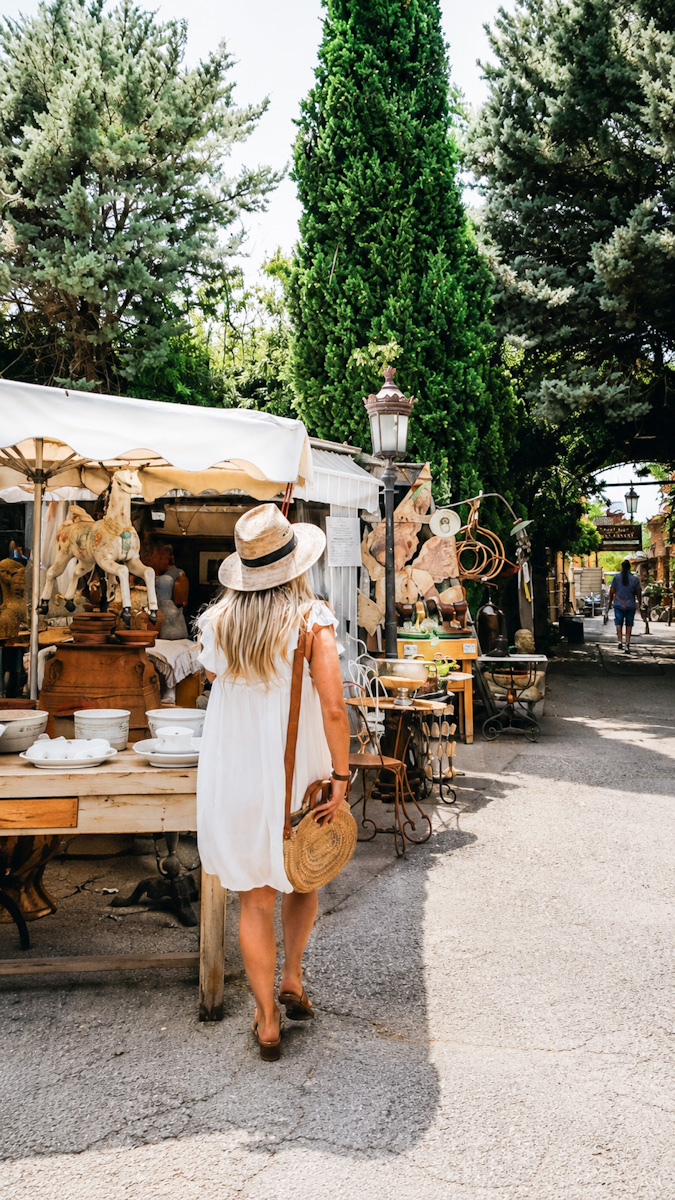
I did not go to Provence hoping to squeeze in a little shopping between sightseeing. I went there for the antiques. For the brocantes, the early mornings, the old baskets, the café chairs, the dusty corners, and that feeling you get when you spot something from across a market and just know it has a story.
That is really how I have built both my 1903 Victorian home and our tiny house cabin, one meaningful piece at a time. I bring antiques home because they make a space feel layered and lived in, not decorated all at once. My whole approach to home is rooted in vintage simplicity, and antique shopping in Provence felt like stepping right into the source of so many pieces I have loved for years.
In This Guide
Antique Shopping in Provence
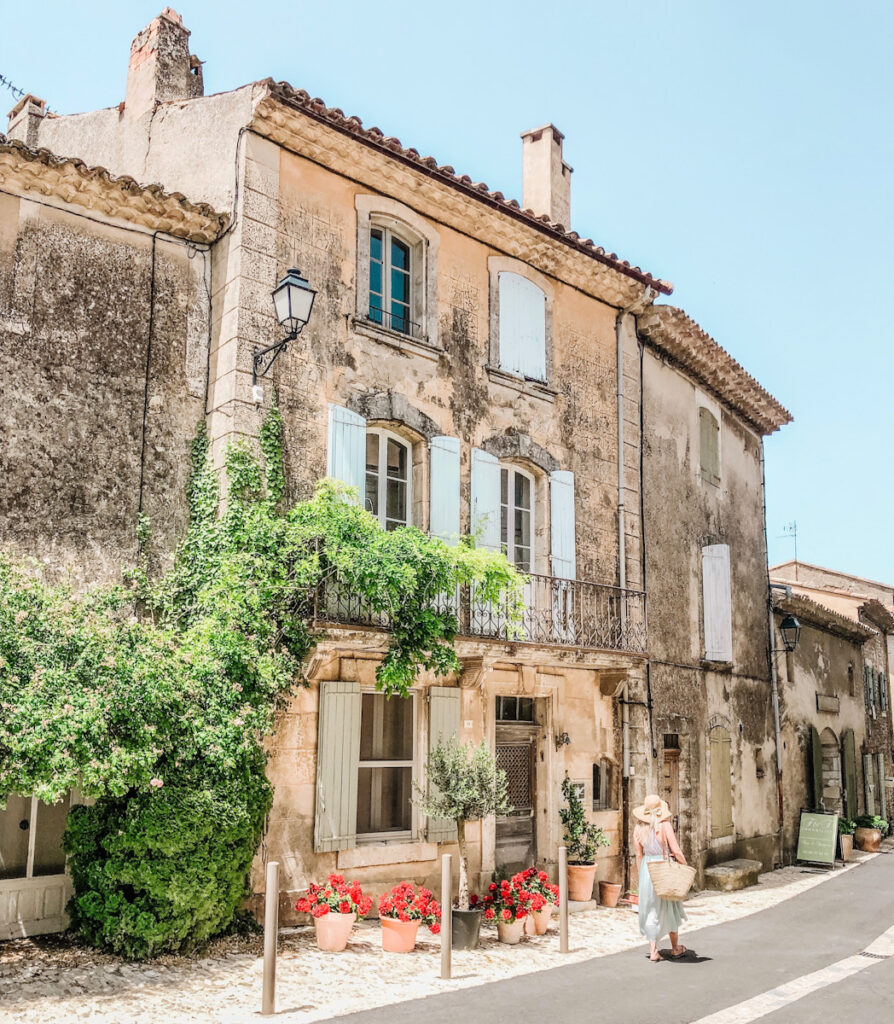
I have loved old pieces for as long as I can remember, but antique shopping in Provence felt different. Shopping for French antiques in Provence was nothing like finding them back home. It felt more personal somehow, like I was finally seeing the pieces I love in the place they were always meant to be. The baskets, the old linen, the copper, the little tables, the worn chairs, the garden pieces; they all feel like they still belong to real life.
That is what I am always looking for when I shop. I do not want my home to feel like a showroom. I want it to feel collected, useful, calm, and full of pieces that make you pause for a second. You find more on this more in my post on how to decorate with vintage home decor, because to me, vintage and antique pieces are never just filler.
When I was walking through the brocantes, I kept thinking about where the pieces would go once they came home. Would a basket work in the tiny house? Or a café chair feel right in the Victorian? Would a piece of pottery look beautiful on open shelving or styled simply on a coffee table? That is how I shop, even when I am thousands of miles from home.
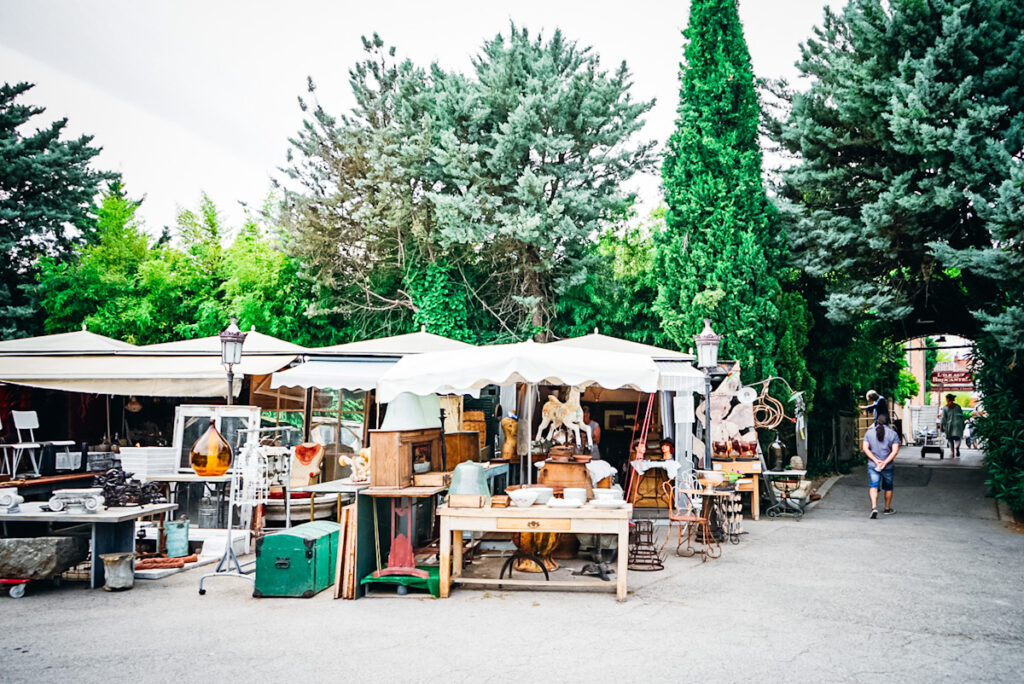
The brocantes can be overwhelming in the best possible way. Everything seems to have patina. Everything feels like it could be special. But I had to keep reminding myself that I was still shopping for my real home and my real life, not for the version of myself who suddenly lives in a stone farmhouse in the Luberon.
Although, let’s be honest, Provence makes that fantasy very easy.
Where To Find Antiques in Provence
Our trip was centred around Apt and the Luberon, which ended up being such a practical home base for antique shopping in Provence. We stayed in a lovely apartment with French country pieces everywhere, and because Apt was so central, we could take day trips to the smaller towns and plan our route around which markets were happening on which days. The hand-drawn map from the trip shows the area we travelled through, including Avignon, L’Isle-sur-la-Sorgue, Fontaine-de-Vaucluse, Gordes, Murs, Roussillon, Goult, Lacoste, Bonnieux, Apt, Rustrel, Saint-Martin-de-Castillon, Saignon, Auribeau, Lourmarin, Ansouis, Oppède-le-Vieux, and toward Aix-en-Provence and the Verdon.
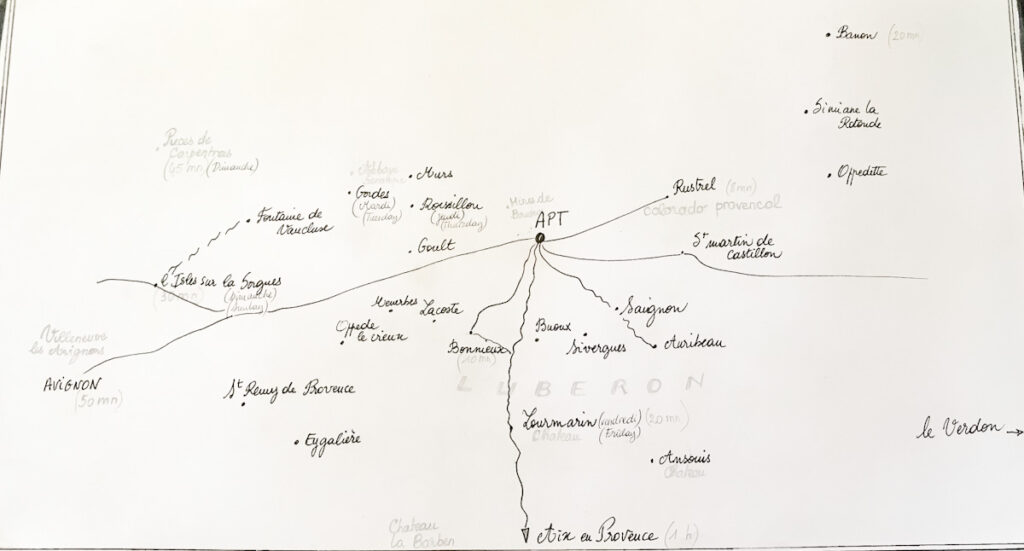
That sounds like a lot because it was a lot. We rented a van, which was wonderful for holding market finds, but driving in Provence is definitely its own experience. The roads can be narrow, the villages can be hilly, and parking is not always simple, especially when you are trying to navigate with a vehicle larger than a small car. I am glad we had the van, but I would say honestly that if you are not a confident driver, or if tight roads and tricky parking make you nervous, that part of the trip can feel a little overwhelming.
How To Get Around Antiquing In Provence
Antique shopping in Provence is not quite as slow and dreamy as it may look from the outside. When you are there to shop, you are checking market days, driving between villages, trying to get there early, making quick decisions, and hoping you have enough room in the van for whatever you just fell in love with.
L’Isle-sur-la-Sorgue is one of the most well-known antique destinations in Provence. Avignon & Provence describes it as a major antiques centre with weekend markets of around 300 stalls and large antique fairs around Easter and August 15 that can grow to more than 500 stalls. If antique shopping in Provence is the purpose of your trip, it is absolutely worth looking into.
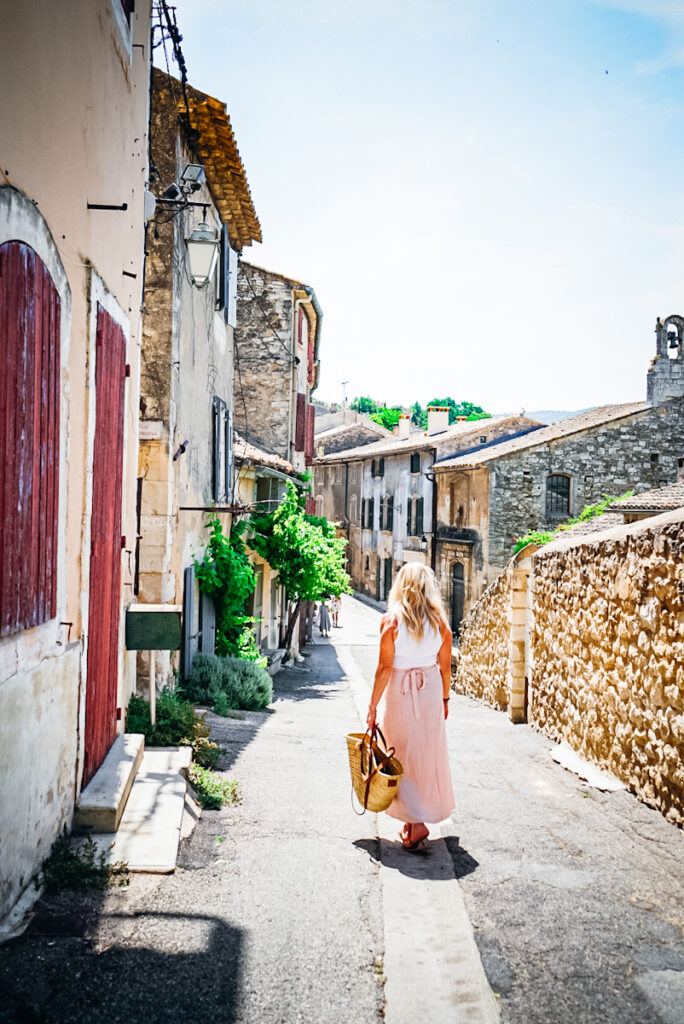
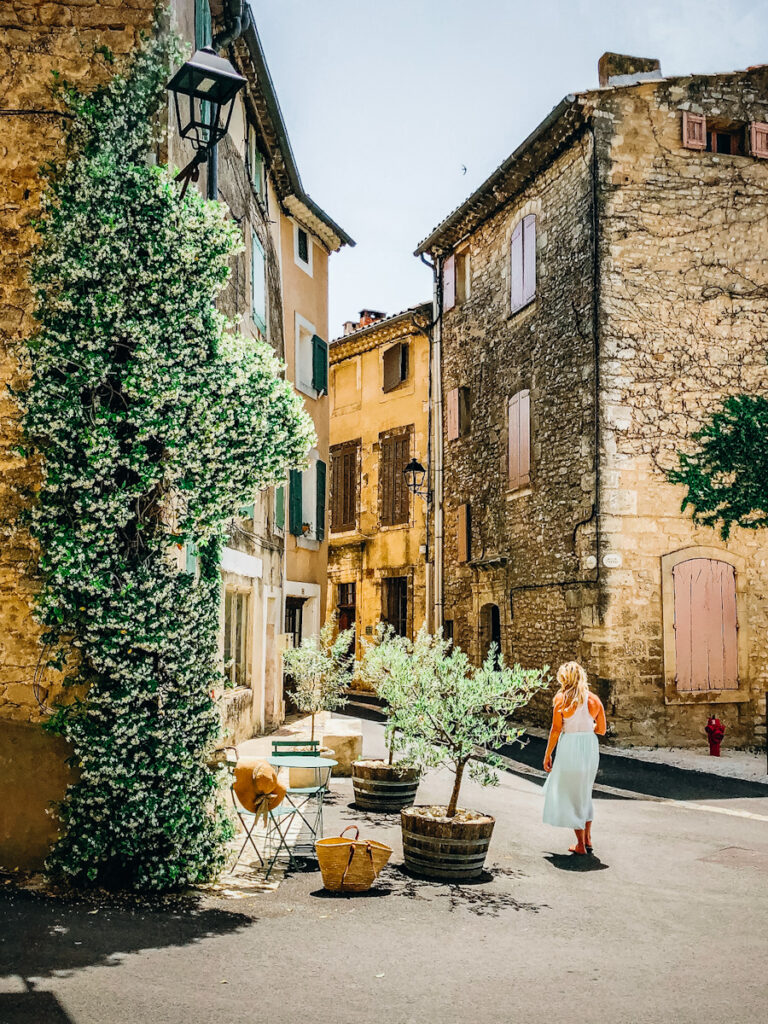
But what I loved about the trip was not just one market or one town. It was the rhythm of moving through Provence with antiquing as the anchor. One morning might be Lourmarin for the market, another day might be Villeneuve-lès-Avignon or Carpentras for the flea markets, and then we would make our way to places like L’Isle-sur-la-Sorgue, Bonnieux, Oppède-le-Vieux, Ménerbes, Lacoste, Gordes, or Saignon. We would shop, drive through villages, stop when something looked interesting, and keep our eyes open for pieces that felt like they belonged with us.
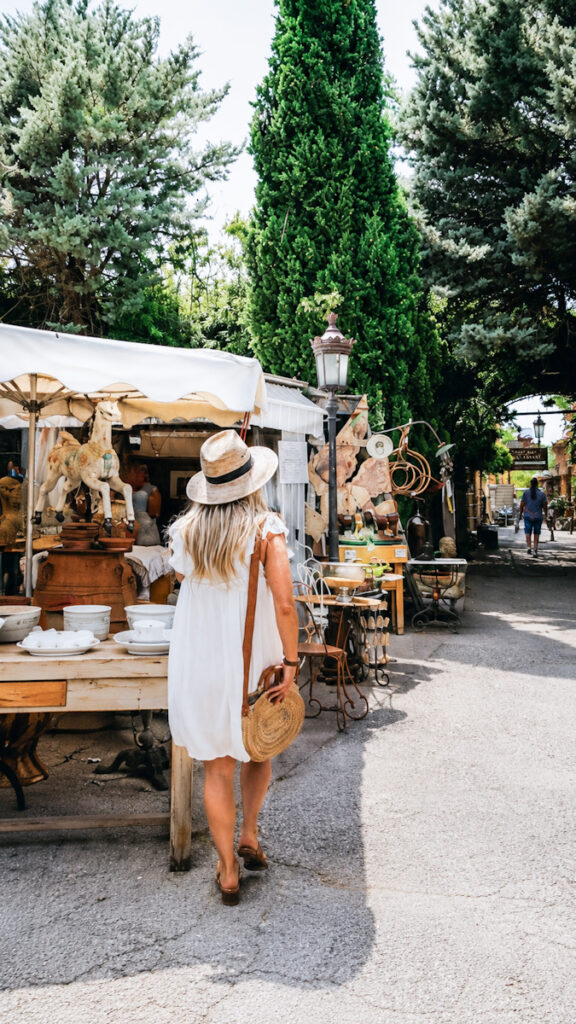
This is the same feeling I had when I wrote my Antique Shopping NYC guide, although New York and Provence could not feel more different. In New York, everything felt fast and layered and city-driven. In Provence, the shopping felt older, quieter, dustier, and more connected to the countryside.
Both are wonderful, but antique shopping in Provence truly felt like a dream.
What I Was Hoping to Find
I went antiquing in Provence with a general list in my head, but not a rigid one. That is usually how I like to shop. If I am too specific, I miss things. If I am too open, I buy things I do not need. I knew I wanted pieces for my own home, pieces I could actually use, and a few special finds that would always remind me of this trip. Since this trip, I have developed my Vintage Hunter’s Pocket Guide for this exact reason.
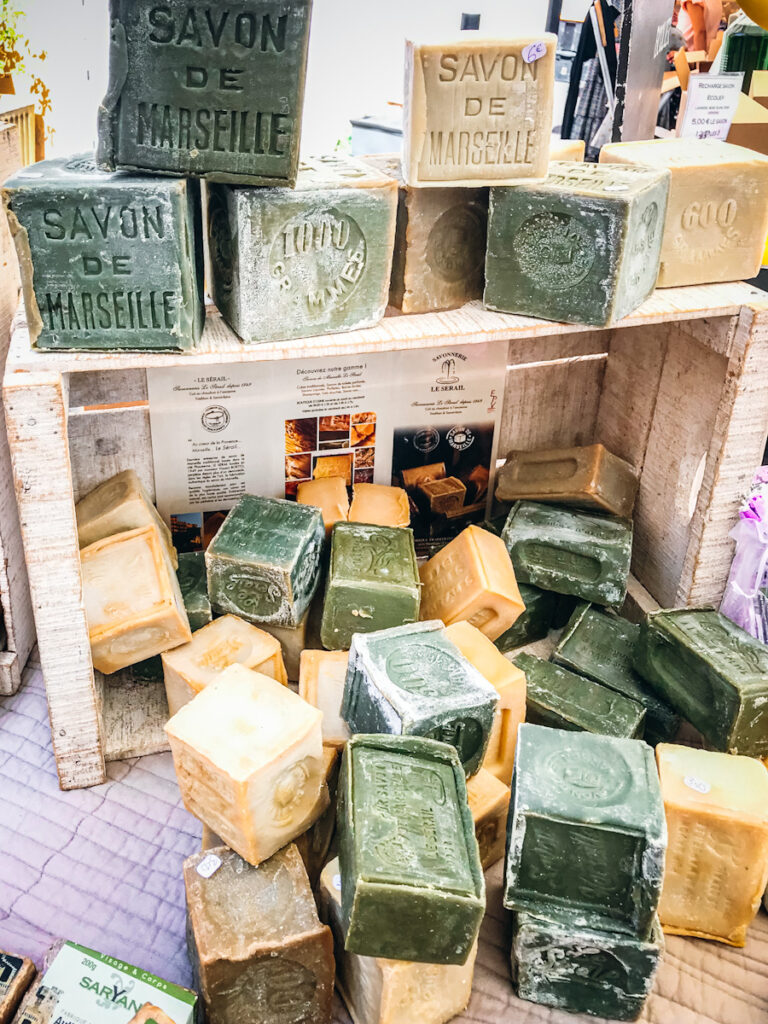
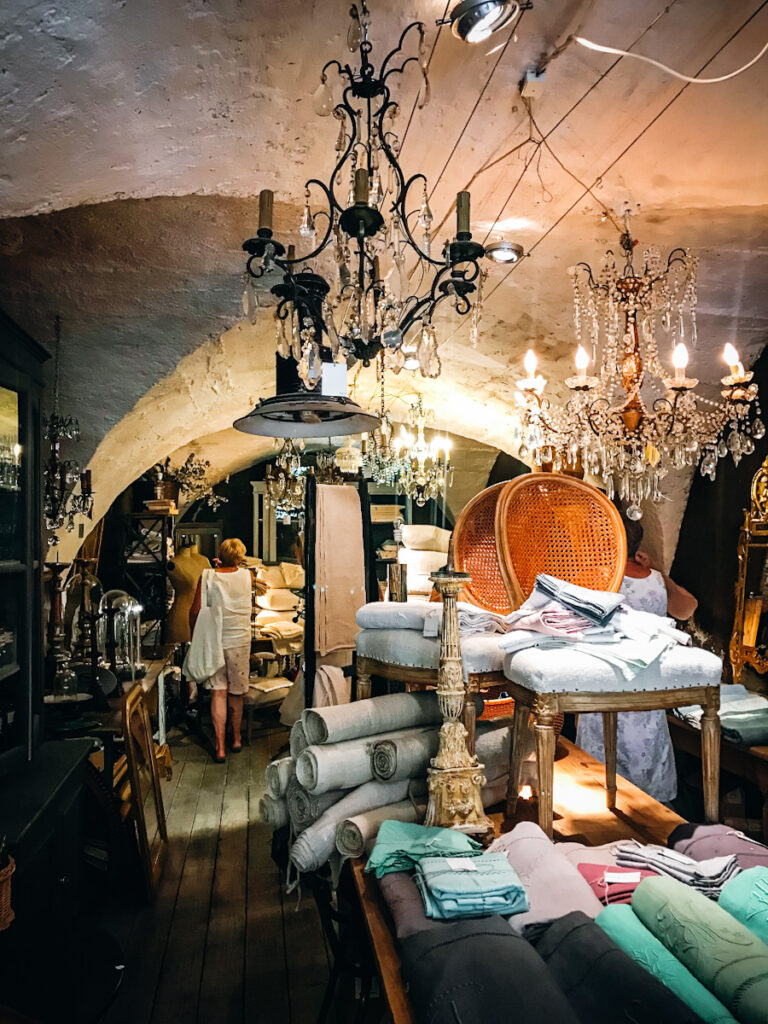
I was hoping to find so many beautiful pieces with the worn-in look I love, and I ended up bringing home café chairs, European linens, French canning jars, a washboard I later used near the bathtub, an antique dough bowl, Marseille soap, and small pieces that could be wrapped and tucked into boxes. I also found the most beautiful French chandelier in Avignon!
I am always drawn to pieces that feel useful first. A beautiful basket can hold blankets, firewood, flowers, or laundry, which is exactly why I always love keeping pieces like French market baskets all through my home. A small stool can move from room to room. A French enamel bucket can hold branches, flowers, or cleaning supplies and still look beautiful sitting out. An French canning jar can add a pop of color to any space.
That is the kind of antique I love most.
Provence Antiquing Tips
I kept coming back to my own antique shopping tips while we were in Provence. They matter at home, but they matter even more overseas because getting something home takes more effort.
- Measure when you can. Look closely.
- Check condition.
- Ask yourself if you actually have a place for it.
- Buy fewer, better pieces.
For my own home, I knew I wanted pieces that would work with the way I already decorate. I love old wood, ironstone, linen, baskets, muted colours, and simple textures. If you have read my decorating with antiques posts, you already know I would rather have one really good old piece than a room full of things that do not mean much.
That mindset helped me walk away from a few things too. And honestly, that is part of antiquing. You cannot bring home everything, even if Provence makes you want to try.
How To Shop the Brocantes and Markets In Provence
When we arrived at a brocante or flea market, I tried to do a quick first pass before buying anything. I wanted to see the layout, notice which vendors had the pieces I loved, and get a feel for pricing. The brocantes can move quickly! I didn’t want to go slowly and miss something, but I also did not want to panic-buy everything I saw.
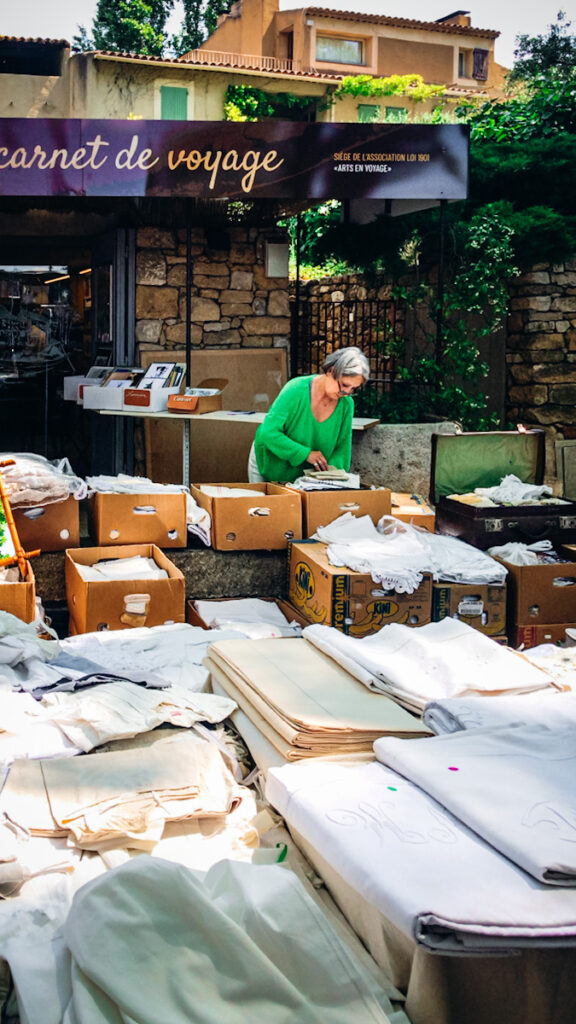
Some markets felt like true flea markets, while others sat in beautiful villages where you could wander from linens to food stalls to old ironstone without noticing the time.
Lourmarin had beautiful market energy. We explored one of our first true flea markets in Villeneuve-lès-Avignon, which made the whole experience feel exciting. In Carpentras, I had to stay focused or risk getting completely distracted by the endless market stalls.
I loved wandering the brocante shops in L’Isle-sur-la-Sorgue. I could have spent an entire day there, simply looking.
Take photos constantly! Simple photographs of pieces, tags, booth locations, prices, nearby signs, and anything that would help me remember where something was. When you are tired, excited, and trying to keep track of multiple pieces in another country, your memory is not enough.
Decorating Your Home With Antiques From Provence
I also kept asking myself one simple question: would I still love this if I found it at home on an ordinary day?
That question helped so much. Provence adds a little romance to everything. Old stone villages, beautiful markets, and perfectly styled antiques make it easy to fall in love with every piece. But I needed to know the piece would still feel right once it was back in Alberta, sitting inside my Victorian home or tucked into the tiny house.
I also thought about how I would style pieces once I got home. A little pottery bowl might work on open shelving, which is why I am always drawn to pottery and stoneware. A basket could be filled with linen and aprons. A French enamel bucket, little stool, or small antique piece could be used in a coffee table decor moment without feeling too precious, and those are the kinds of simple decor and antique pieces I love most. That is what I love about useful antiques. They are beautiful, but they are not untouchable.
What I Brought Home and How We Shipped It
For this trip, we used UPS to ship pieces home in boxes. Standard United States Postal Service or Canada Post was a good option, too. We sent café chairs and some larger home decor pieces that way, and for what I bought, that worked well. I brought home the pieces I love most. Old baskets, pottery, linens, French canning jars, soap, an antique dough bowl, a washboard, and simple decor that fit naturally into my home. It was not the most glamorous part of the trip, but it was one of the most practical parts.
There is something about falling in love with an old chair in France, only to suddenly start thinking about packing, shipping, insurance, and how on earth it will make it home. That is the reality of buying antiques overseas. The romance is real, but so is the logistics.
Packing Antiques To Be Shipped
If you are only buying a few things for yourself, boxed shipping can be a good option.This option works best for smaller pieces you can wrap well and pack within size and weight limits. Smaller chairs, French market baskets, linens, pottery, French enamel buckets, French canning jars, and certain decor pieces may work this way depending on their shape and fragility. We spent evenings packing boxes and wrapping breakables, and it really did feel like putting a puzzle together, trying to make everything safe enough for the trip home.
I would not wing it, though. Keep every receipt. Photograph each item before it is packed. Take photos of the condition, the tag, and any details that matter. Ensure anything you would be upset to lose. A trip like this is too special to have a piece damaged simply because it was packed carelessly.
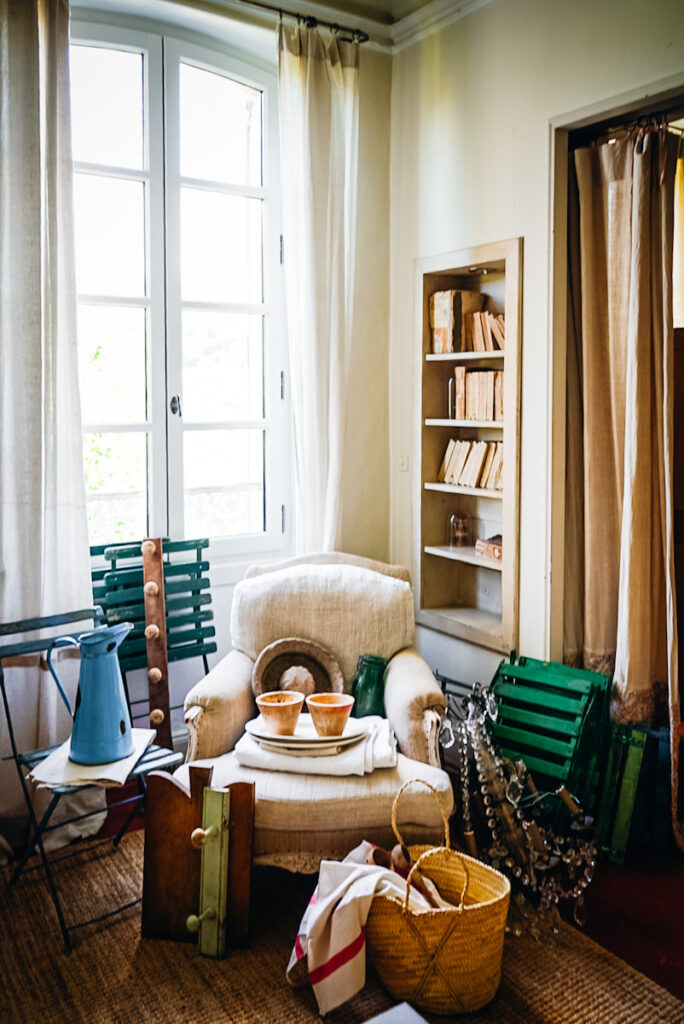
I have curated the B Vintage Style Shop for those of you who cannot go to France, or if the shipping side feels like too much. You can often find the same feeling in the shop through French market baskets, simple decor and antiques, pottery and stoneware, and linen and aprons.
Sometimes the treasure hunt happens in person, and sometimes you find the piece from someone who has already done the digging. Both ways can help you build a home that feels collected.
Customs and Bringing Antiques Home
This is not the most charming part of antique shopping in Provence, but it is important.
Keep receipts, photograph each piece, and note its age, material, value, and purchase location.
For personal-use antiques entering the United States, qualifying pieces may enter duty-free if they meet age requirements and you have proper documentation. In Canada, travelers still need to declare all purchases, including antiques, shipped home separately.
I am not a customs broker, so always double-check the current rules before you buy or ship anything. Wood, baskets, plant materials, upholstery, and anything made with restricted animal products can be more complicated, so those are the pieces I would ask extra questions about before bringing home.
In plain English, do not guess. A little planning and paperwork upfront can save you from customs or shipping headaches later.
More Antiquing Guides and Vintage Inspiration
Antique shopping in Provence was one of those trips I will never forget. I worked hard to make it happen. At the time, I believed I might never get another chance to do something like it.
Now, of course, I want to go back again and again.
If you are planning your own trip, a few things I would suggest are:
- Stay somewhere central if you can.
- Plan your day trips around market days.
- Rent a vehicle with enough room for your finds.
- Be honest about whether you are comfortable driving narrow roads and parking in small villages.
- Leave room in your plans for unexpected stops.
- Do not buy so much that the shipping takes the joy out of the trip.
If you love this kind of antiquing trip, you may also enjoy a few of my other posts on antiques and vintage:
Whether you come home with café chairs or an irontstone bowl, a Provence antiquing trip stays with you. Sometimes, you come home with nothing more than inspiration, and honestly, that can be just as special.
There is something about wandering the markets in Provence that changes the way you see your own home. You start to notice the beauty in old things, simple pieces, and a home that feels collected over time.
A collected home is never finished in one trip. But sometimes one trip gives you a story you will carry into every room.
xo,
Deborah