

This post may contain affiliate links. Please read our full Disclosure Policy.
Vintage simplicity, a simple home decor style, is not about having less; it is about choosing better, living with intention, and surrounding yourself with things that have meaning.
I have believed that for as long as I can remember, long before I had the words to describe it. And the house that helped me figure it all out has been standing since 1903.
When I was twelve years old, I stood outside this Queen Anne Victorian after church and told my parents I would live here someday. I don’t know where that certainty came from. But I never forgot it.
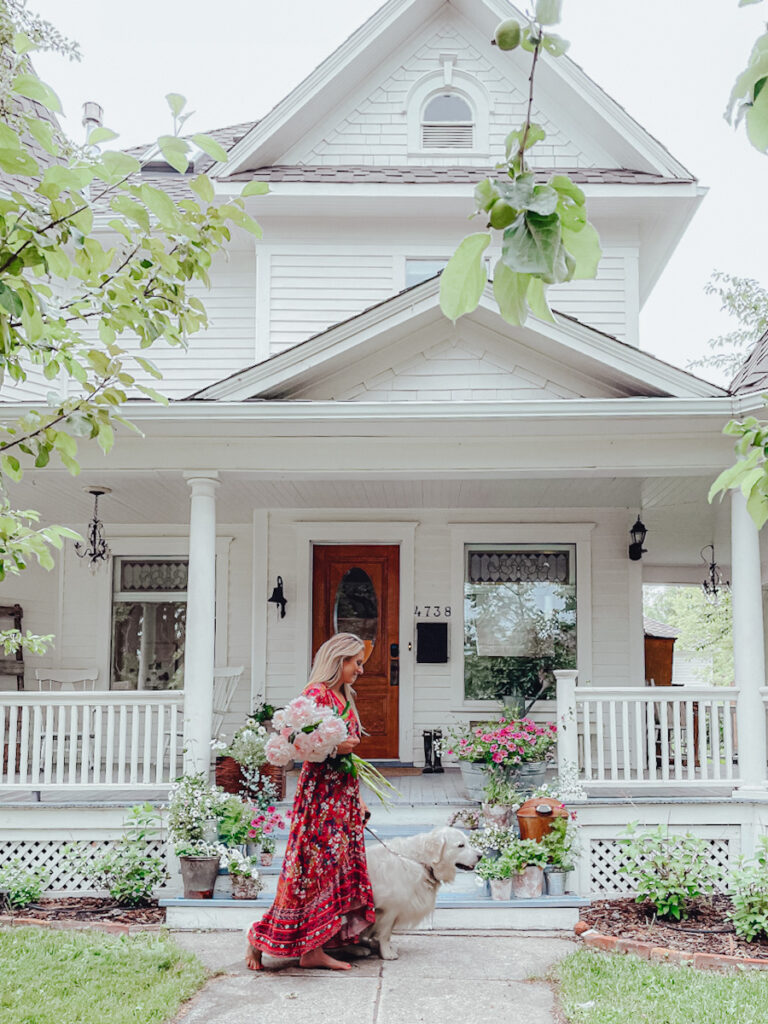
Years later, when the opportunity came to buy this house, I didn’t hesitate, even though it was tired, divided into rental units, and needed work in every single room. I didn’t see what it was. I saw what it could become.
That feeling, of walking into a space and knowing it is yours, of building a life around beauty and calm instead of waiting to find it somewhere else, that feeling has a name. I call it Vintage Simplicity.
What Is Vintage Simplicity?
Vintage Simplicity is my design philosophy, and it sits in a very specific place between styles you already know.
It is not cold Scandinavian minimalism: that can feel too stark, too empty, too much like a hotel you are not sure you are allowed to touch. It is not busy French Country: too ornate, too layered, too much competing for your attention at once. And it is definitely not the mass-produced farmhouse trend that took over every big box store for a decade.
Vintage Simplicity is the space between all of those. It is warmth without clutter. Patina without chaos.
Restraint with soul.
Vintage simplicity is a simple home decor style that feels lived in, not staged, where every piece has a reason to be there and nothing is there just to fill space.
The five things that define it for me are aged materials over new ones, muted and natural colour palettes, fewer and better things, antique and vintage pieces as the foundation rather than the accent, and rooms that feel genuinely used. These are not design rules. They are the way I actually live.
The House That Started It All
Our home was built in 1903 from blueprints that originated in the Boston, Massachusetts area, a true Queen Anne Victorian, with a turret, wraparound porch, decorative gables, and layered rooflines that make a statement before you even step inside. It was built by one of the Craig brothers who founded our small Alberta town, and it has a sister house just down the street.
By the time we purchased it in 2012, it had been split into two rental units and was tired in every possible way. Peeling paint. Broken trim. Layers of renovation choices made without any care for what the house actually was. But the bones were still strong, and I could see exactly what it wanted to be.
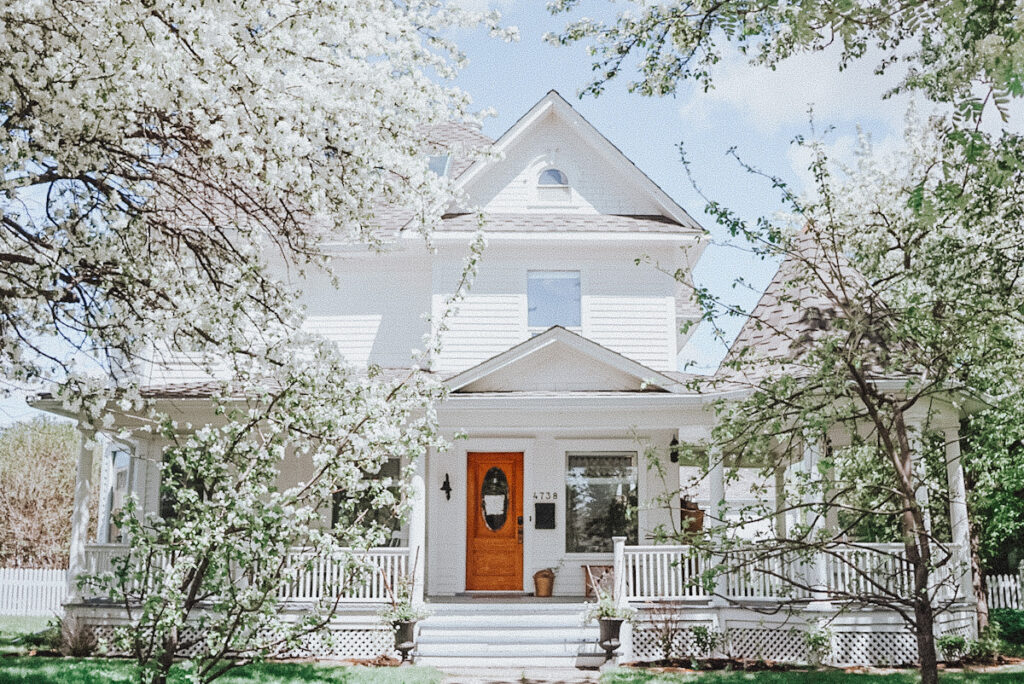
I documented a lot of that early process in my home renovation guide and later in our broader home remodel updates. We restored rather than replaced wherever we could, original hardwood floors refinished instead of covered, stained glass preserved, and walls removed that had been added to divide the space for renters.
That is the responsibility that comes with owning a home like this. You do not erase its character. You steward it.
The Kitchen : Where Life Actually Happens
For years, I described our kitchen as “functional but temporary.” It worked, but it was never finished. Now it finally is, and it is one of my favourite spaces in the house.
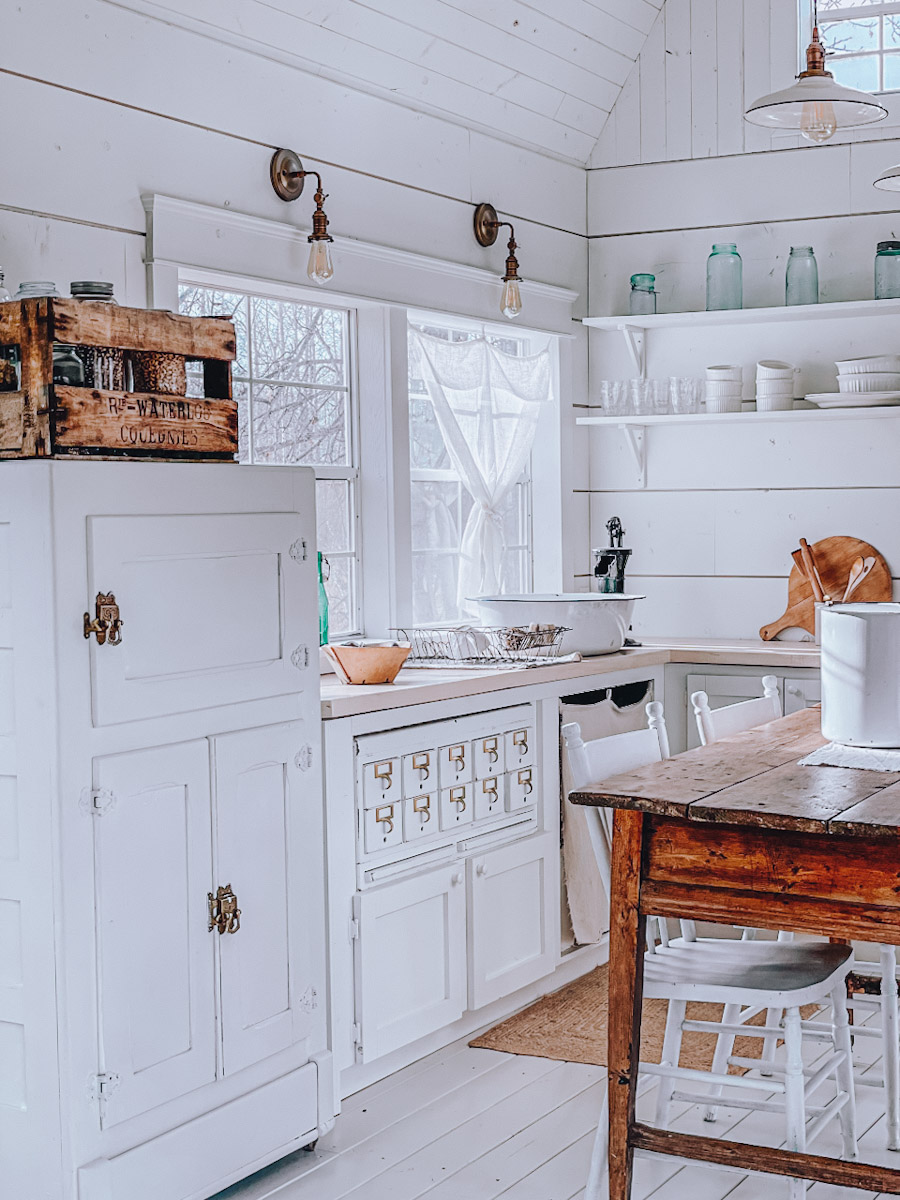
Our Scandinavian kitchen design is intentional in every detail, soft white cabinetry, natural wood warmth, minimal upper shelving, open shelves styled with antique ironstone, and warm brass touches that feel aged rather than flashy. The goal was calm. A simple home decor style that works for real life.
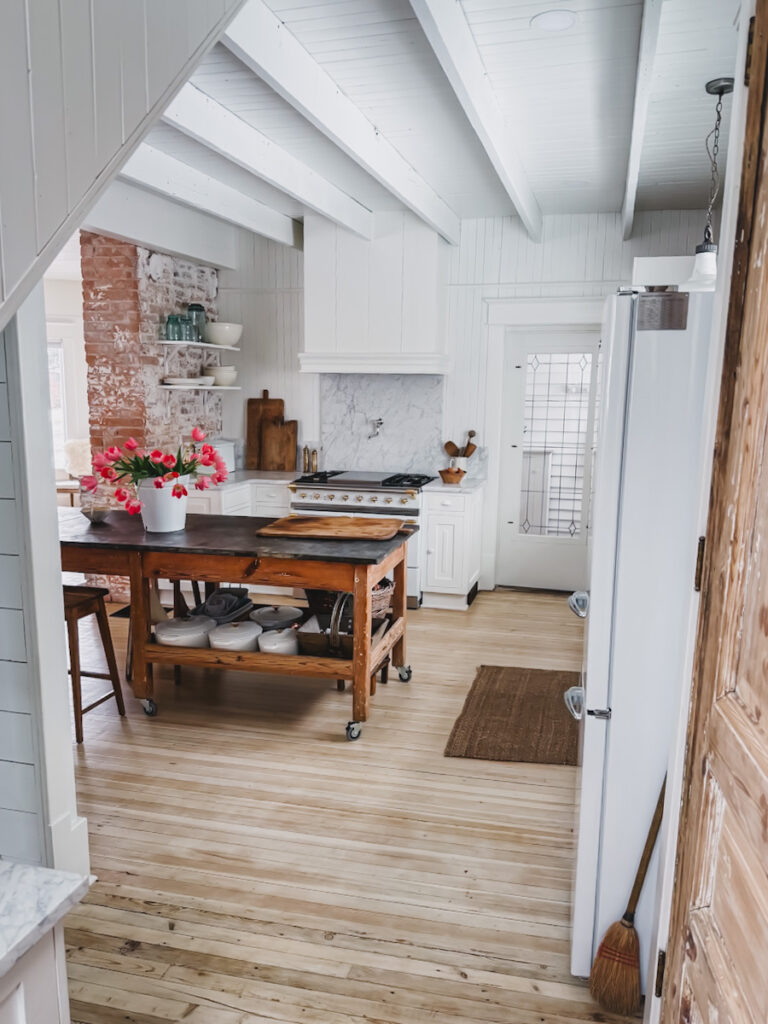
Teenagers come in hungry after hockey practice. Coffee happens before anyone else wakes up. Recipes get made from scratch on a busy weeknight.
This kitchen is not styled for content; it is lived in every single day.
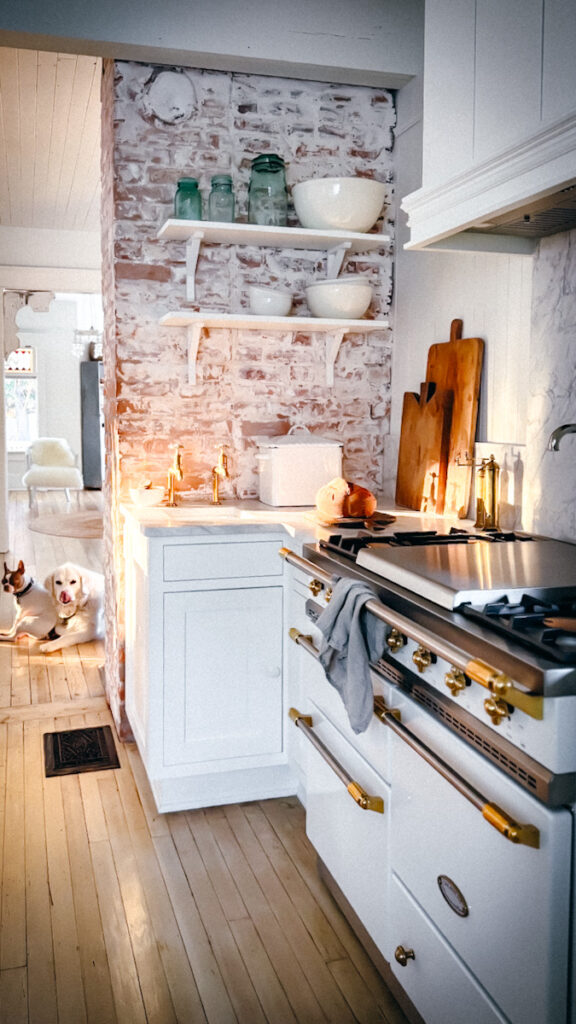
The pieces you see here are the same ones I use every day. European linen runners, antique crocks, French market baskets, they are not props. Many of them are available in my home collection and curated finds in the shop, because I only carry things I actually live with.
Bathrooms, Floors & the Quiet Details That Matter
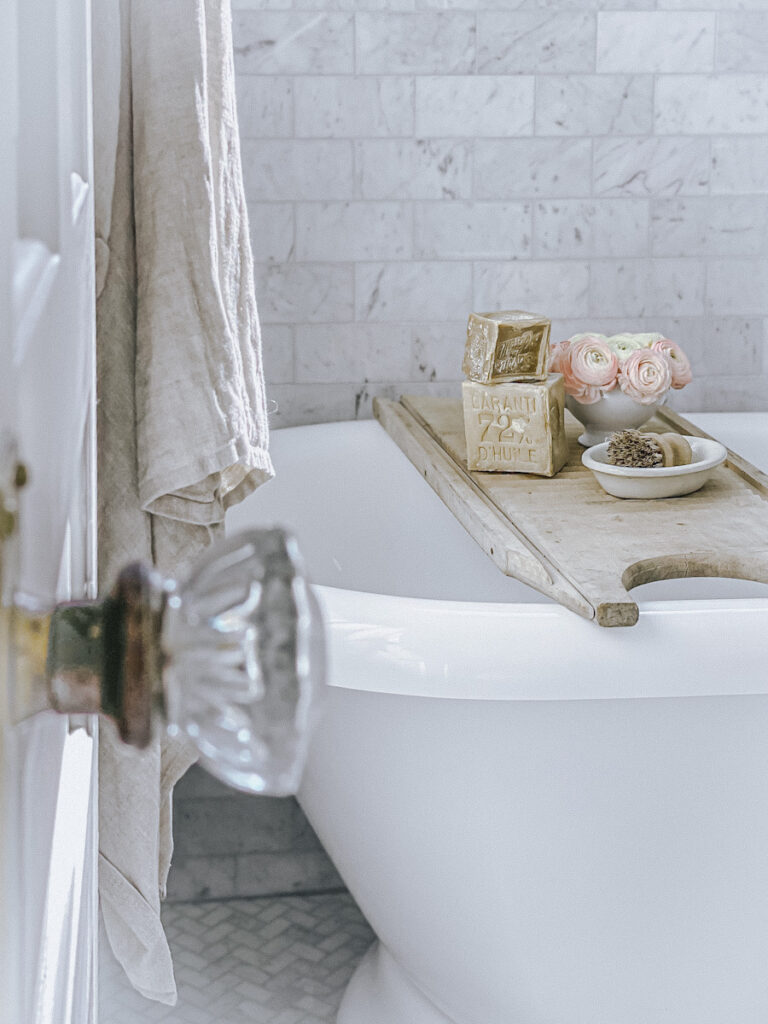
Historic homes ask you to be thoughtful. You cannot rush them, and you cannot fake them. Our bathrooms have evolved slowly over the years: structural work first, beauty second. I have shared that full process in both the bathroom renovation post and the shiplap bathroom reveal.
During the main bathroom demo, we discovered the original hardwood floors still underneath, which completely changed the plan. Instead of the marble tile we had originally intended, we kept the floors and painted them. That decision felt right for the house, and it still does.
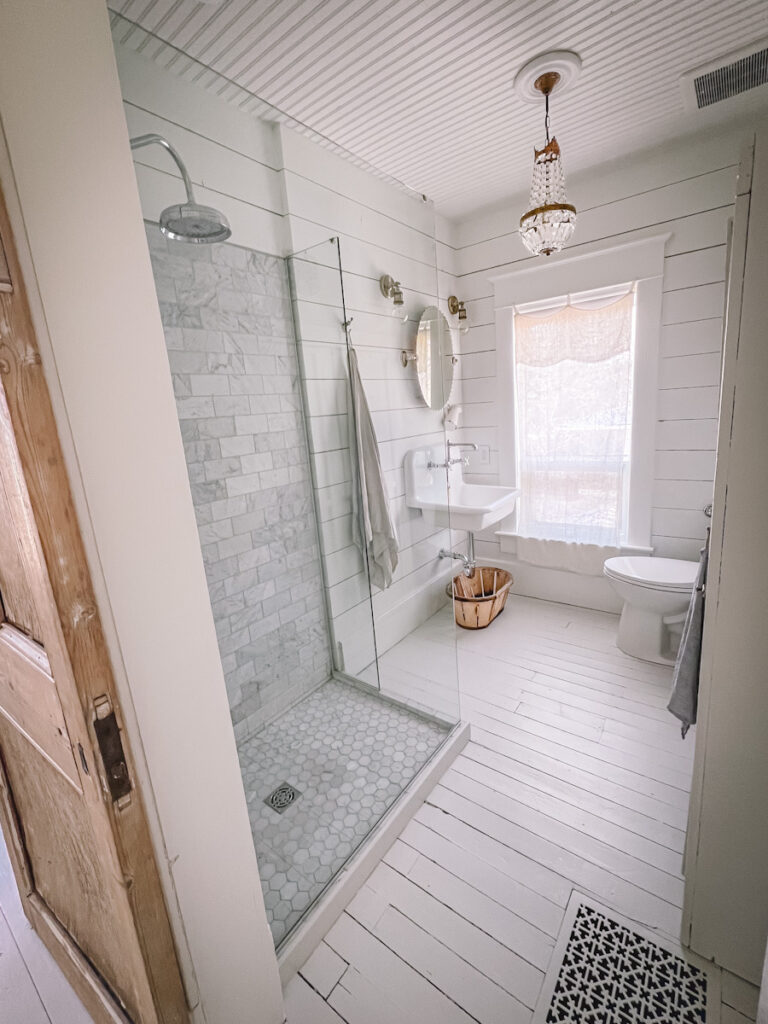
We added texture through shiplap ceiling details in other areas and grounded the staircase with DIY jute stair runners; natural fibre, simple, and exactly the right texture for a house this age. A Queen Anne Victorian already has so much architectural personality. Inside, I counterbalance it with softness.
Clean lines. Natural materials. Breathing room. That is the essence of a simple home decor and vintage simplicity style inside a bold historic structure; the architecture provides the richness, and you provide the calm.
The Attic : A Room That Changed Everything
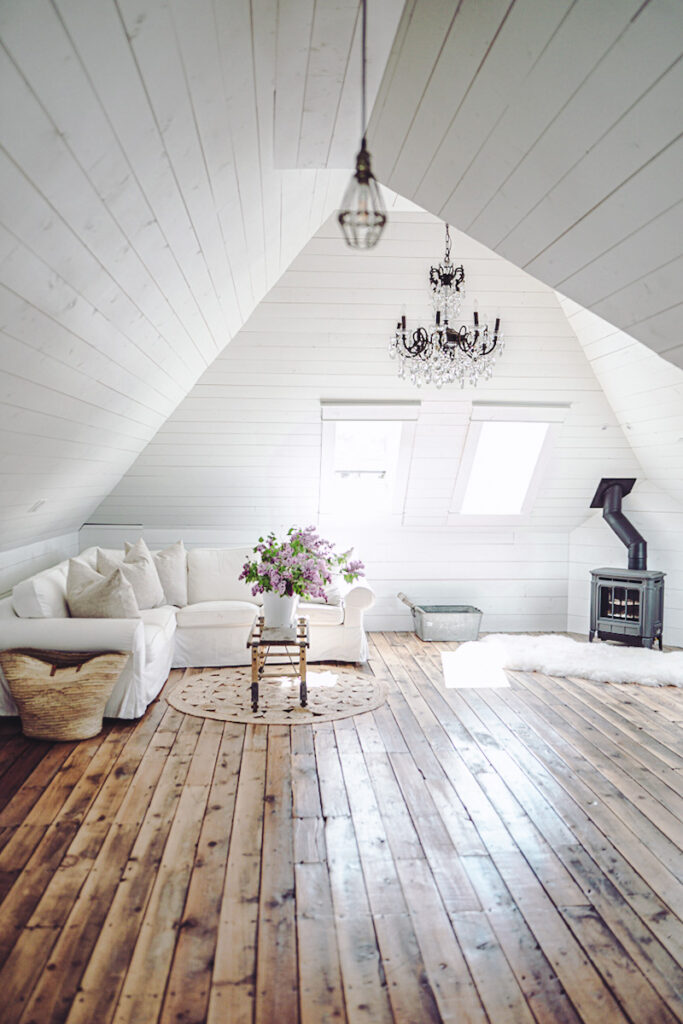
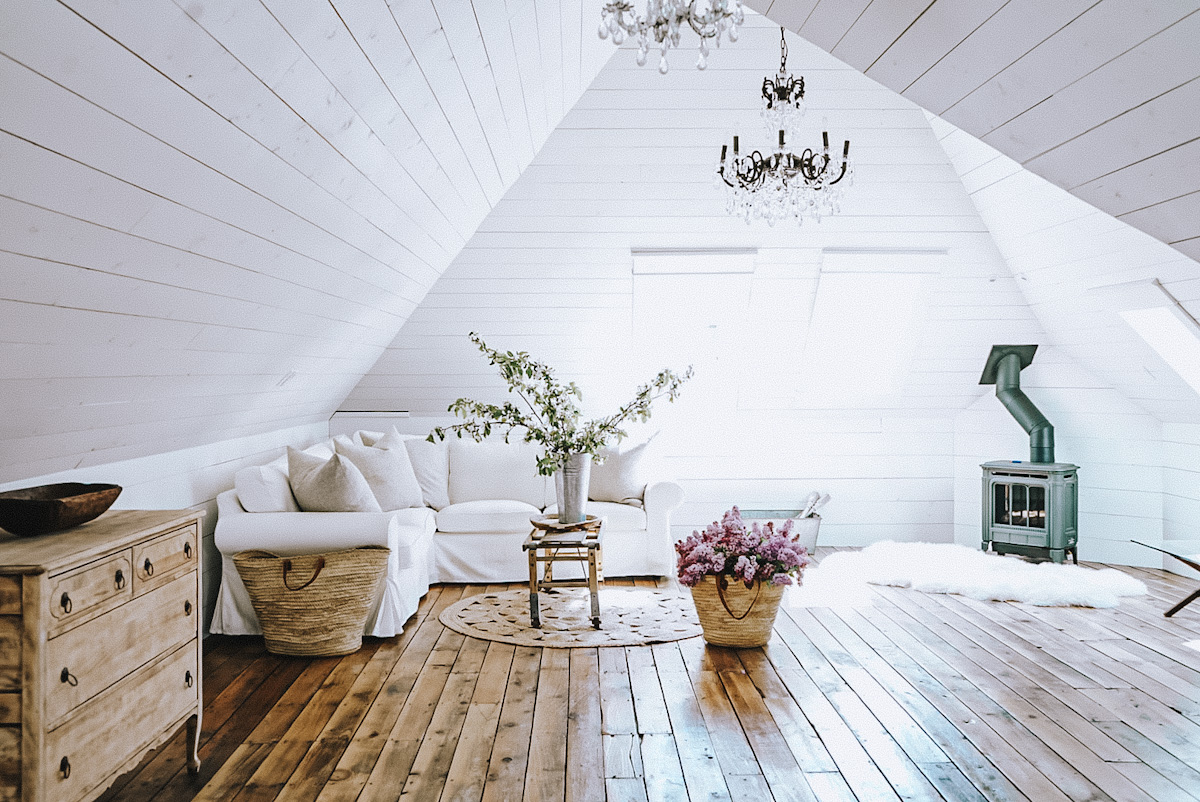
The attic in this house was a forgotten space for a long time. Low ceilings, no insulation, no reason to go up there. Turning it into a finished family room was one of the most dramatic transformations we have done, and it remains one of my favourite rooms in the house.
White shiplap on every wall. Light filtering through the roofline. A gas fireplace that anchors the space.
A sectional big enough for all of us. You can see the full before and after in the attic family room post.
That renovation taught me that square footage is not the point. The point is how a room feels when you are in it. Even a house built in 1903 can be modernized without losing its soul.
Outdoor Living : Extending the Simplicity Outside
The exterior of a Queen Anne Victorian is meant to be enjoyed, and we have spent years building outdoor spaces that feel like a natural extension of the inside. Our DIY salvaged brick patio grounded the yard and gave us a gathering space that feels like it has always been there. The small outdoor kitchen changed how we host in summer.
The outdoor wood burning fireplace anchors fall evenings in a way nothing else could. I have shared more inspiration in patio makeover ideas and how we approach the landscape in 7 steps for a magical garden.
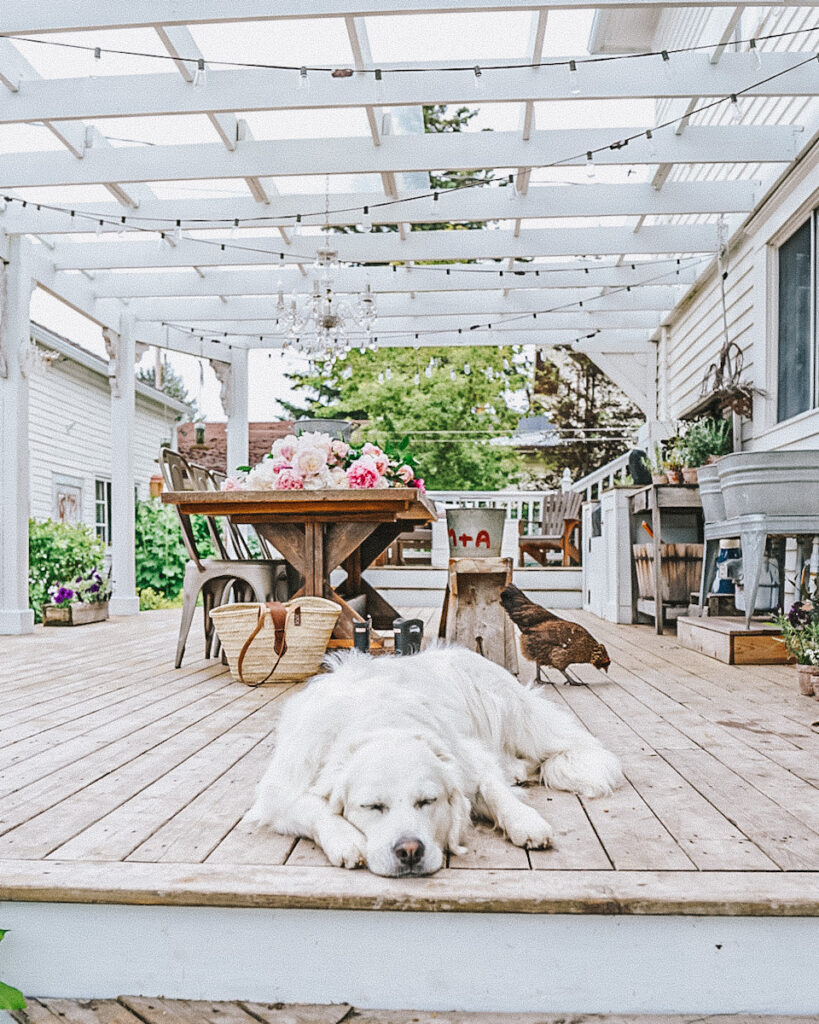
Even outside, the same simple home decor style philosophy applies. Fewer decorations, more natural beauty. Architecture. Greenery. Firelight. That is enough.
Vintage Finds & the Art of Buying Better
A Queen Anne Victorian almost invites excess. The architecture is ornate, the history is layered, and it would be very easy to fill every corner with things. I don’t.
My philosophy has always been: buy fewer, buy better. Let things age with you. And if they have a story, that makes them so much more appealing to me. I have so many pieces in my home that will often make me stop and think: I wonder what this piece would say if it could talk.
The antique wooden corbels framing the opening between my living room and fireplace room came from a mansion built in the 1800s in Wisconsin. When the home was demolished, over a hundred and fifty of these corbels were salvaged, and now a small piece of that history lives here. The same philosophy guided the stained glass window beside it. During our last renovation, I had the opening custom cut to fit a salvaged stained glass window rescued from a Calgary home that was torn down after the 2013 floods. Two buildings lost, but pieces of both of them found a second life in this house.

You can read more about how I source meaningful pieces in vintage finds. The antiques and European textiles throughout this house aren’t just decoration. They’re the foundation of my home and the heart of my simple decorating style. Each piece feels truly collected over time rather than carefully assembled. I often think of them the same way you would think about artwork… pieces that deserve to be displayed and appreciated every day.

Many of these pieces are available in the curated collection and simple living collection in the shop. This home is not a museum. It is lived in, used, and loved.
How to Start Bringing Vintage Simplicity Into Your Home
The most common question I get is: where do I even start? My honest answer is always the same, start with colour. Choosing the right white changed everything in this house.
We used Oxford White by Benjamin Moore throughout most of the interior, and it became the foundation for everything else. You can read more about how I approach colour decisions in home colour selections.
I like to think of the walls as a blank canvas, with the furniture and décor acting as the artwork that brings the space to life. Those pieces are what should naturally draw your eye and become the true focus of the room.
From there, it is about editing. Walk through your home and ask what is earning its place. A simple home decor style is not about removing everything; it is about being intentional with what stays.
Swap synthetic materials for natural ones: linen, jute, wood, iron, stone. These are the textures that make a space feel grounded and real.

I write more about the rhythm of this kind of living in hygge style, and it is a good place to start if this philosophy resonates with you. Finally, invest in one or two genuinely good vintage or antique pieces rather than filling a room with things that are new and forgettable. A single antique crock on a shelf, a linen runner on a table, a worn wooden bowl, these are the things that give a simple home decor style its soul.

Browse the simple living collection if you want a starting point that already reflects this way of living.
This Life Was Built, Not Found
I did not stumble into this home or this lifestyle. I chose it, deliberately, with both hands. This is what I wanted: historic character, natural light, space for my family, room to create, and a rhythm that felt calm instead of reactive.
So instead of looking for that life somewhere else, I built it here. Brick by brick, room by room, season by season.
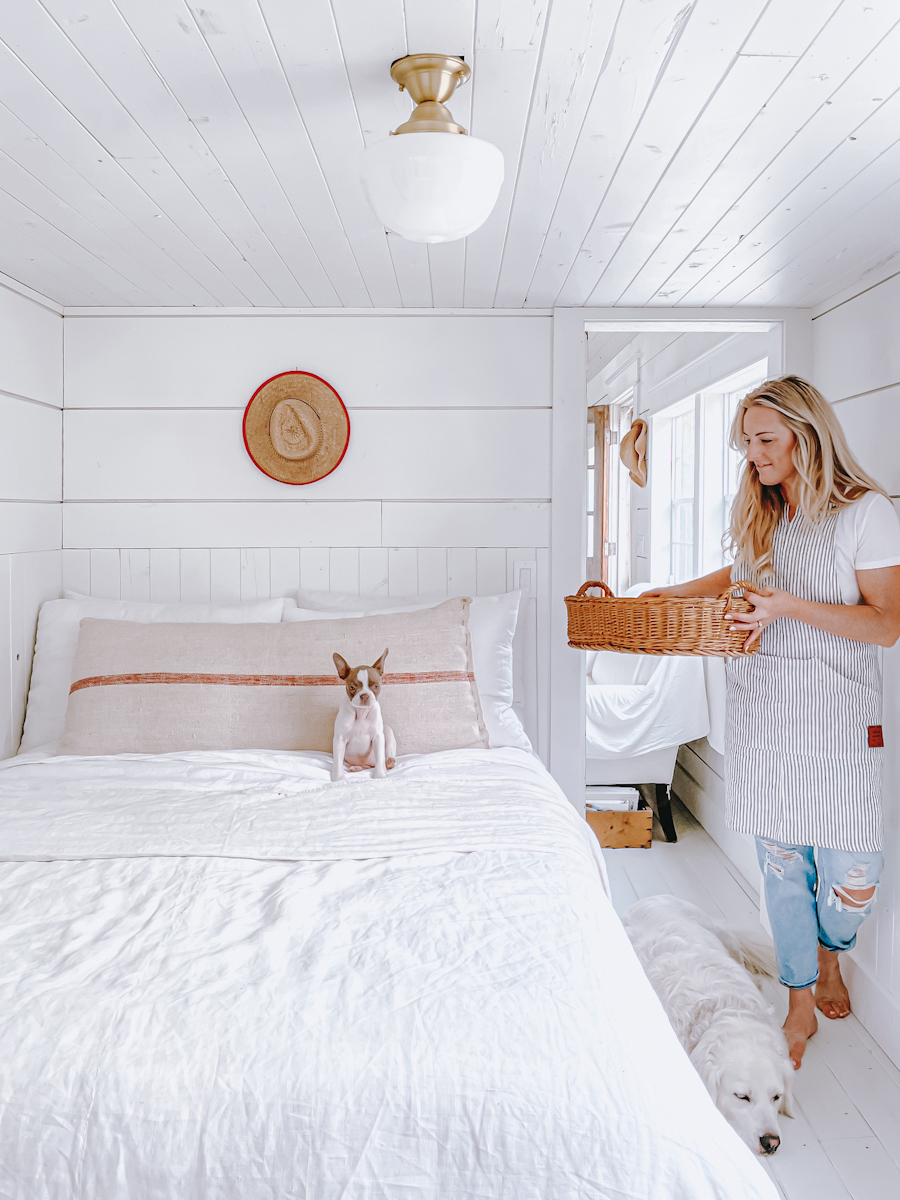
We also built a small off-grid cabin on our property a few years ago, a quieter, even more stripped-back version of this same philosophy. That is its own story, and you can read it in tiny house living off grid.
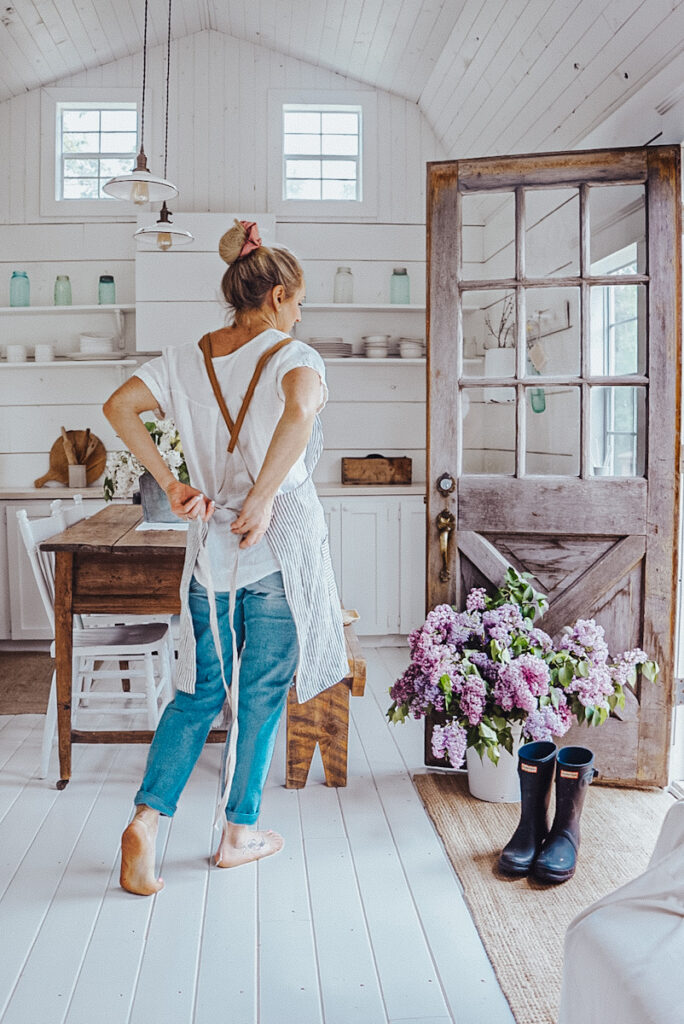
But the heart of everything will always be this 1903 house. Vintage Simplicity is not a trend. It is not a mood board.
It is a way of living, and this home is the evidence that you can choose your life and build it slowly, intentionally, beautifully. If you are new here, welcome.
Pull up a chair. This is where everything begins.

If you want to go deeper into this philosophy and how to bring it into your own home, my e-book Making Space is the natural next step. And if you want to follow along as this home continues to evolve, I would love to have you here.
For more of my 1903 Victorian house, our tiny home, my antiquing adventures, and all things simplicityat home, join my email list (I promise not to spam you) or grab a coffee and let’s chat on Substack. As always, you can find me over on Instagram, YouTube or TikTok too. Be sure to Pin this post to your Pinterest so you can go back to it over and over when you need to!

I love all your post about the house and intentional living. I hope I can turn my space in to a more peaceful home All thanks to you, have a blessed Easter.