
This post may contain affiliate links. Please read our full Disclosure Policy.
Creating a calm home environment is less about what you remove and more about what you do intentionally, and these five principles make all the difference.
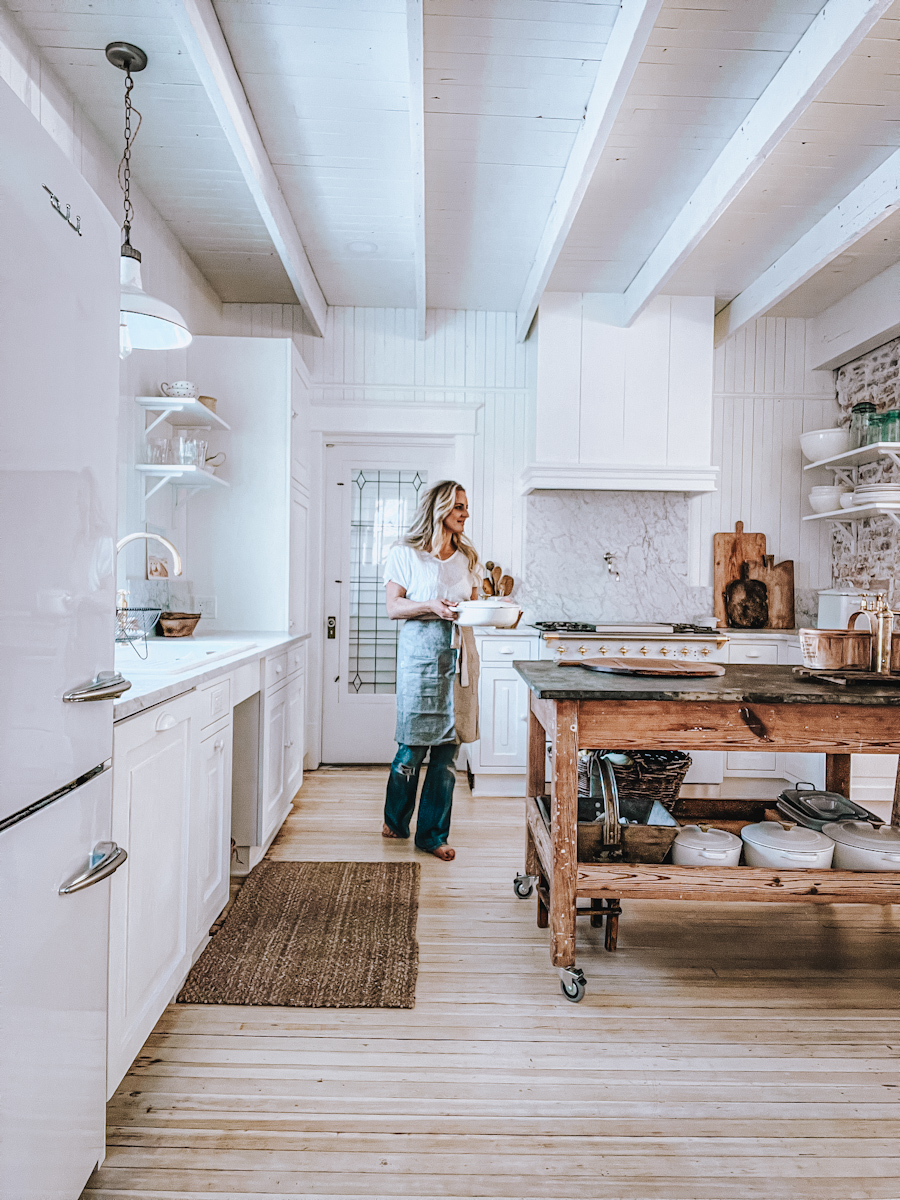
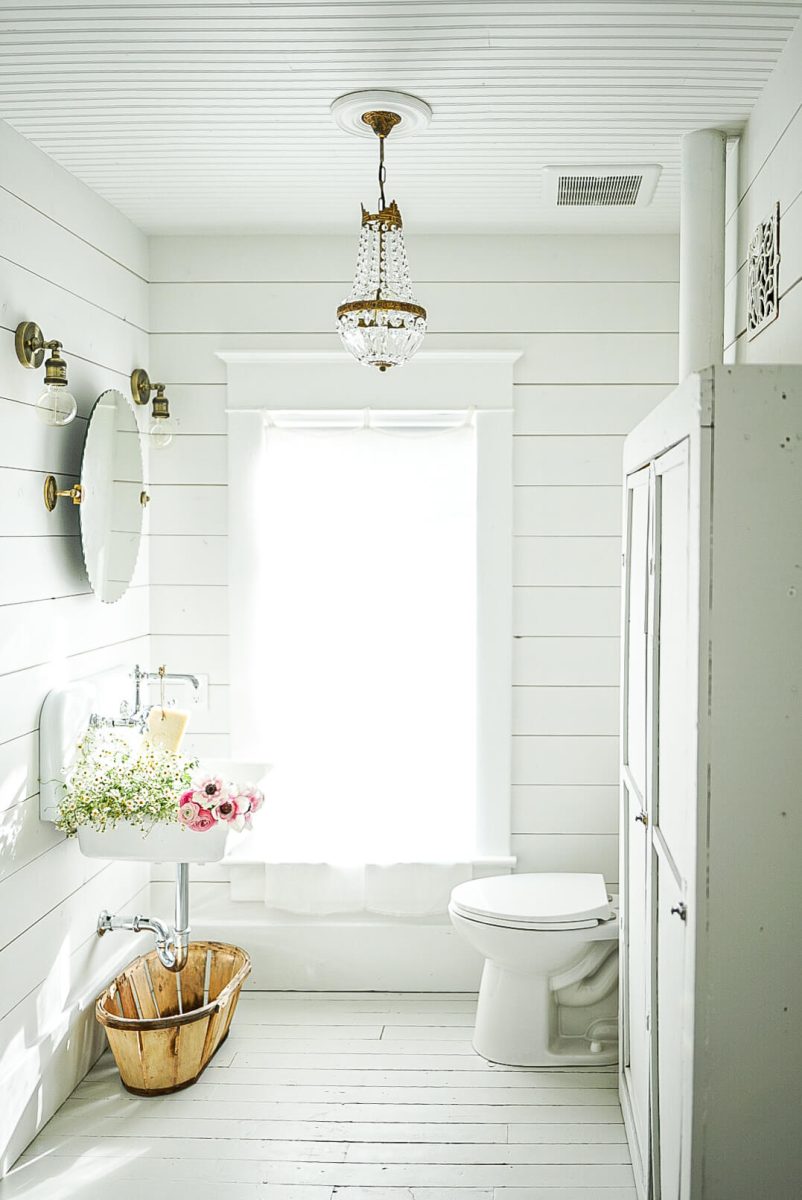
How to create a calm home environment is one of the questions I get asked most, and honestly, it’s one I’ve been figuring out in real time for years. Because here’s the thing: I don’t live in one home. I live in two. There’s our beautiful 1903 Victorian, a historic house I fell in love with when I was twelve years old and vowed I’d live in someday (spoiler: I do), and then there’s our tiny off-grid cabin in the woods, which started as a pandemic pivot and turned into one of the best decisions we’ve ever made. Two completely different spaces. Two completely different scales. And yet, both of them feel genuinely calm. Not because they’re perfect or empty, but because of the way we approach them.
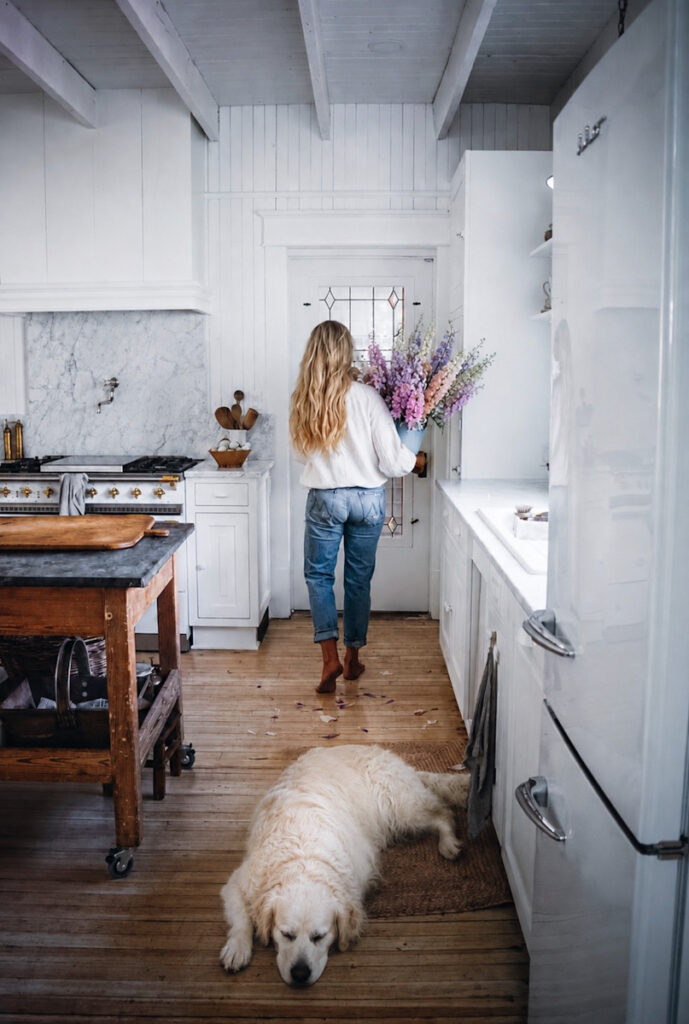
And that’s exactly what I want to talk about today. If you’ve been searching for how to create a calm home environment, I hear you. So much advice basically tells you to throw everything away and live with a single linen cushion and a pebble. That is not the answer. (And honestly? It sounds exhausting.) A calm home environment is not an empty one. It’s an intentional one. And that is a very different thing.
After years of designing for clients, plus renovating and styling both of our homes, one sprawling and historic, one tiny and off-grid, I’ve learned that creating a peaceful home decor approach doesn’t require a complete overhaul. It requires a shift in how you think about your space. Today, I’m sharing the 5 principles I come back to again and again. These are the ones that actually work when you want a calm home that still feels like you.
Why Most “Calm Home” Advice Gets It Wrong
Let’s talk about the minimalism trap for a second. Somewhere along the way, “calm” became synonymous with “bare.” White walls, no art, three objects on a shelf, and a faint sense of existential emptiness. Sound familiar?
Here’s the problem: stripping a home of its personality doesn’t create peace; it creates a space that feels like a waiting room. And nobody relaxes in a waiting room. The goal of calm home decor ideas isn’t to remove everything that makes your home feel like yours. It’s to make sure everything that stays is earning its place.the best comfort food list!
True peaceful home decor is rooted in intentionality, not deprivation. It’s the difference between a home that feels curated and a home that feels abandoned. You can absolutely have your grandmother’s pottery collection, your vintage finds, your cozy throws, and your children’s artwork on the wall, and still have a home that feels genuinely calm and relaxing. The key is in how you approach it.
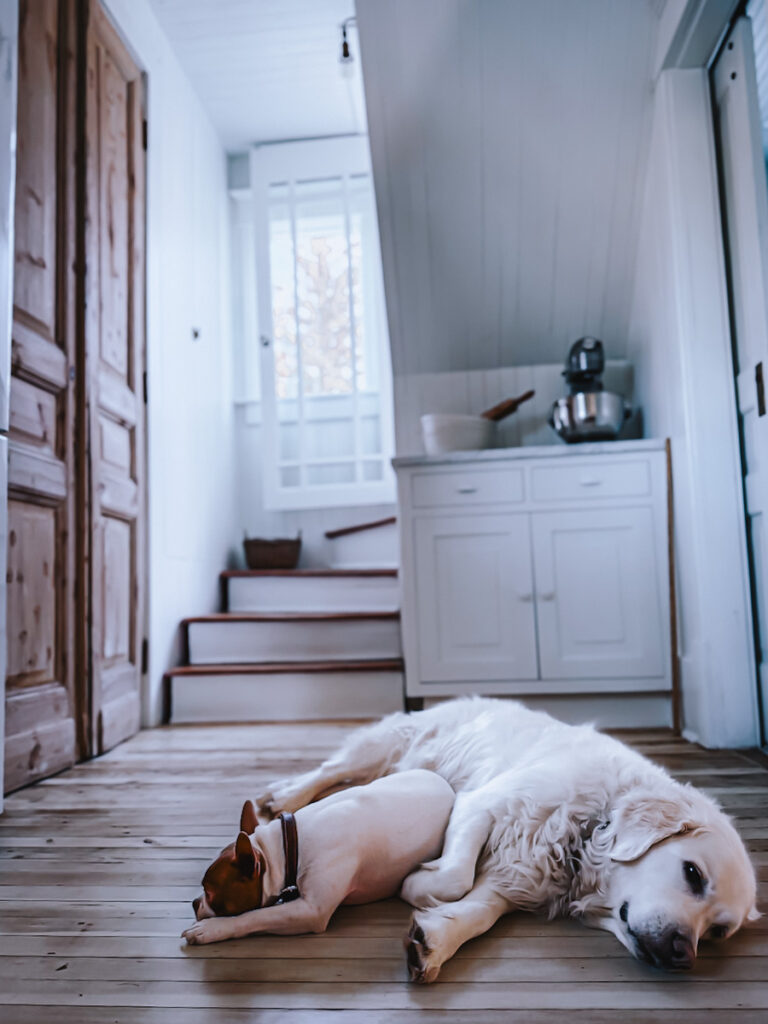
My philosophy has always been this: a calm home should still feel like you. Just the best, most breathed-out version of you, surrounded by your favorite things. That’s what we’re going for here.
Principle 1: Edit, Don’t Empty
The first step to creating a calm home environment is understanding the difference between editing and emptying. Editing is thoughtful. Emptying is just panic-clearing before guests arrive (we’ve all been there, no judgment).
When I talk about editing your home, I mean going through it with a discerning eye, one surface at a time, one room at a time, and asking yourself whether each object is earning its place. Not “does this spark joy” (though, sure, that works too), but: does this belong here? Does it serve a purpose: practical, aesthetic, or emotional? If the answer is a confident yes, it stays. If you’re hesitating, it might be time to let it go.
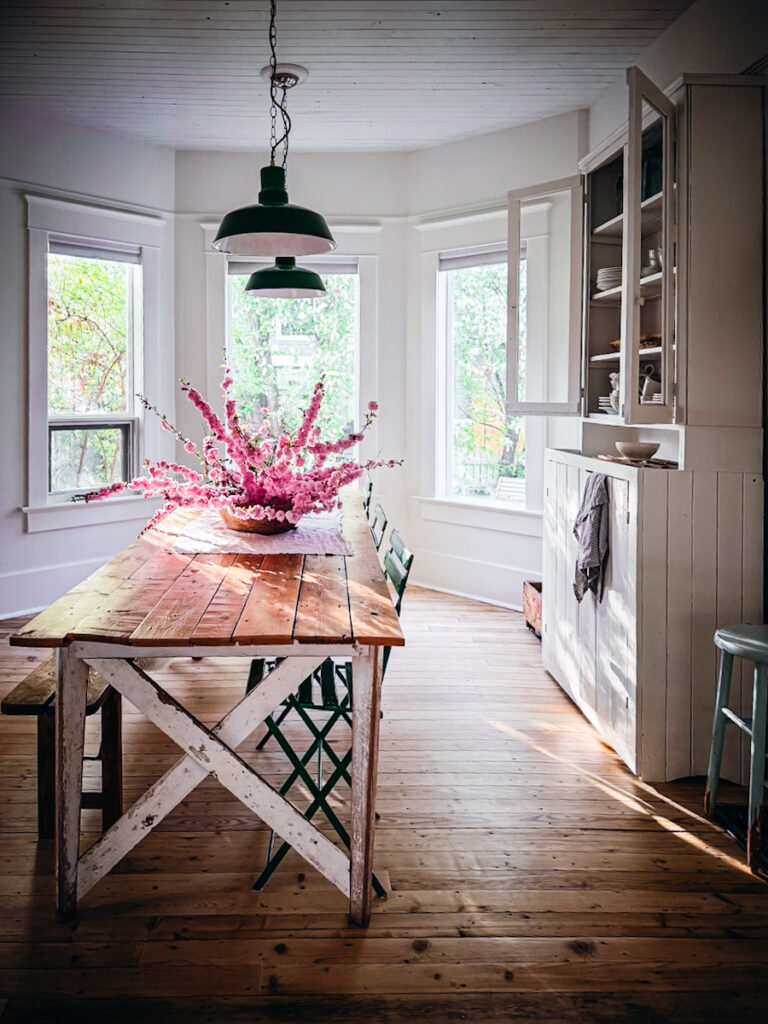
The key is to take it slowly. Trying to declutter your entire home in a weekend is a recipe for burnout and a pile of things you’ll just shove back in a cupboard. I always recommend starting with one surface, a kitchen counter, a side table, or a desk, and working from there. Small wins add up fast, and before you know it, your whole home starts to breathe differently. That’s when you really start to feel the shift toward a calm home environment.
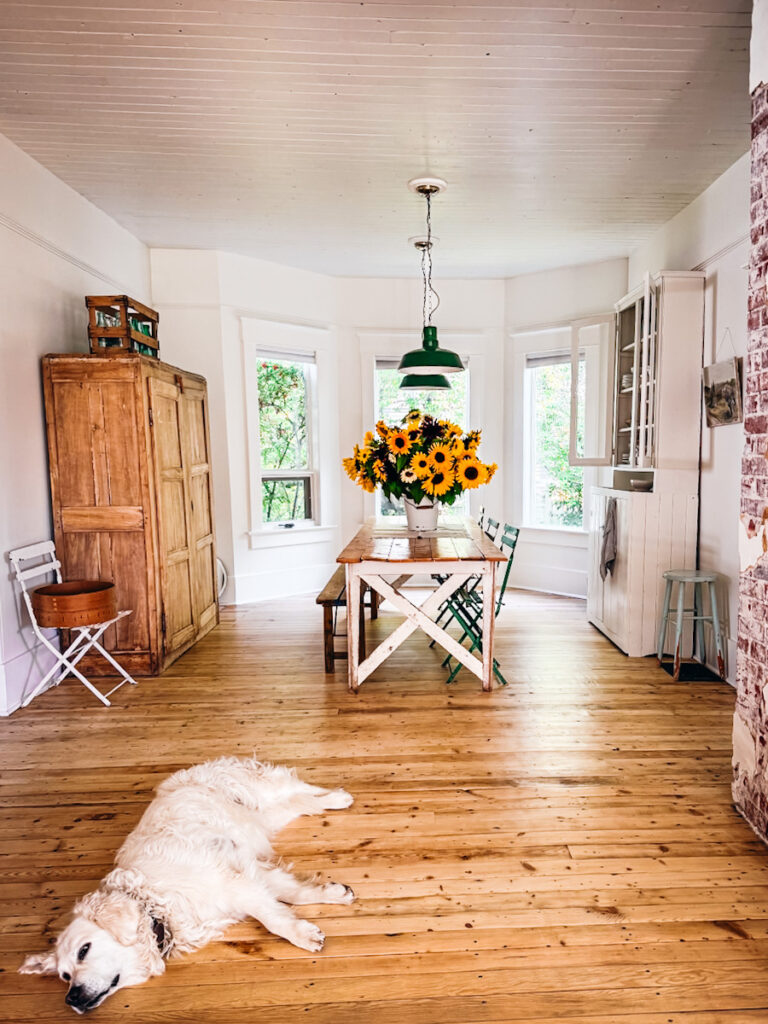
For a really solid step-by-step guide to doing this well, check out my post on how to declutter and simplify your home. It walks you through the whole process without making you feel like you need to live like a monk. And if the kitchen is your biggest source of chaos, my kitchen declutter guide is a great place to start.
Principle 2: Choose a Palette That Breathes
Color is one of the most powerful tools you have when it comes to creating a peaceful home decor scheme, and one of the most underestimated. The right palette can make a room feel instantly calmer; the wrong one can make even the tidiest space feel restless.
Here’s something that might surprise you: stark, cold white is NOT actually the most calming choice for a calm home environment. I know, I know, it seems like it should be. But a flat, cool white can actually feel clinical and a little anxious, especially in rooms with limited natural light.
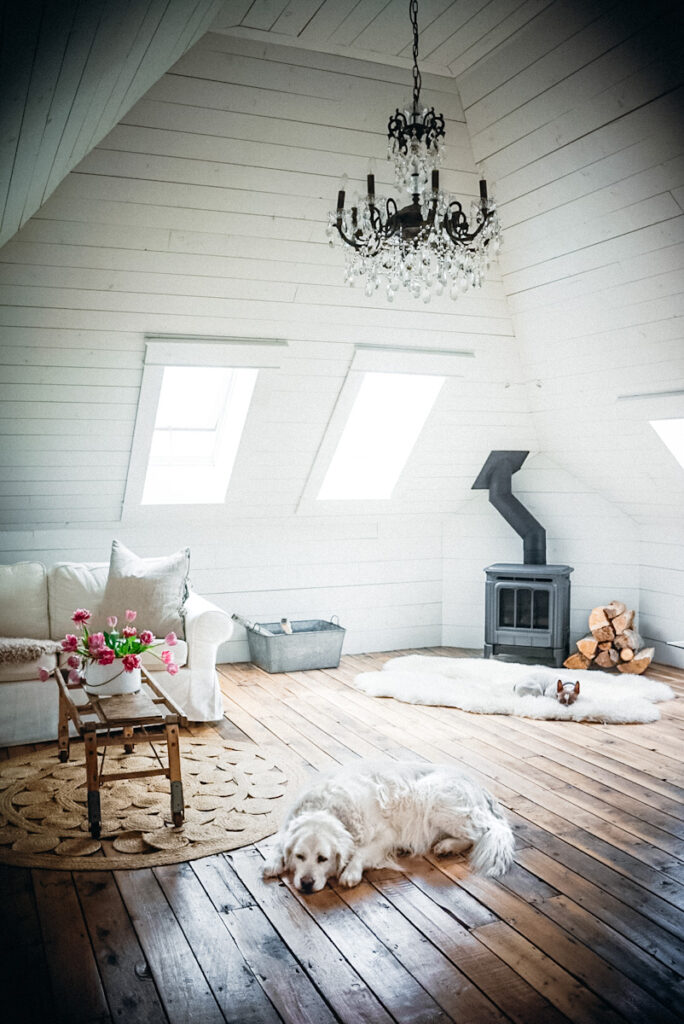
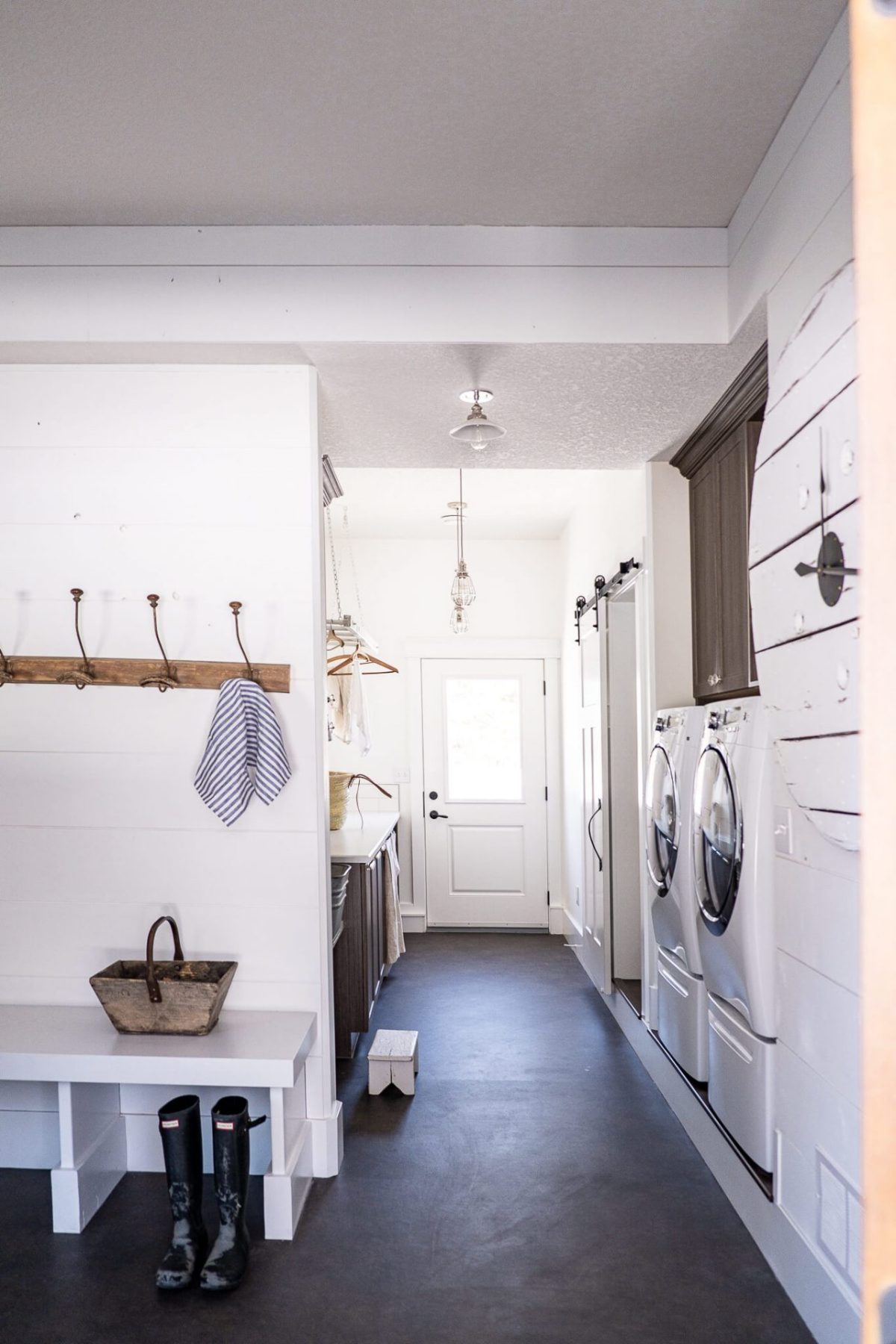
However, a light-colored background is still a beautiful starting point for a calm home environment. Think of it like an art canvas: soft white, warm cream, or pale linen gives everything else in the room space to breathe. The trick is choosing a shade with warmth and then from there, bring the room to life with warm neutrals and natural texture.
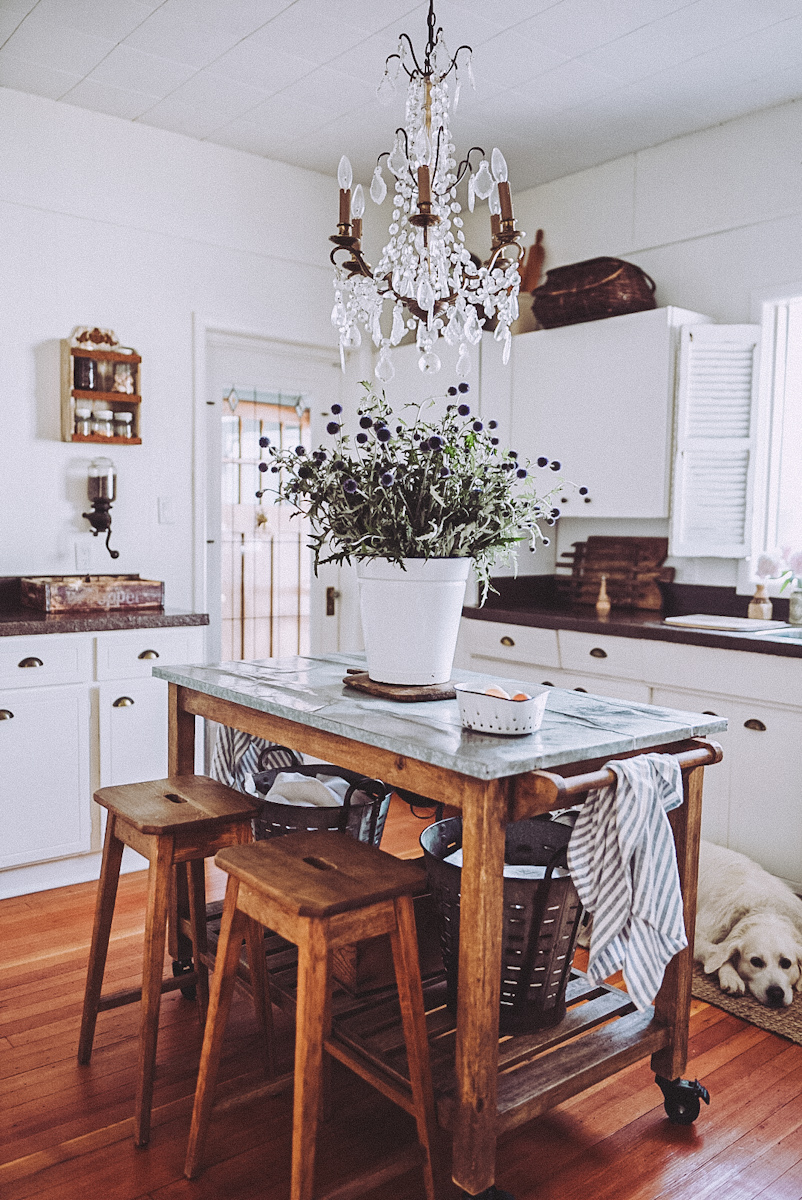
Soft linen, warm stone, aged cream, dusty sage, earthy clay, wood, and vintage pottery add the depth that keeps a light space from feeling bare. These layers do not compete with one another. These tones have a quality that I can only describe as “breathing room.”They create a quiet, lived-in backdrop that feels peaceful, personal, and warm.
The Perfect Tone
My go-to approach is to keep walls and large surfaces in a warm neutral. I’ve used Benjamin Moore’s Oxford White throughout both of our homes, and it is absolutely beautiful. The next step is to layer in depth and warmth through textiles, wood tones, and natural materials. The result is a space that feels cohesive and calm without feeling like a show home nobody actually lives in.
For more on how I approach color in a home (and how to carry a calm palette through the whole home), take a peek at my Home Color Selection Guide.
Principle 3: Let Natural Materials Do the Work
If you want to know how to create a relaxing home, this is honestly one of the biggest secrets: natural materials are doing most of the heavy lifting.
Linen, wood, stone, aged iron, rattan, cotton, clay, these materials have a warmth and an organic quality that synthetic alternatives simply cannot replicate. There’s a reason a room full of plastic and polyester feels vaguely unsettling even when it’s perfectly tidy. Synthetic materials have a kind of visual “noise” to them. Natural materials, on the other hand, are quiet. They absorb light rather than reflect it harshly. They have texture and variation that feel human and grounded — and that is exactly what a calm home environment needs.
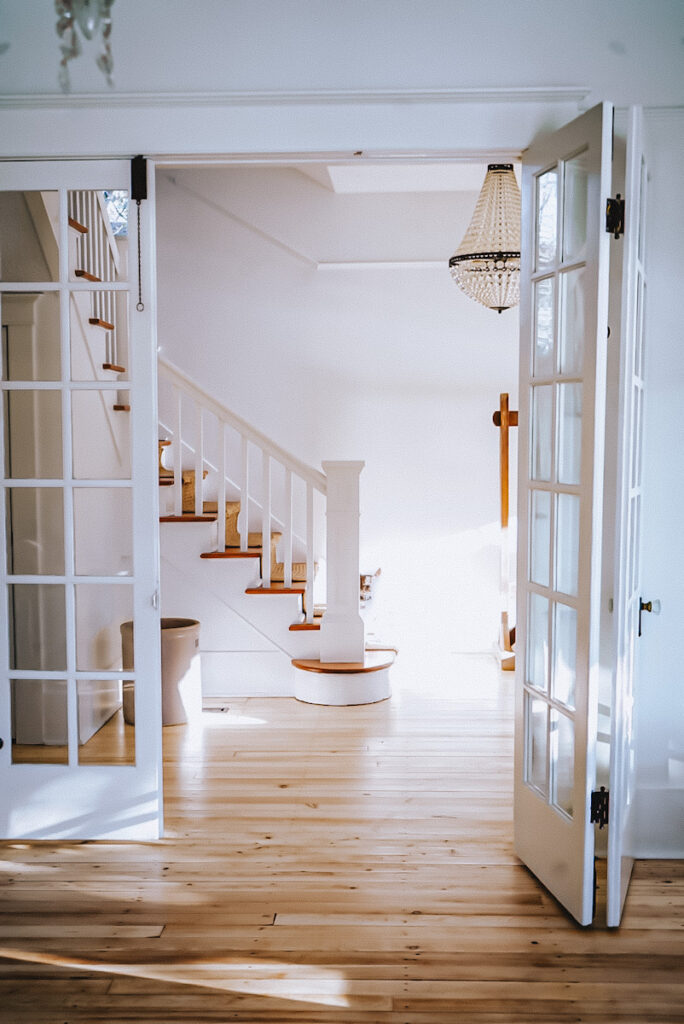
6 Simple Ways To Add Calmness To Any Space
Some of my favorite simple swaps to bring more natural, calm home decor ideas to life:
- Replace synthetic throw pillows with natural linen or cotton covers; the texture alone changes the whole feel of a sofa.
- Swap out plastic storage bins for wicker baskets or wooden crates; these are both functional and beautiful.
- Add a handmade pottery piece to a shelf or kitchen counter. There’s something about the imperfection of handmade ceramics that immediately makes a space feel more intentional and alive. Something like this rustic ceramic vase is exactly the kind of piece I’d reach for, simple, beautiful, and grounding.
- Use wooden cutting boards as decor on kitchen counters; they’re practical, and they add that warm, natural element without any effort.
- A simple linen tablecloth or runner can transform a dining table from “functional furniture” to “a place I actually want to sit and linger.”
- A set of stoneware mixing bowls on your counter is one of those things that genuinely makes your kitchen feel more intentional and calm — beautiful and practical in equal measure.
These aren’t expensive changes. They’re just intentional ones. And that’s the whole point.
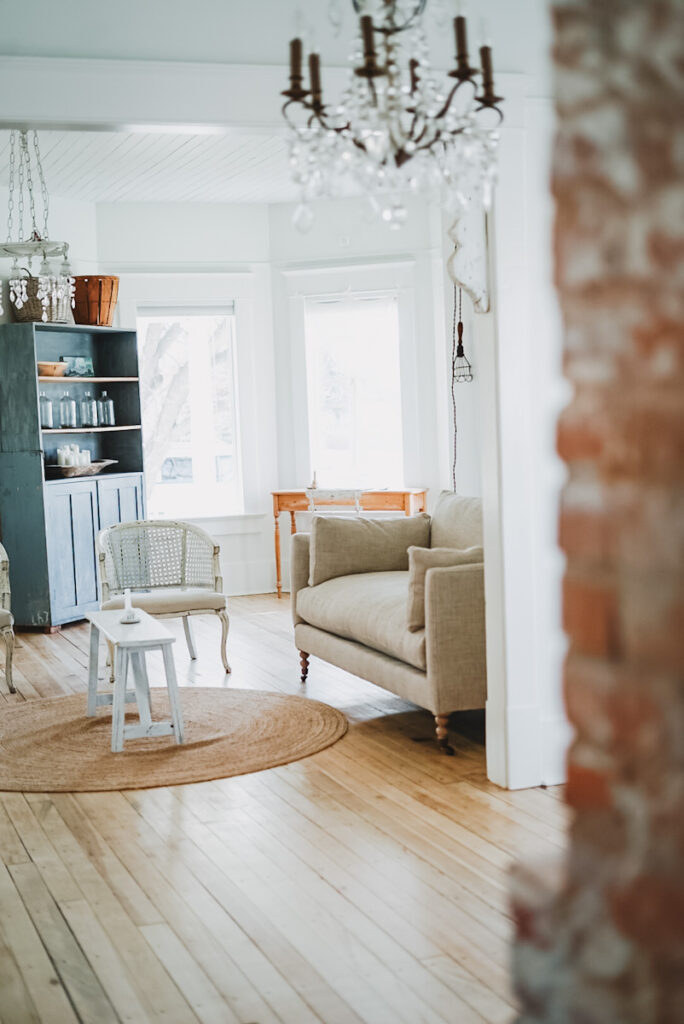
For more inspiration on how to bring natural elements and vintage pieces into your home in a way that feels cohesive and calm, my vintage finds post is full of ideas.
And if you love the cozy, natural, layered aesthetic of hygge-style decorating, which is basically the gold standard of calm home decor ideas, you’ll want to read my hygge style guide too.
Principle 4: Give Every Object a Reason to Be There
This is the principle that separates a calm home environment from a cluttered one, even when both have a similar number of objects in them. It’s not minimalism; it’s intentionality.
Before you keep something, buy something, or display something, ask yourself one simple question: why is this here? It sounds almost too simple, but it is genuinely transformative when it comes to creating a peaceful home decor approach that actually sticks. An object can earn its place in your home in one of three ways: it’s useful, it’s beautiful, or it carries meaning. Ideally, it’s two or three of those things at once.
Simplicity with a Story
The vintage ceramic jug on my kitchen shelf? It holds wooden spoons (useful), it’s beautiful, and I found it while wandering and antique shopping one of the markets in Provence years ago (meaningful). It earns its place every single day. The random decorative item I bought on impulse because it was on sale? That one didn’t make the cut.
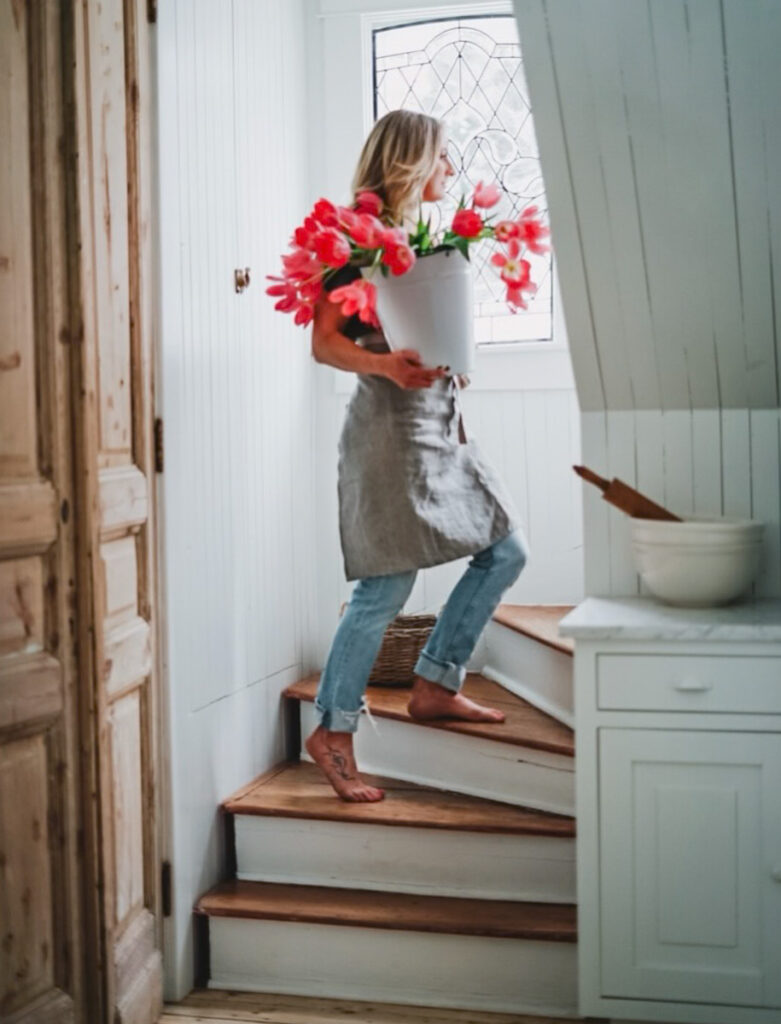
This principle also applies to what you buy going forward. Before anything new comes into your calm home environment, run it through that same filter. Does it serve a purpose? Is it genuinely beautiful? Does it mean something? If it doesn’t check at least one of those boxes convincingly, it’s probably not going to add calm; it’s going to add clutter.
This is something I talk about a lot in my simple living post, and it really is the foundation of everything. When you start living with more intention around what you bring into your home, the whole atmosphere shifts. You can also find some of my favorite intentional, beautiful everyday pieces in the B Vintage Style shop, things like one-of-a-kind handmade pottery, European linen aprons, and French market baskets that are as pretty as they are practical. Speaking of beautiful and functional, a set of handmade ceramic candlestick holders adds warmth and that lovely, imperfect quality that makes a space feel lived-in rather than staged. And a good linen throw blanket draped over a chair? That’s cozy, simple home decor at its absolute best.
Principle 5: Create One Room That Is Completely Yours
Here’s the principle that I think makes the biggest difference in how to create a calm home. It’s the one people skip most often: create one room, or even one corner, that is fully calm, fully intentional, and completely yours.
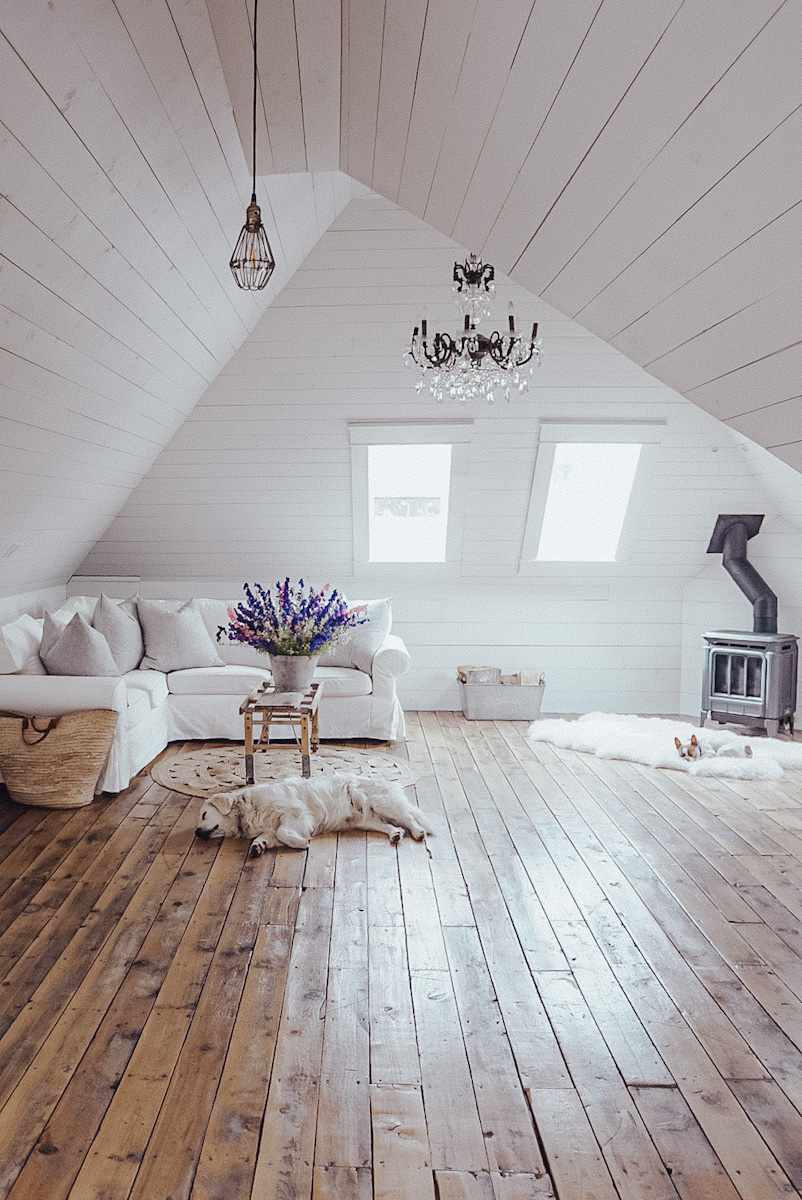
I call this the anchor room concept, and mine is a reading corner by our fireplace. The idea is that you don’t have to transform your entire home at once (and you probably shouldn’t try, see Principle 1). Instead, you choose one space, and you make it exactly what you want a calm home environment to feel like. You get it right in that room. And then that room becomes your reference point, your proof that it’s possible, and it sets the tone for everything else.
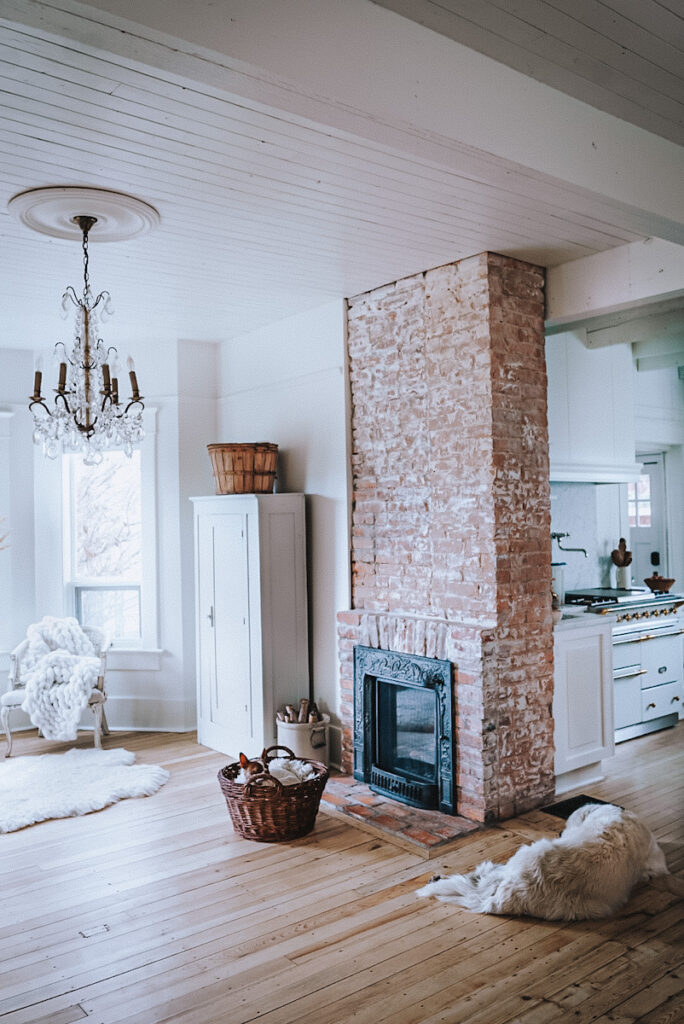
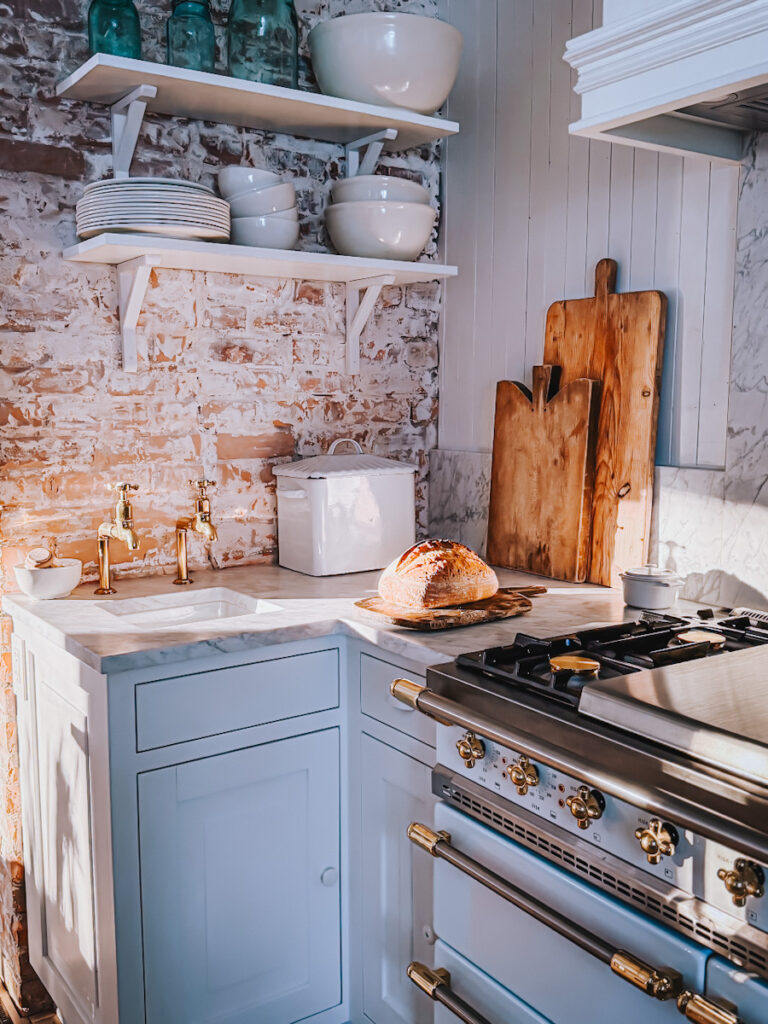
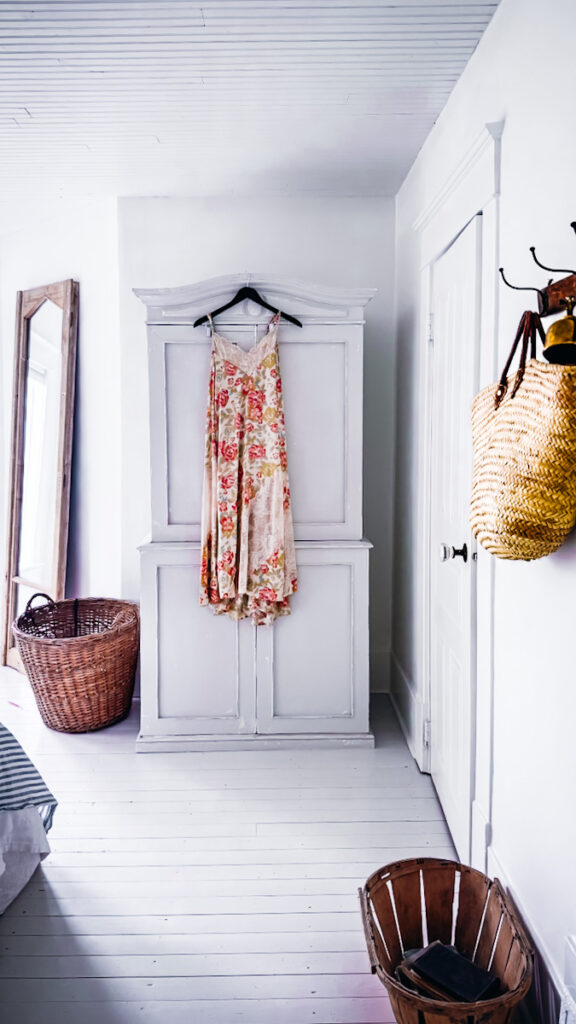
For you, this might be a bedroom, where you invest in beautiful linen bedding, clear the surfaces, and make it a true sanctuary. It might be a reading corner in the living room, a chair, a lamp, a small table, and a basket of books. It might be your kitchen, where you’ve finally got the counters clear and the open shelves styled with pieces you actually love.
Keep It Simple
The point is that you have somewhere in your home that already is what you’re working toward. Somewhere that reminds you what a calm home environment actually feels like, so you can keep building toward it in the rest of your space. One room done well is worth more than an entire house half-done.
For ideas on how to create that kind of warmth and atmosphere throughout your home, my post on creating a happy home is one of my favorites; it’s full of small, meaningful ways to make your space feel genuinely good to be in. And if you want to bring that same cozy, intentional energy into your everyday routines (not just your decor), my simplicity at home is a great read alongside this one.
Where to Start This Weekend
Okay, so you’re on board. You want to create a calm home environment, and you’re ready to actually do something about it. Here are three low-cost, high-impact actions you can take this weekend:
- Edit one surface. Pick the most cluttered surface in your home, the kitchen counter, the coffee table, the bathroom vanity, and clear it completely. Then put back only the things that are useful, beautiful, or meaningful. Leave the rest somewhere else for now. Just see how it feels. This one small act is often enough to make the whole room feel like a different, calmer space.
- Add one natural element. Go to the grocery store and grab a small bunch of flowers or a potted herb. Pick up a linen tea towel if you don’t have one. Bring in a piece of wood or stone from outside. Something small, something natural. Notice how it changes the energy of the room. This is one of the easiest calm home decor ideas you can act on today, and it costs almost nothing.
- Spend 20 minutes in your anchor room. If you don’t have one yet, pick the room that has the most potential and spend 20 minutes in it, not cleaning, just being there. Notice what bothers you, what feels good, what you’d want more of. Let that be your starting point for building your calm home environment from the inside out.
For more on building the daily habits and routines that support a calm, simple home, revisit my simple living post and my decluttering guide; they’re the perfect companions to everything I’ve shared here. And if you want to take your home’s natural cleaning routine to the next level while you’re at it, my homemade all-purpose cleaner post is a favorite around here too.
Ready to Go Deeper?
If you’ve loved these principles and want a complete, step-by-step guide to applying them throughout your whole home, my Making Space e-book walks you through the entire process, from editing and palette to creating those anchor spaces and building the routines that keep it all feeling calm. It’s the full roadmap to a calm home environment, all in one place.
In the meantime, I hope this gave you a really clear starting point. Creating a calm home environment isn’t about perfection, and it’s definitely not about getting rid of everything you love. It’s about being intentional, one surface, one room, one beautiful natural material at a time.
You’ve got this. And your home is going to feel so good.
Pin this for later and share it with a friend who needs a little more calm in their home!