

This post may contain affiliate links. Please read our full Disclosure Policy.
Shed to tiny house conversions have quickly become one of the most popular and affordable ways to build a small cabin or off-grid getaway. With the right layout, a bit of creativity, and some thoughtful design, a simple garden shed can be transformed into a beautiful and functional tiny home.
A few years ago, our family decided to do exactly that. Instead of building a traditional cabin, we converted a 12 × 32 garden shed into a tiny house tucked into the trees on our family property about 40 minutes away from our Victorian house in town. What started as a practical solution quickly became one of the most special places we’ve ever created.
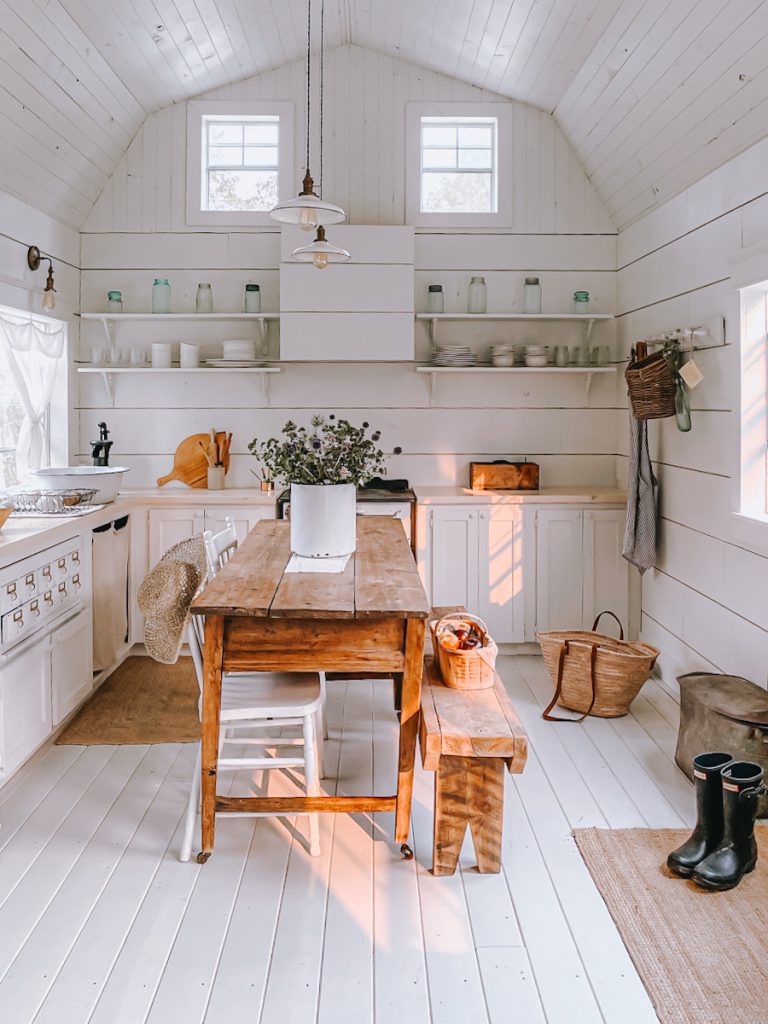
Originally, we had been planning a big trip to Europe with our kids. When the pandemic changed those plans, we decided to put that travel budget toward something different. Instead of exploring another country, we built a little escape of our own and turned a garden shed into an off-grid tiny house cabin where we could spend summers fishing, boating, and enjoying the quiet.
The process ended up being far simpler and more affordable than we ever expected. With some careful planning, a bit of DIY work, and a love for simple living, we were able to transform a basic shed into a warm, functional space for our family.
In this post, I’m sharing exactly how we turned a shed into a tiny house, including the layout we chose, the cost of the build, how we set up our off-grid systems, and the design ideas that helped make this small cabin feel cozy and spacious.
What Is a Shed to Tiny House Conversion?
A shed to tiny house conversion is exactly what it sounds like: transforming a garden shed or portable building into a small, livable home or cabin. We chose this option because it’s far more affordable than building a traditional cabin from scratch, and it was easier to bring the finished product to our remote location. With the right layout, insulation, and utilities, a simple shed can become a comfortable tiny house retreat.
Why Build A Garden Shed Into A Tiny Home
When the pandemic started, building a tiny home shed cabin was not even something our family had thought would happen. We had vacation property that we pulled our trailer each year, but we weren’t planning to build a cabin on it. The year the pandemic started, we were planning an adventure of a lifetime to Europe with our children. Then C____ began… it changed so much for so many.
We didn’t want that season to take away our sense of adventure, so instead we redirected the money we had saved for the trip and decided to convert a garden shed into a tiny house cabin in the woods. What started as a simple idea quickly turned into one of the best decisions our family has ever made.
Sometimes life changes your plans… but it also opens the door to something even better. This little shed turned cabin has already given us years of memories.
One of the reasons converting a shed into a tiny home appealed to us so much is that it offers a surprisingly practical way to create a getaway space without building a full cabin from scratch.
A shed to tiny house conversion can be a great option because:
• It is much more affordable than building a traditional cabin
• Construction is much faster and simpler
• Portable buildings often do not require permanent foundations
• Off-grid living becomes much easier to set up
• A shed cabin is perfect for weekend getaways or family retreats
For us, it created a cozy little escape where we can fish, explore the surrounding lakes, and spend quiet evenings together away from the busyness of everyday life.
And honestly… there is something incredibly satisfying about turning something as simple as a garden shed into a warm and welcoming tiny home.
Choosing a Location for a Tiny House
When choosing a location for your tiny home or shed cabin, you will want to make sure you consider a few things, especially if it will be off the grid. It is a lot like choosing a plot of land for a home, and you must ensure you have thought it through. Make sure to consider:
- Sunlight for Solar – If solar is going to be your main source of power, you will want optimal sun exposure for your panels.
- Trees for Privacy and Protection—Although you want the sun to charge your panels, a shady, treed area is wonderful for hot summer days and offers privacy as well.
- Close Proximity to a Main Road—This is very important to consider if you live in a climate with changing seasons, as you will probably need to deal with snow removal. A long road to the cabin could be difficult to navigate in winter.
- Recreational Activities Nearby – Having many activities nearby is nice for the whole family! As enjoyable as a cabin is, it is always fun to head to the beach for the day or get out into the wilderness for a hike.
- Cost and Affordability – Last but certainly not least, COST! Find something that won’t break the bank and preferably something that doesn’t have ongoing yearly fees.
Our Cabin Shed
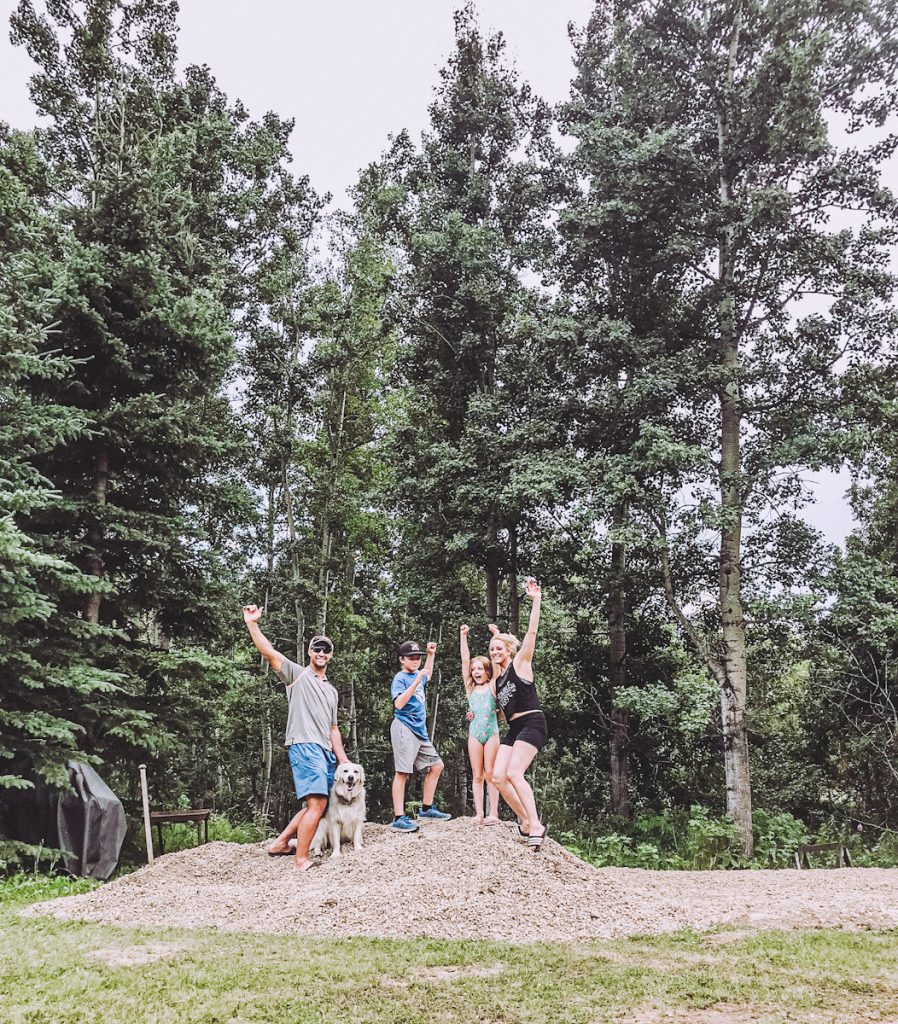
The tiny house is located on a property that belonged to my grandfather! It is the last privately owned quarter section before 150 quarters of Crown land. Basically, it is our property and then open land until the mountains! There are also 4 lakes within a few minutes of us! Lots of boating, outdoor activities, and fishing, to say the least! I grew up spending so much time there as a child. He farmed the land that is surrounded by a cluster of Alberta lakes. My family has so many happy memories in this very spot.
For years, my family has spent summers out here boating, fishing, and having fun. We would bring our Glamper at the beginning of summer and leave it there as long as possible. It was a quick and easy getaway for our family all summer long as it was only a short drive away. Our family always joked about building a cabin there someday but never actually thought we would pull the trigger. When the pandemic hit, and we couldn’t continue with the holiday plans, there seemed to be no better time than now!
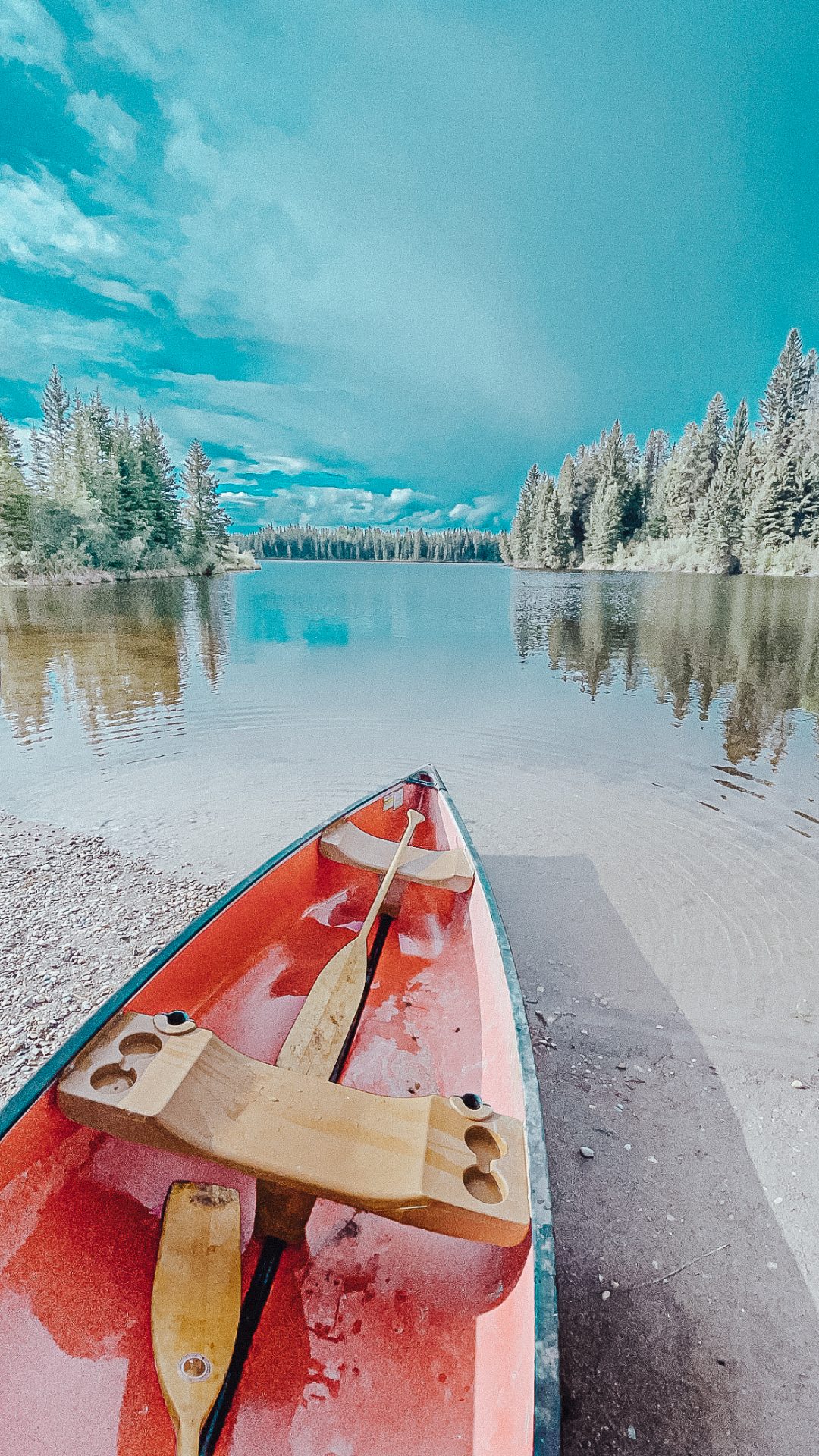
Our cabin backs onto an open forest and is surrounded by trees. We get plenty of shade and very little wind as we are nestled into an area surrounded by trees. There is still enough sunlight for our solar panels to charge, and the vegetation is thick enough that no one can see us when driving in the area! I would have loved to place the cabin deeper on the property, but it would have been too difficult to get to it in the winter when it snows.
To Build Or Buy Pre Built
Although you can build your cabin from scratch, a great alternative is using an existing building, like a garden shed. Garden sheds come in different sizes and styles nowadays; some are even built with full porches and loft areas! If you choose to work directly with the building company, you may even be able to customize some of the exterior features! A few customizable features are:
- Adding additional doors and windows plus the flexibility to change their sizes and quality.
- Exterior hardy board siding and tin roof color.
- Adding insulation in the floor
- Increasing the height of the building and changing the placement of entrances.
- Additional loft areas, including the length and height of the loft areas.
Our children are eight and 11, and we only have a few years left with us as a family at home. We wanted a place to make memories and for all of them to return to as they grow. My husband and I began exploring the options for moving something onto the property or building something, but it all seemed overwhelming and not the right fit.
One night before bed, my husband searched Kijiji and found a listing for Premier Buildings, which sells prebuilt garden sheds and portable buildings. The very next day, we toured the existing buildings displayed on a farm outside of Didsbury, Alberta.
Choosing the Right Shed for a Tiny House
Ok, so you have decided to convert a shed into a tiny house! Now choosing the right structure from the beginning will make the entire process much easier. Garden sheds come in so many different styles and sizes today, and with a few thoughtful choices, you can start with a building that already works well for living space.
When we began planning our shed cabin, we focused on a few key features that would make the interior feel comfortable and functional for our family. We went with a company called Premier Buildings and were very happy with the product and the flexibility of the options when the building was made.
1. Size of the Shed
One of the biggest decisions is the overall size of the building. Tiny houses can technically be very small, but you still want enough space to comfortably move around and fit the layout you’re dreaming about.
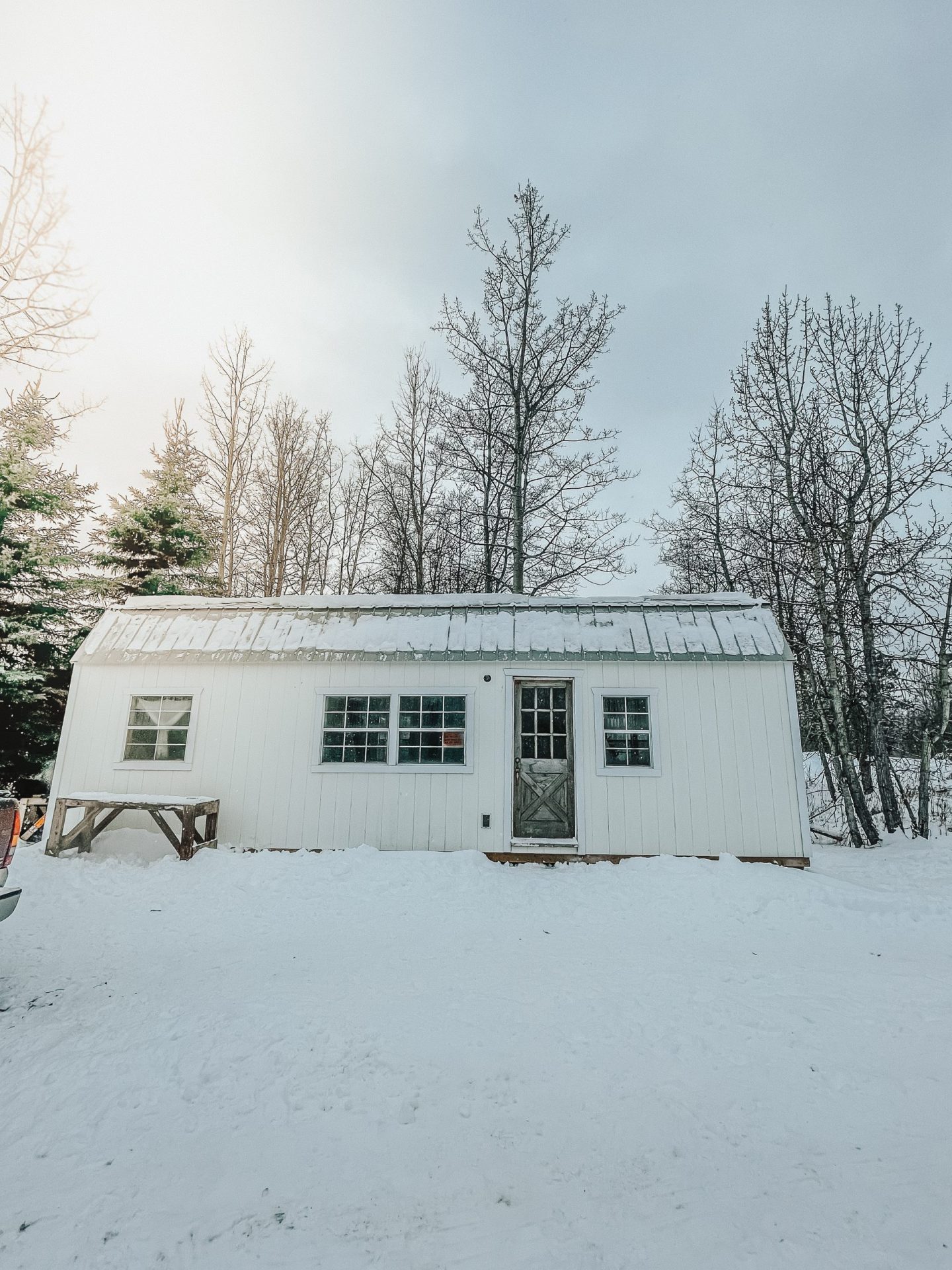
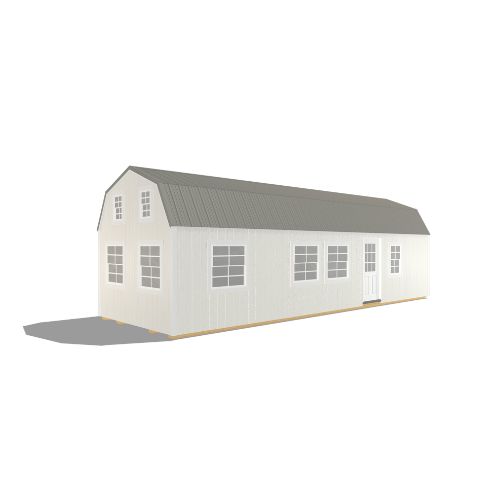
Our building is a 12 × 32 shed, which ended up being the perfect size for our needs. It allowed us to create an open living and kitchen space, a small bedroom on the main floor, and a loft area for the kids. The extra length also makes the space feel much more open than a smaller shed might.
2. Ceiling Height
Ceiling height is something people often overlook when choosing a shed, but it can make a huge difference once you start finishing the interior. Higher ceilings, like vaulted ceilings, instantly make a small space feel bigger and give you more flexibility if you plan to add a loft.
We chose to slightly increase the ceiling height on our shed, to 14 ft, so that the loft would still feel comfortable while leaving enough headroom below.
Windows and Natural Light
Adding plenty of windows was one of the best decisions we made when designing our shed tiny house. Natural light makes a small space feel larger, brighter, and more welcoming.
Our cabin has thirteen windows, which might sound like a lot for a small building, but the light they bring in completely transforms the space and allows us to enjoy the surrounding forest views from inside.
Doors and Entry Placement
Think carefully about where the doors will be placed in your shed before finishing the interior. The entry location can affect your entire layout, especially in a small space where every square foot matters.
We chose a door placement that allowed us to walk directly into the main living area while keeping the bedroom tucked quietly toward the back of the cabin.
Roof Style
The roof style of the shed can also impact how usable the interior space becomes. A higher roof pitch allows for more loft space and better airflow, which can be very helpful if you’re planning to use the loft as a sleeping area.
In our case, the roof design gave us just enough height to comfortably create a loft for the kids while still maintaining that cozy, tiny cabin feel.
Taking the time to choose the right shed at the beginning can save a lot of work later. With the right size, ceiling height, windows, and layout, it becomes much easier to transform a simple garden shed into a beautiful and functional tiny house.
Some of the garden sheds seemed spacious enough to accommodate the family and be quite cozy with the right design. After we went home, I used the building software on the shed company’s website and started designing the building. I thought it would work so we could get a quote.
I added tons of windows (13), changed the positioning of both the windows and doors, removed one of the lofts, bumped out the patio, added insulation to the floor, and even raised the ceiling height of the overall building.
The Cost of a Tiny House Shed
The cost of the building will completely depend on the size you choose for your shed cabin (and the current building supply costs)! You will need to budget anywhere from $10,000 to $25,000 for the exterior shell of the building and then approx another $15,000 to $30,000 for the interior. If you go the off-grid route, you may save a lot of money as both plumbing and electrical costs should be significantly cheaper.
When we submitted the quote for our cabin, I was pleasantly surprised by how affordable the shed was. Even with the adjustments I had made, it was still between C$13-C$15,000!! That also included hardy board siding, a tin roof, and extra windows/doors. From there, I budgeted another $15-$20,000 to finish the unit on the interior.
We decided to take the plunge!! A lot of preparation had to go into the physical land to get it ready for the tiny house. The area needed to be surveyed and leveled, so we brought in loads of gravel to help level the surface.
One pleasant surprise for us was because the shed cabin building comes on skids and is not classified as a permanent structure, therefore the taxes on the land did not increase! Once we decided to move forward with the build, Premier took approximately a month and a half to finish building our custom garden shed.
Our 12×32 Shed to Tiny House Layout
When we started designing the 12 × 32 shed to tiny house layout, we knew we wanted the space to feel open but still be practical for our family. With four of us using the cabin, every square foot needed to serve a purpose while still feeling comfortable and welcoming.
Our layout includes:
• A main floor bedroom for my husband and me
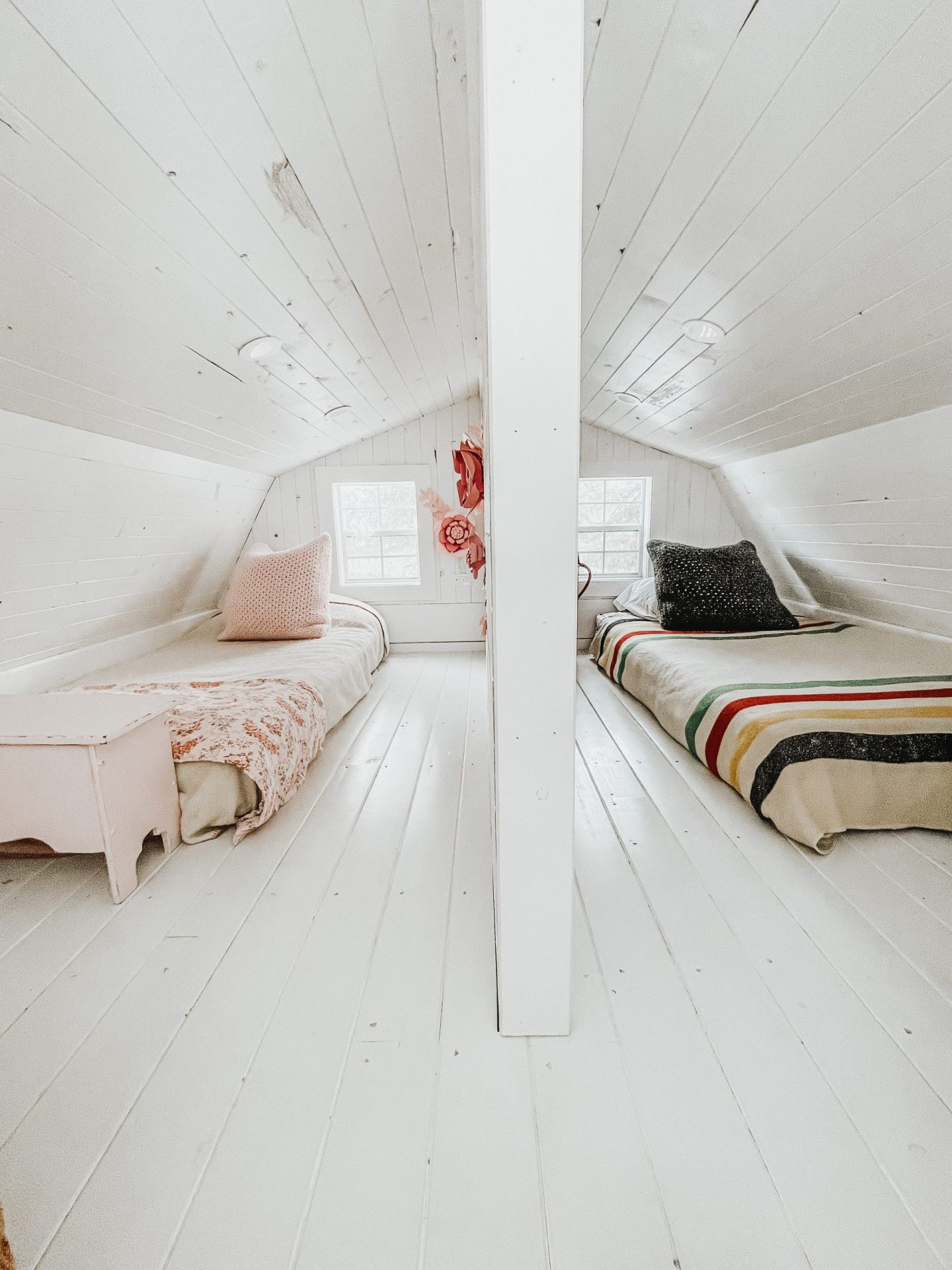
• A loft space for the kids, divided into two sleeping areas
• A small bathroom area with a compost-style toilet and sink
• An open kitchen and living area that serves as the heart of the cabin
Tiny Home Shed Layout Details
When we started designing the 12’ x 32’ shed, we knew we wanted it to have a very open concept but still be functional and have storage. The original building had not one but two lofts and a small porch that bumped into the building.
We began by removing one of the lofts and the porch to give the space a much more open feel. The new design also extended the remaining loft to 11 feet long. In addition, we added an additional 12 inches to the ceiling height while keeping the loft in place, which allowed for more overhead space for the kids’ sleeping areas.
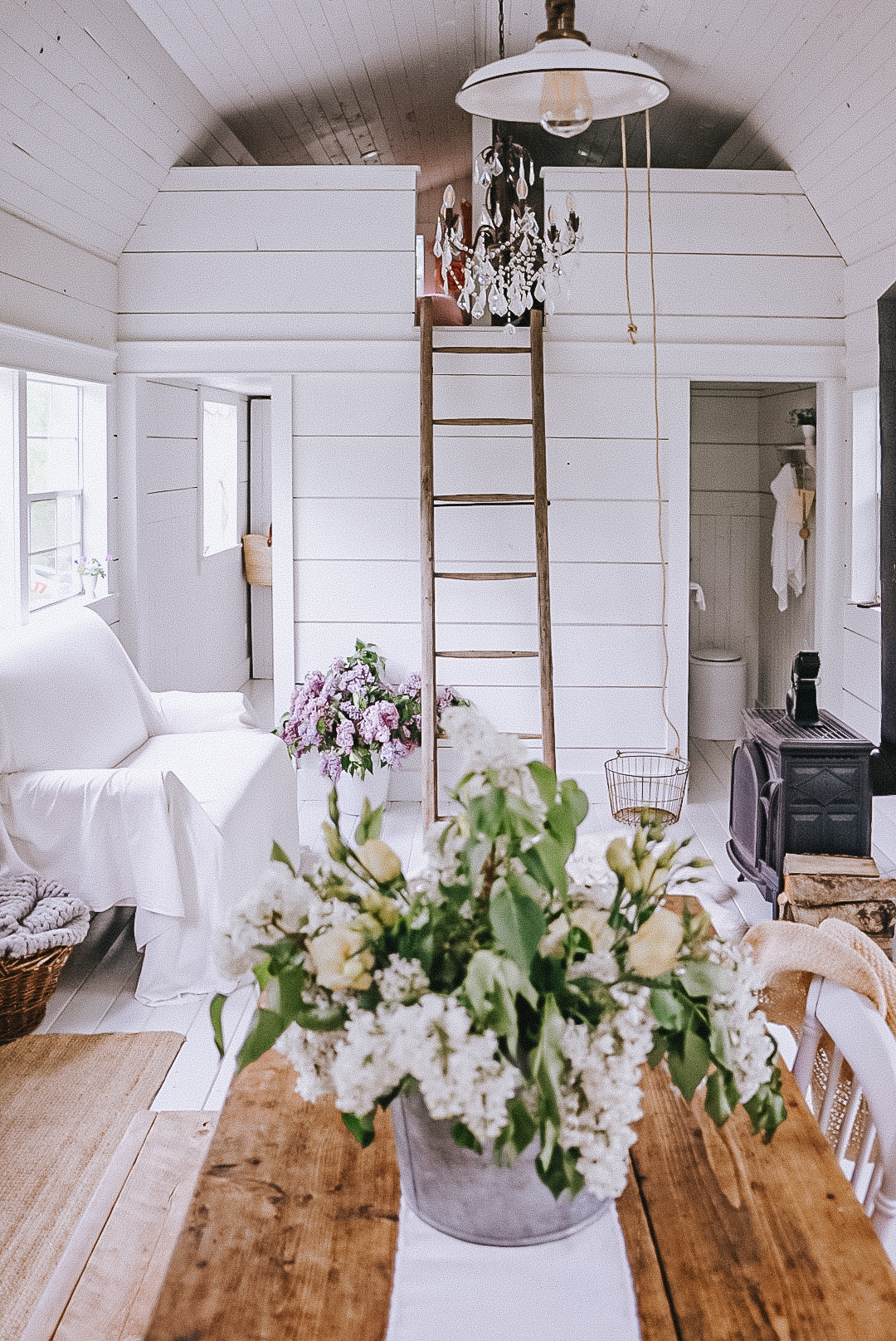
The main floor bedroom for my husband and me is approximately 11 feet long by 9 feet wide. That left just over 2 feet beside it for the bathroom area, which was just enough space to create a separate room for a toilet and sink.
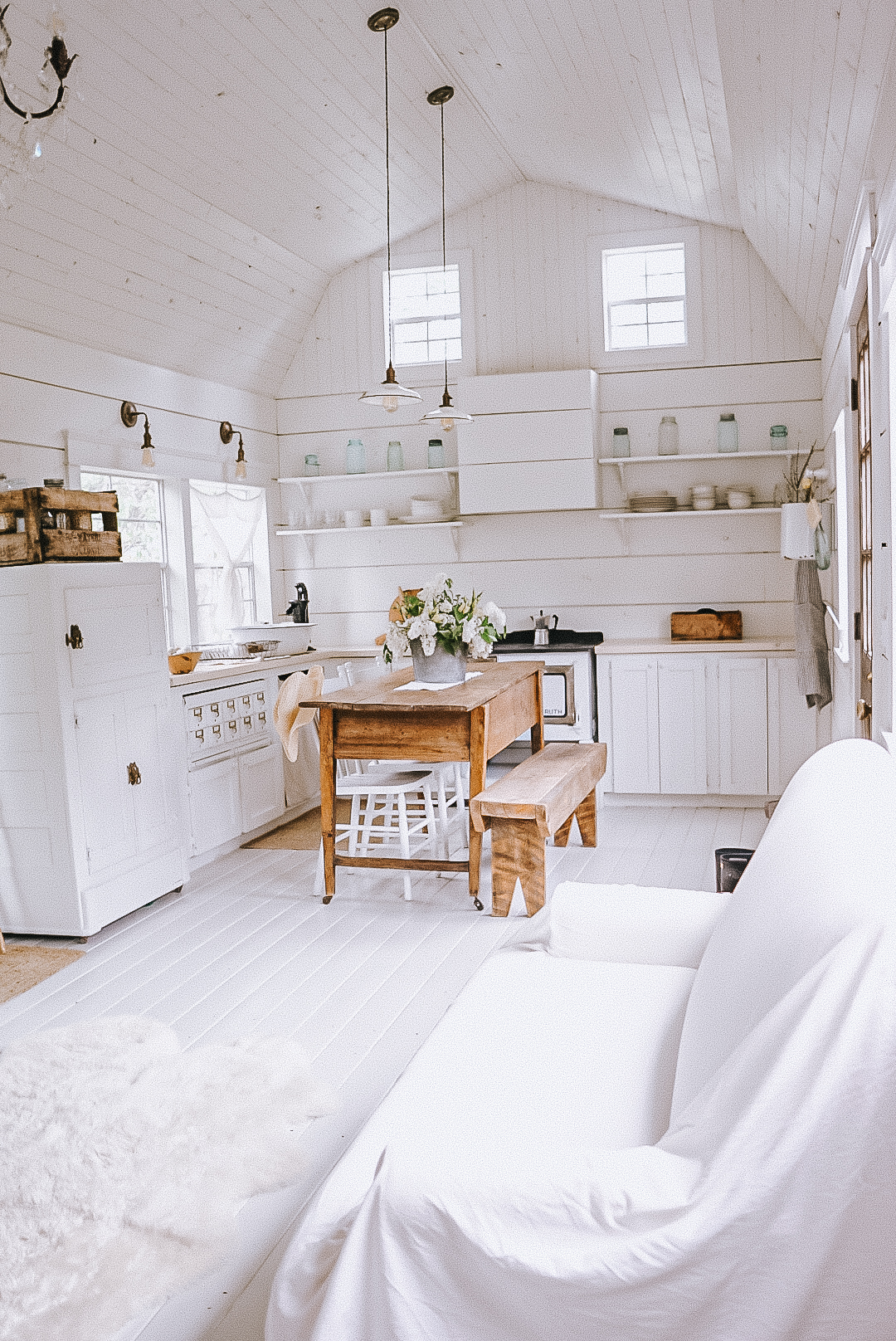
The open kitchen and living space ended up being one of my favorite parts of the layout. Keeping the main area open allows the cabin to feel much larger than it actually is, and it gives us a cozy gathering place for meals, board games, and evenings by the fire.
Designing the right layout is one of the most important steps when you convert a shed into a tiny house. With a smaller space, every decision matters, and thoughtful planning makes all the difference in how comfortable the finished cabin feels.
How We Finished the Interior of the Shed Tiny House
Designing the interior of a shed tiny house is one of the most fun parts of the entire process. Once the structure of the building is complete, the interior details are what truly transform a simple garden shed into a warm and welcoming tiny home.
When finishing any interior space, including a tiny home or shed cabin, it is important to follow the five principles of interior design.
- Proportion – Proportion is the relationship between various things in a group. Consider the size of your furniture compared to the size of each space.
- Balance is a variation of formal balance. The placement of furniture affects the balance of any space.
- Emphasis—The center of interest in any arrangement is created by emphasizing the most important feature. This principle is followed by emphasizing a beautiful stove in the kitchen or a fireplace in a family room.
- Rhythm – rhythm is achieved through repetition and flow in a space. Repeating a color, texture, or shape in a home will achieve rhythm in your design
- Harmony produces the impression of unity through selecting and arranging consistent objects. How you place the objects in your home will give your space a sense of harmony.
The simple, natural design style we used in the cabin is heavily inspired by our Scandinavian kitchen design in our Victorian house, which focuses on light colors, natural materials, and functional pieces that work beautifully in small spaces.
How to Convert a Shed Into a Tiny House
One of my favorite parts of converting this shed into a tiny house was choosing the finishing details. Even though the space is small, those details are what give the cabin its personality and charm.
The Shiplap Walls
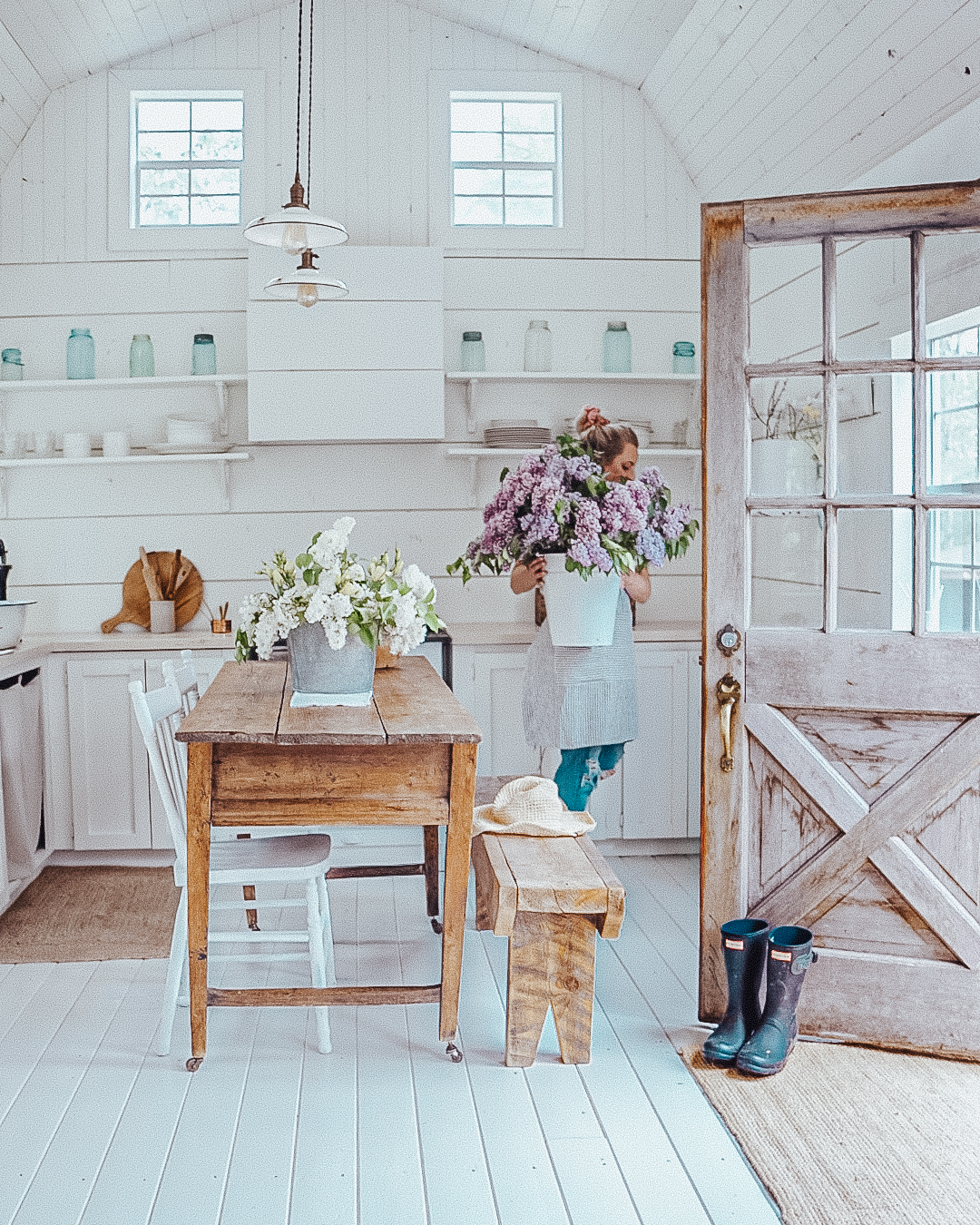
The entire time we were building this tiny house, I knew we wanted shiplap on the interior! Over the years, we had slowly introduced shiplap into our historic home in town and loved how it looked. We purchased 12 x 1“ planks that they cut down to 10-inch shiplap themselves.
We used cottage grade one by four, 5/16” Penny lap for the walls and ceiling. In the bedroom and bathroom, we also used the same material for 4’ wainscotting. If you’re interested, you can learn how we made our own shiplap and how to install a shiplap ceiling.
The Paint Colour
As so many of you already know, my favorite color, white, is Oxford White by Benjamin Moore. I used a solid stain in this color to paint the entire cabin using a spray gun. It was the perfect tone for the space. I love the look of the shiplap walls, as they add so much detail to the space but keep the cabin feeling light and airy.
If you’re choosing colors for a small home or cabin, it can really help to think through your home colour selections ahead of time so the entire space feels cohesive.
Using a consistent paint color throughout the tiny house also helps the space feel larger and more cohesive, which is an important trick when designing the interior of a small cabin.
The Floors
For the floors, we used V-groove pine boards, which are a beautiful and affordable choice for a shed tiny house interior. This ended up being the most cost-effective flooring option for the cabin, at under $3 per square foot finished.
Take a look at my post on painted floors for details on how I painted the floors and the custom color I used. They have held up extremely well and are relatively low-maintenance to care for.
Off-Grid Systems for a Shed Tiny House
Building off the grid can be a very affordable option when done correctly. It is amazing how little is needed to live a comfortable and full lifestyle. A few of the benefits of living off the grid are financial freedom, the ability to get away from traditional city living, a very high quality of life, and a connection to nature.
When we converted our garden shed into a tiny house cabin, we knew we wanted to keep the systems as simple and practical as possible. A small space like this really doesn’t require much to function well, especially when you focus on efficient off-grid solutions for power, water, heating, and everyday living.
Off-Grid Kitchen
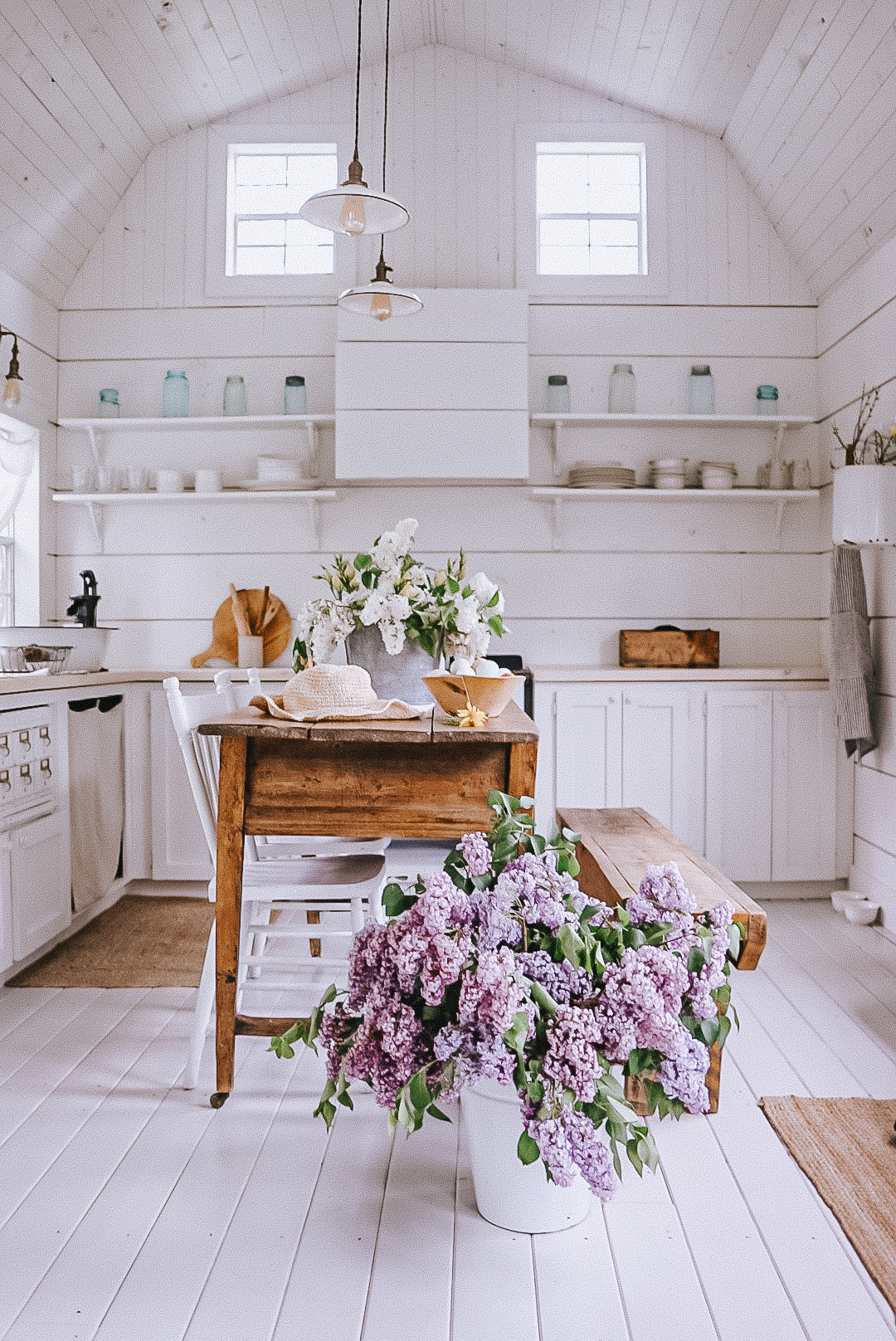
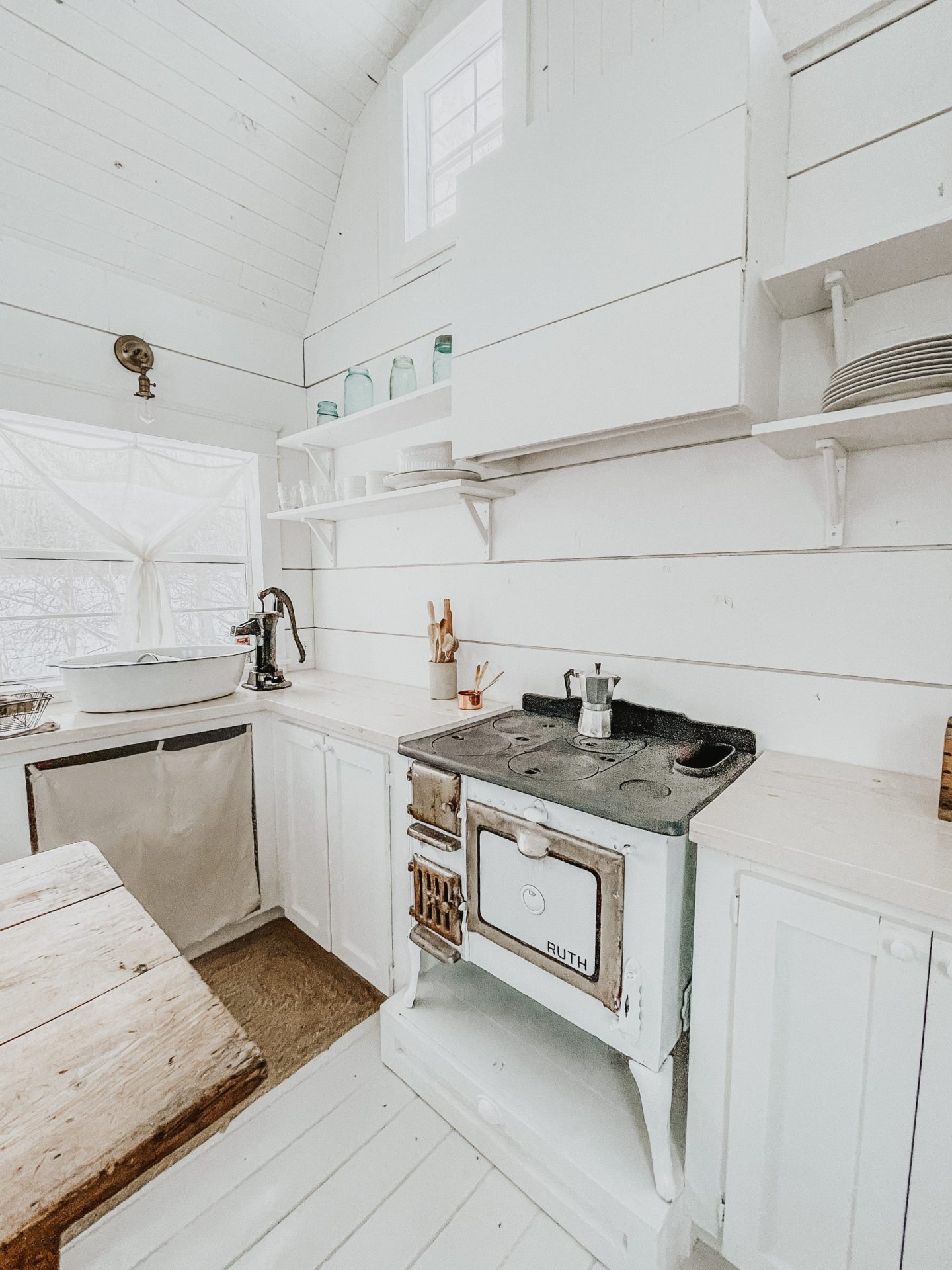
We made the kitchen cabinets in the tiny home cabin out of plywood and wood planks! They give a more vintage, rustic feel to the space than manufactured cabinets, which is exactly the look I wanted. Instead of using upper cabinets, open shelving was used to keep the space bright and airy. The countertops were made out of 1 x 6” planks that have been stained whitewashed!!
We also use a vintage ice box as a refrigerator in the winter. It takes about five blocks of ice every two days to stay cold down below. It’s very easy to use, and Deb loves that it is completely off the grid! In the summer months, we have a small refrigerator that runs on solar power. Keeping the ice box cold in the hot summer is too much work!
Propane Heating
We also added a beautiful natural gas stove to heat the unit. This adds an element of cosiness to the space but is still practical and functions well. For now, it is attached to a 30-pound propane tank. Eventually, we may add a large propane bullet on the property.
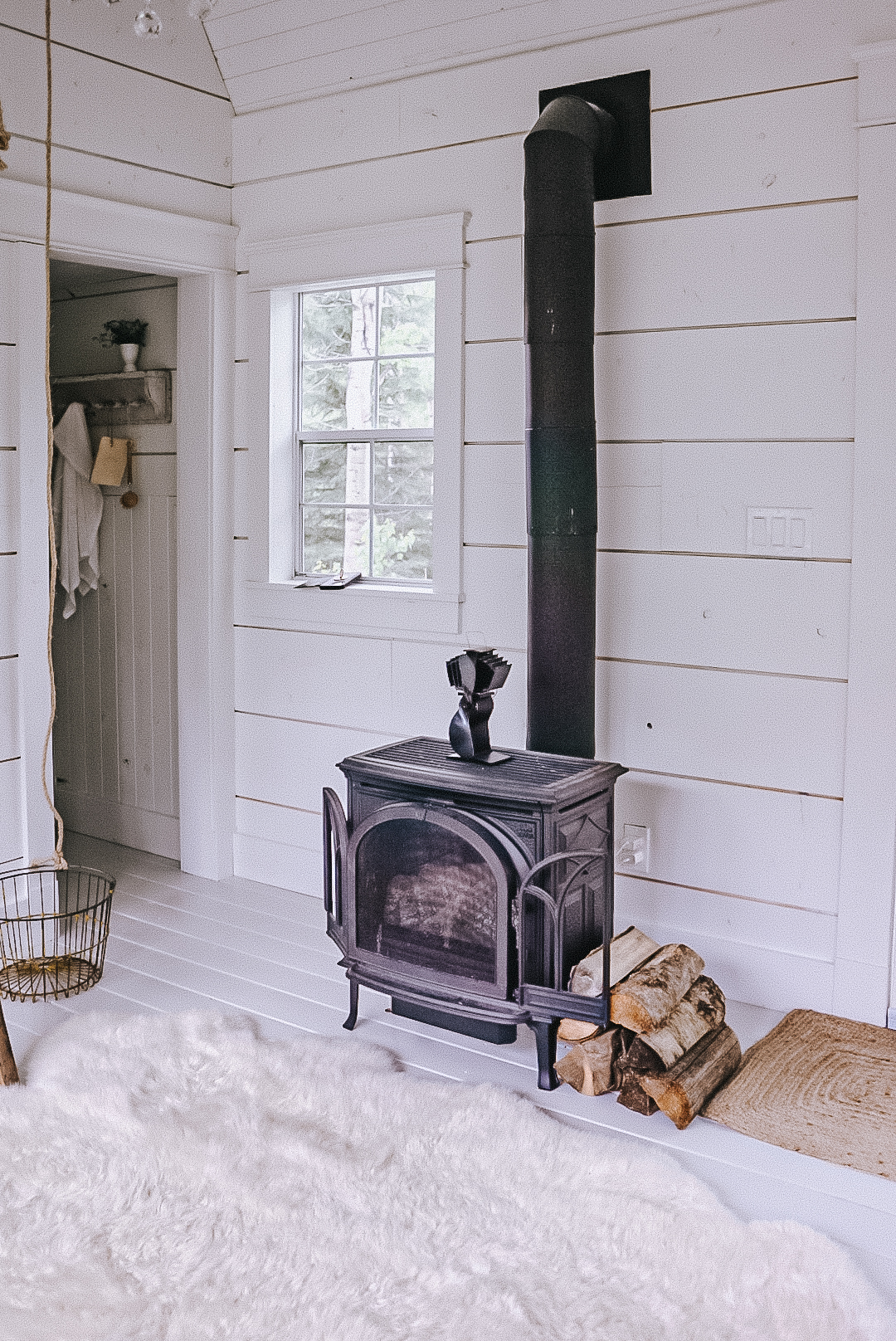
This particular unit takes about 4–8 hours to heat the cabin in the winter, depending on how cold it is outside.
Adding a fan to the top helps to circulate the air more and move the heat throughout the cabin. Without it, the loft becomes very warm while the rest of the cabin stays cool.
Propane heating is a very common solution in off-grid cabins because it is reliable, simple to maintain, and provides consistent heat even in colder climates.
Solar Power & Electricity in a Tiny House
In the beginning, we used a 3500 V generator to power the tiny house. The one we use has command start and works really well. The remote start is key to convenience for this source of power, as it makes it so easy to turn on and off when needed, no matter where you are indoors.
This past summer, we added solar power, which has completely off-grid the unit!! Using three 2′ by 4′ solar panels, we were able to charge 2 – 12 volt batteries consistently. A 600-watt converter is the perfect size to run the small refrigerator and all the LED lights in the home.
We still keep the generator there in case of emergencies or if there has been a cloudy day. The 2021 summer was smokey from all the fires in BC, so keeping the solar going some days was difficult. Overall, we are very happy with how well solar panels work for us there.
Solar systems are a great option for a shed tiny house because they allow you to generate power without needing to connect to traditional utilities.
Off-Grid Bathroom & Compost Toilet
What do you use for a bathroom? This is the question I get asked most often!
Although we have an outdoor biffy (outhouse) on the property, we still decided to put in a separate room for a toilet and sink. There is no plumbing in this unit; however, we use a simple compost-style toilet.
You can purchase Double Dootie bags from Amazon. These work pretty well for a weekend away as, most of the time, they only use the indoor toilet at night. The outhouse works fine throughout the day!
Compost toilets are one of the easiest bathroom solutions for off-grid cabins because they require no plumbing and are very simple to maintain.
Water System for an Off-Grid Shed Cabin
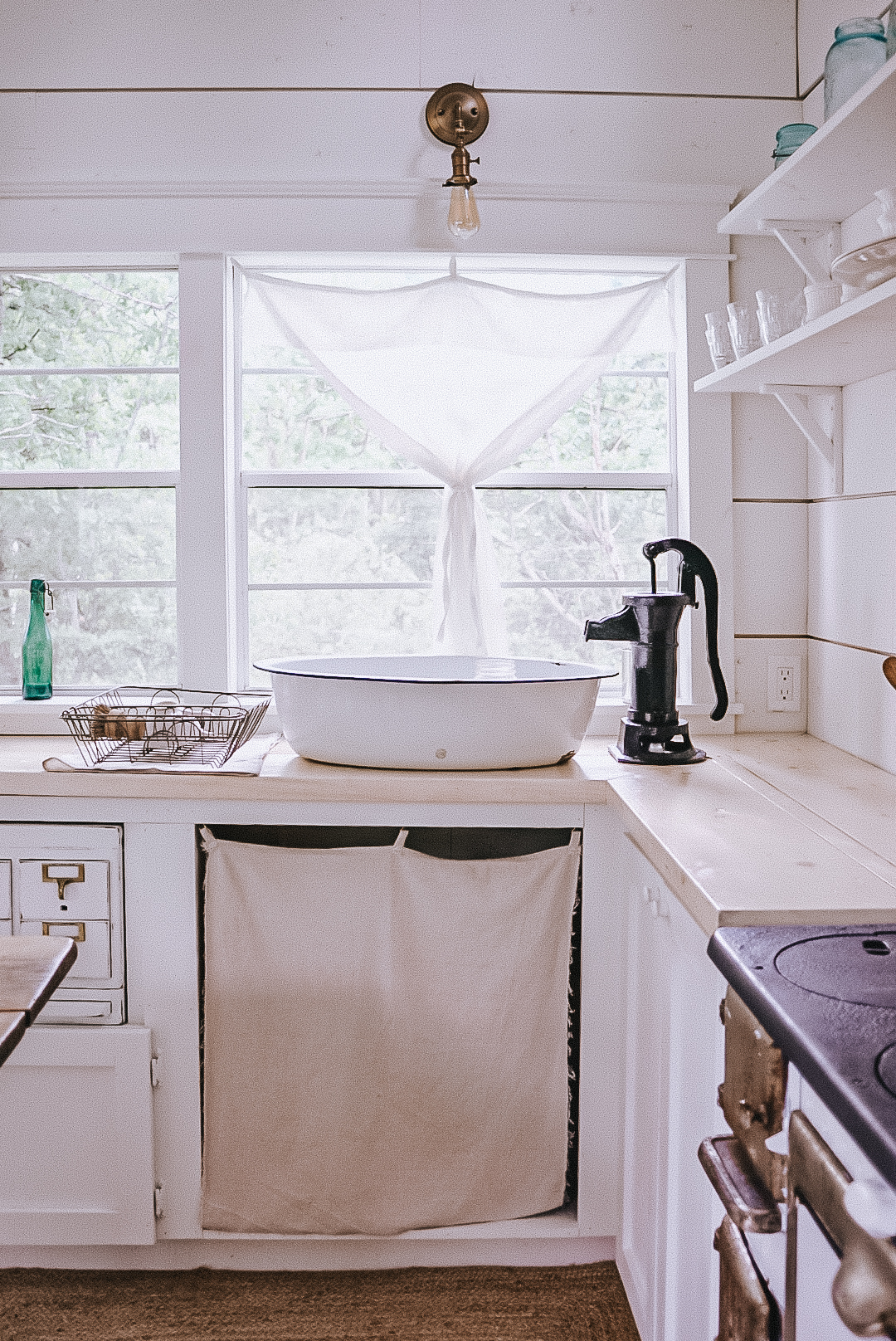
Although there are ways to add plumbing to the unit, we have chosen to leave it without for now. Instead, we pack water into large 5-gallon jugs and use a simple pump system.
I found this vintage kitchen pump, and we attached a 4″ PVC plumbing hose to the end. The hose is just the right size to fit inside the jugs of water! The pump works like a charm and looks so good at the kitchen sink.
I will also boil water and keep it in a thermos for quick hot water whenever needed.
In the summer months, I catch rainwater off the eaves, which I use to wash dishes, etc. Eventually, we may add a drain pipe somewhere in the building for gray water.
If a shower or washing is needed, it is only a short drive home, or you can always take a dip in one of the surrounding lakes to clean up!
Permits, Zoning, and Building Codes for Shed Conversions
One of the most common questions we get asked is, “Do you need a permit to turn a shed into a tiny house?”
The short answer is: Always check your local zoning laws and building codes before starting a shed conversion, as requirements vary wildly by county and municipality.
Because our cabin is located on our own private family land, out in the country, and off the grid, we had a lot more freedom and didn’t have to jump through the typical municipal zoning hoops. However, even when building on private rural land, safety is still the number one priority.
Here are a few key code and safety considerations we had to navigate, which you should keep in mind for your own build:
Fire Safety Codes:
This was our biggest hurdle. Because we were planning to install both a wood-burning stove and a propane fireplace, we had to strictly adhere to fire codes. This meant ensuring the stoves were placed a specific, safe distance away from the walls and installing proper non-combustible protective barriers behind them.
Electrical Codes:
Even with an off-grid solar setup, electrical safety is paramount. We ran into some tricky electrical code rules regarding where outlets could be placed. For example, having outlets inside closets or tucked away inside cabinets often requires specific workarounds or is prohibited by code to prevent fire hazards.
Habitability Requirements:
If you are building within city limits or a more regulated county, they may have strict rules about what classifies a structure as a “habitable dwelling.” This can dictate minimum ceiling heights, egress windows for bedrooms, and specific plumbing requirements.
Every area is different. Before you buy a shed or start swinging a hammer, make a quick call to your local county zoning office or building inspector. Tell them your plans—they are usually very helpful and can give you a clear list of what permits you will need to make your tiny house dream a legal reality!
Tiny House Storage Solutions
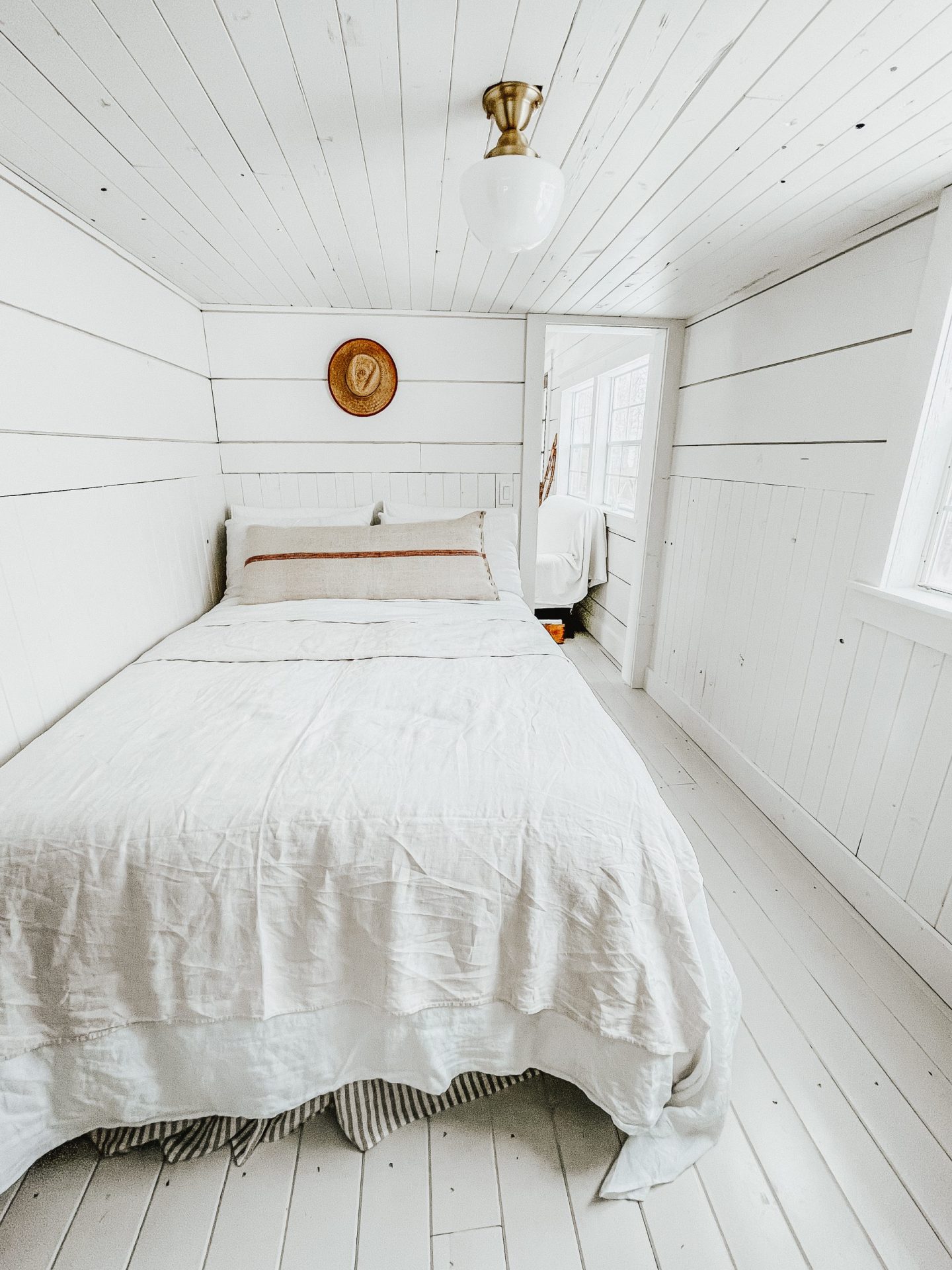
Another key point that was kept in mind when decorating this space was finding storage solutions with every large piece of decor that was added. The kitchen table is an antique baker’s table that has a ton of storage in the base. It holds all the board games for our family to play! The large cabinet in the bedroom adds tons of storage to the room, and there are bins under the beds for additional clothing storage. Take a look at these 10 small space storage-saving solutions for additional storage ideas.
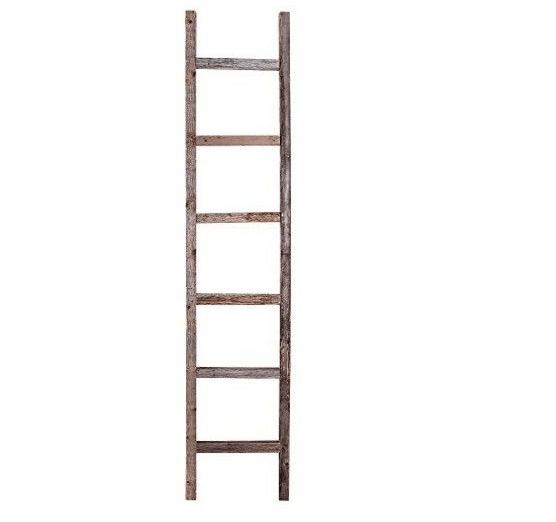
There wasn’t enough room for stairs to the loft, so I found the most amazing antique Hungarian ladder instead! As much as stairs are a safer and easier option, we just didn’t have the space. So I went to my favorite shop, Uniquities, and Julia, the owner, had a Hungarian vintage ladder that fit perfectly!! It adds so much personality to this space and was very cost-effective. Many of the decor items that were used in the cabin I had been collecting over the years so that really did help keep the cost down.
Interior Design Ideas for a Shed Tiny House
Scandinavian farmhouse and simple home decor have become more popular lately, and with good reason! They are all about simplicity, purity, and calmness. Most often, they only use items with a purpose in your home as decor, making it the perfect type for a small space like a cabin shed or tiny house. I also tried to incorporate as much Hygge into this space as possible.
Three key points were kept in mind when decorating the tiny house.
- Only items that have a functional purpose and that are used regularly can be added to the space
- Use decor elements and furniture pieces that will provide additional storage
- Try to use as many antique, vintage, or repurposed decor items as possible! This adds personality to a space while keeping the costs down.
That first principle of only keeping what you truly use is something I have carried into every part of our home and life. Learning how to declutter and simplify your home really changes the way you look at the items you bring into a space. In a tiny house, especially, simplicity becomes the key to making the space feel calm and functional.
Vintage and Antique Decor
I’ve always loved decorating with vintage home decor because it brings warmth and history into a space. Small cabins and tiny homes are actually the perfect place to incorporate antiques because every piece can tell a story.
I began hunting for unique items and antiques and found the most beautiful front door in an antique shop just outside Cremona, AB. The shed company was wonderful about adding custom elements and built the cabin to fit the door.
Over the years I’ve collected many unique vintage finds that eventually made their way into this cabin. Things like antique ladders, old cabinets, and rustic lighting help give the space personality while still keeping everything simple and functional.
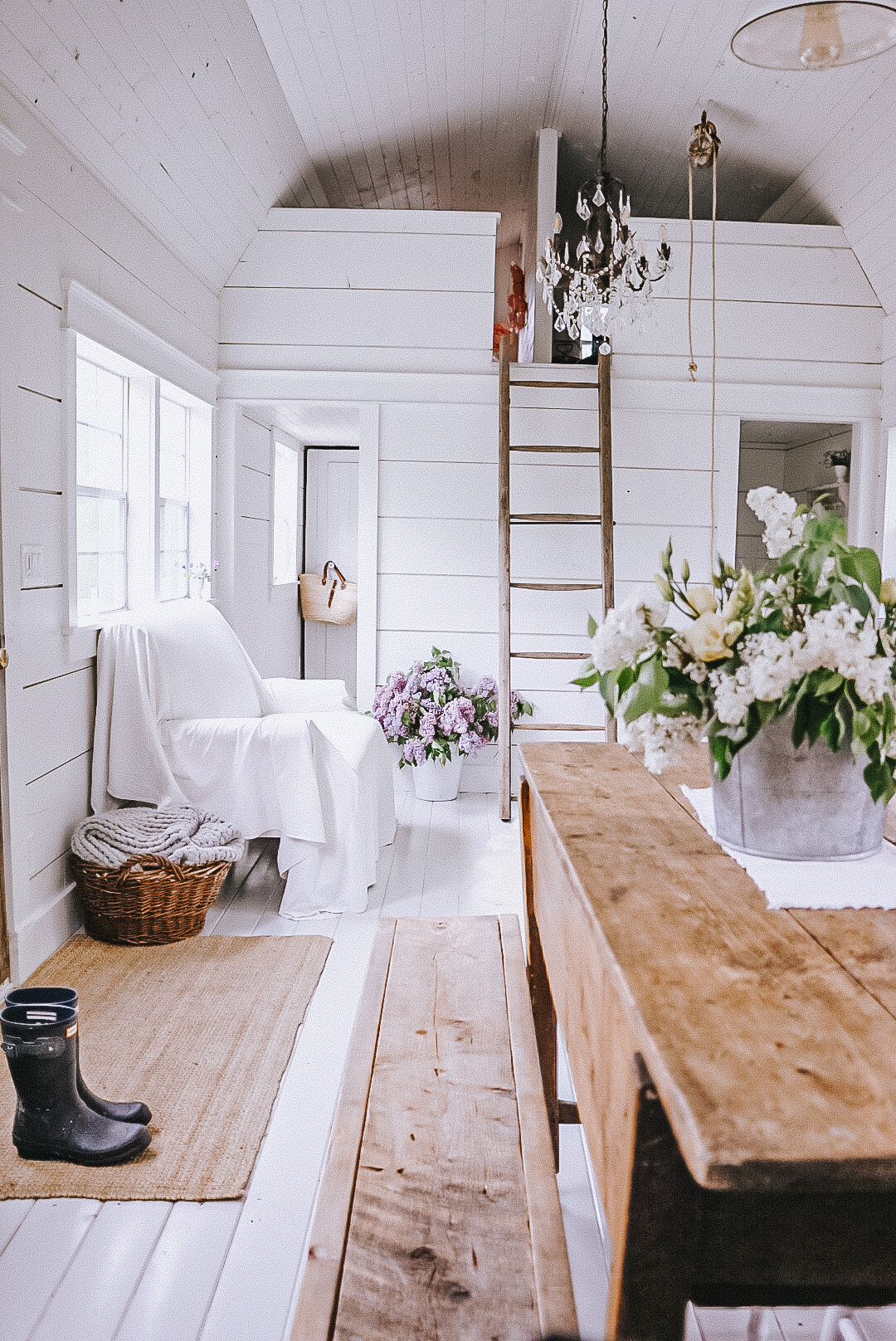
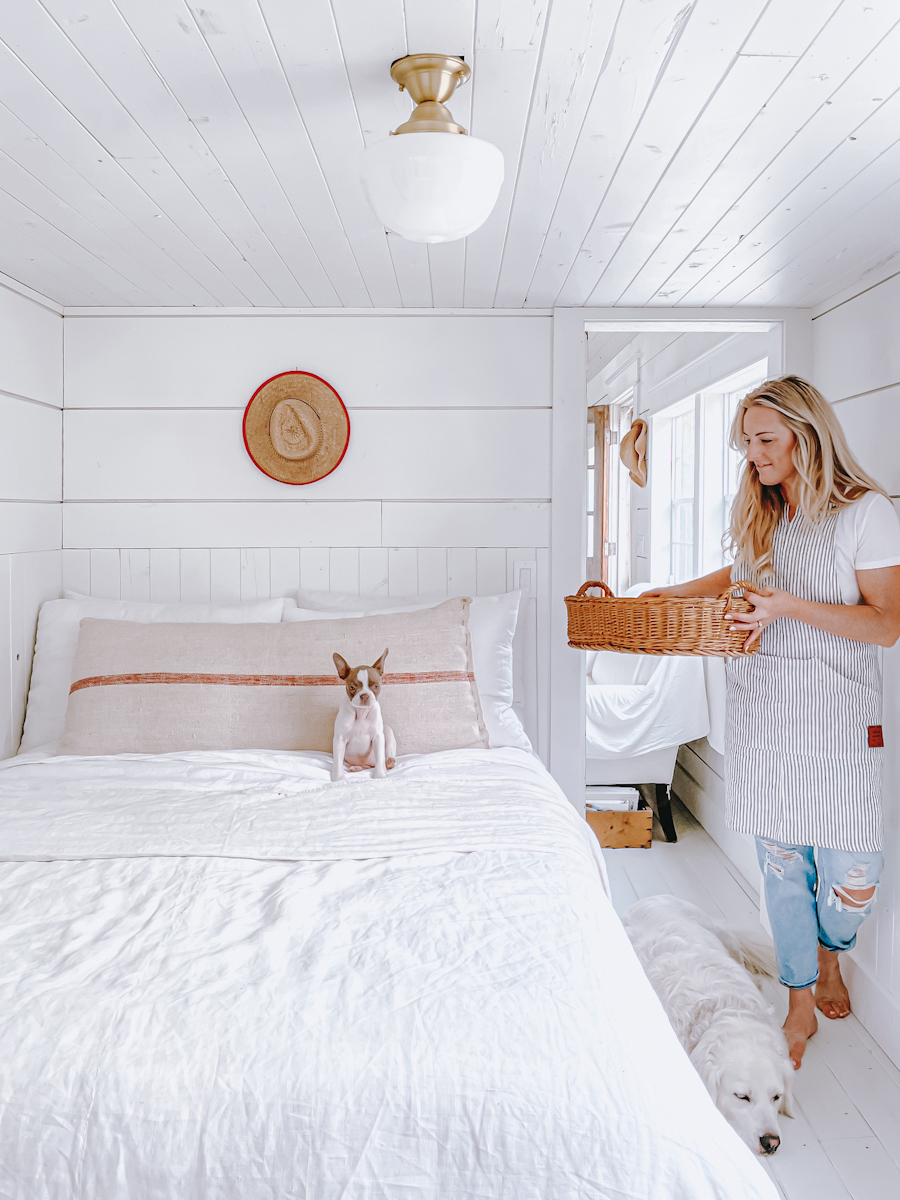
I was also able to find some beautiful lighting options on Etsy! I love the ones that are hanging over the kitchen table and the schoolhouse light in the master bedroom.
The combination of simple Scandinavian design, vintage pieces, and practical storage solutions helped turn this small shed into a cozy and welcoming tiny house.
If you’re interested in creating this same sense of simplicity at home, I walk through the exact approach I use in my book Making Space: Simple Standards for a Calm Home and Life, where I share the practical systems I use to simplify both my home and daily routines.
Shop the Tiny House Decor
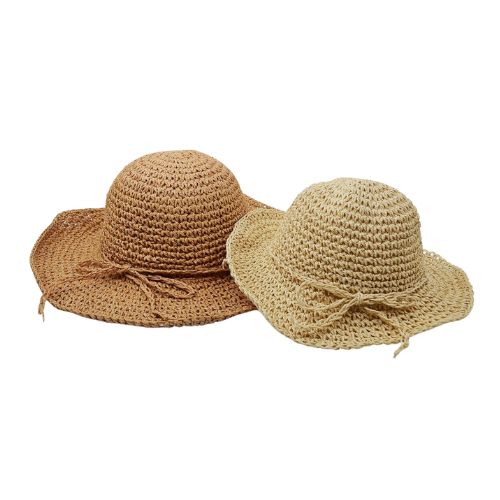
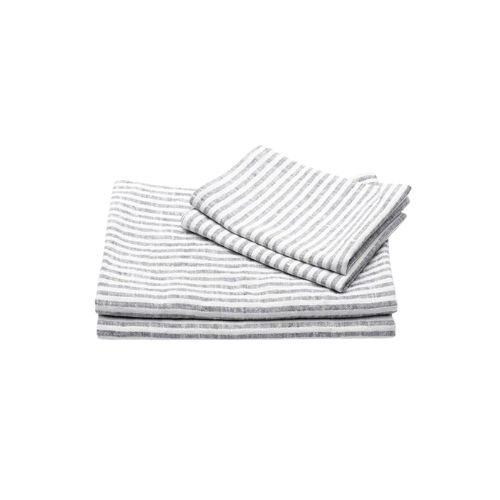
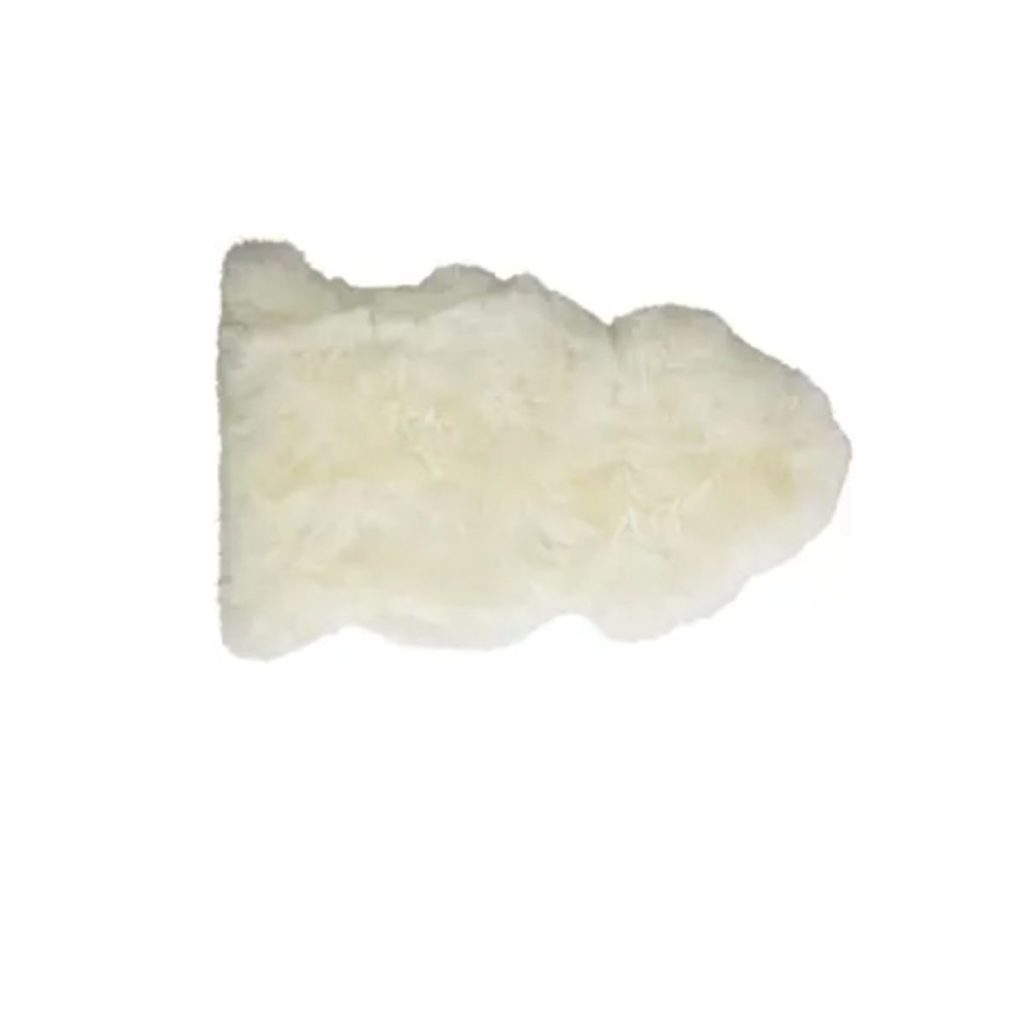
You can shop most of my tiny home in my B Vintage Style Shop or over in my Amazon storefront.


Step-by-Step: How to Convert a Shed into a Tiny House
If you are feeling inspired to tackle your own shed to tiny house conversion, having a clear plan is essential. While every build is unique, here is a step-by-step checklist based on our own experience to help guide your project from an empty shell to a cozy cabin.
1. Choose the Right Shed and Location
Start by deciding whether you will build from scratch or buy a pre-built shed. We opted for a 12×32 pre-built garden shed because it saved us so much time. Next, prepare your site. Consider sunlight for solar panels, tree coverage for shade, and how accessible the location will be during the winter months.
2. Level and Prep the Foundation
A solid foundation is crucial. Depending on your land and local regulations, you might use a gravel pad, concrete blocks, or a poured concrete slab. Make sure the foundation is perfectly level before your shed is delivered or built.
3. Seal and Weatherproof
Before doing any interior work, go around the entire shed and seal any gaps or cracks with caulk or expanding foam. This keeps pests out and ensures your tiny home will be draft-free and energy-efficient.
4. Plan Your Layout and Framing
Map out exactly where your kitchen, bathroom, sleeping areas, and living space will go. If you are adding interior walls for a bathroom or a loft space like we did, this is the time to frame them out.
5. Rough-In Electrical and Plumbing
If you are running traditional power and water, or setting up off-grid systems like our solar panels and water pump, get the wiring and pipes installed before the walls are closed up. Tip: Think carefully about outlet placement!
6. Install Insulation
Proper insulation is what turns a shed into a livable, four-season home. We used spray foam insulation on the floor to keep our toes warm, and fiberglass insulation in the walls and ceiling.
7. Put Up the Walls and Ceiling
Once the insulation is in, it is time to close up the walls. We chose shiplap for our interior walls because it adds that beautiful, classic farmhouse character and is very durable.
8. Paint and Flooring
Give the walls a fresh coat of paint (we used Oxford White by Benjamin Moore to keep things bright and airy). Then, lay down your flooring. We went with a durable, wood-look vinyl plank that can handle muddy boots and cabin life.
9. Install Fixtures and Appliances
Bring in your kitchen cabinets, sink, compost toilet, and heating sources. For us, this meant installing our beautiful antique baker’s table as an island, setting up the vintage water pump, and installing our propane fireplace and wood stove.
10. Decorate and Add Storage
The final (and most fun!) step. In a tiny house, every piece of decor needs to be functional. Bring in your vintage finds, cozy textiles, and clever storage solutions to make the space feel like home.
Tiny House Shed Video Tour
The memories our family has already made are truly irreplaceable! And we can not WAIT to keep the good times coming. In fact, my husband would gladly live out there if he could. This summer, we plan to add two decks and a small garden to the space.
Eventually, we would love to have a turnkey oasis in the woods, and they are well on their way!! So tell us, would you ever build a tiny house in the woods and live off the grid?
I hope this post on our cabin shed helps you if you plan to build one in the future. If you have any questions, please make sure to leave them in the comments below.
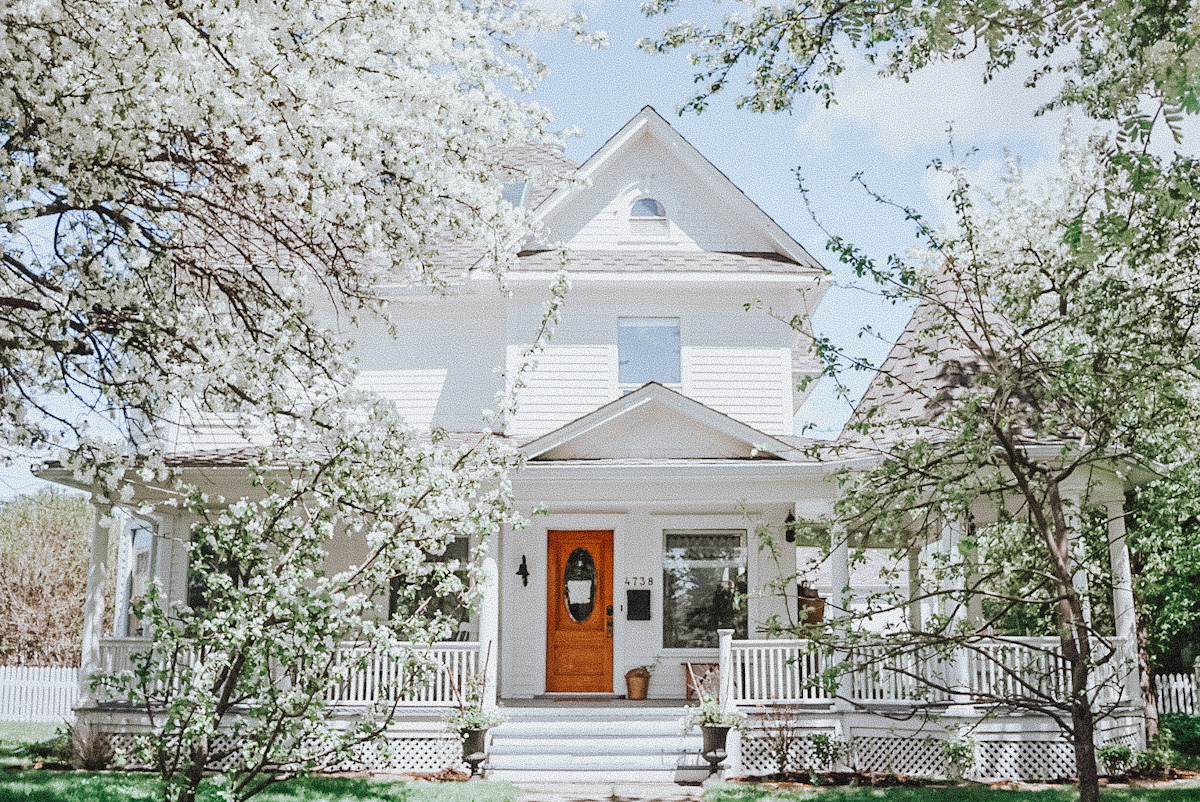
For more of my 1903 Victorian house, our tiny home, my antiquing adventures, and all things simplicityat home, join my email list (I promise not to spam you) or grab a coffee and let’s chat on Substack. As always, you can find me over on Instagram, YouTube or TikTok too. Be sure to Pin this post to your Pinterest so you can go back to it over and over when you need to!
Reader Tiny House Shed Questions
Yes, you absolutely can. Many people start with a garden shed or portable building and then finish the interior just like a small home. With the right layout, insulation, and utilities, a shed can become a cozy tiny house, cabin, or guest space. In our case, we started with a 12×32 garden shed and finished the interior ourselves to create a comfortable off-grid cabin for our family.
It really depends on how you plan to use the space, but many people find that something around 12×24 or 12×32 works very well. Our 12×32 shed allowed us to create an open living area, a small bedroom on the main floor, a bathroom space, and a loft for the kids.
The cost can vary depending on the size of the shed and how much work you plan to do yourself. Our shed structure cost between $13,000 and $15,000, and we budgeted another $15,000–$20,000 to finish the interior. Doing much of the work ourselves helped keep the cost down quite a bit.
Not necessarily. Many off-grid cabins use alternative water systems such as water storage jugs, hand pumps, or rainwater collection. For our cabin, we use large water jugs and a vintage hand pump at the sink. For the bathroom, we installed a simple compost-style toilet.

totally love this! way to rock the build. xo
Thanks! I’m glad you love it! We sure do!!
Wonderful
Thank you Mary
Where did you get the fire place?
Thank you so much for the feature
Charming and cozy!!
Thank you so very much.
This was so informative. We’ve been wanting a cabin home away from home . But the cost has stopped us. I’ve searched a few options but all that you shared has given me some other ideas! Thank you so much!
Thank you so much for the feedback. I am glad I was able to answer your questions. Yes there are very affordable options for sure. We love how our place has turned out.
Hi, you did a wonderful job. Currently in the middle of remodeling now. What was the total cost of your tiny house? With electric and plumbing included.
Thanks so much. I appreciate the comment. Our overall budget was just over $30K Canadian, however, we don’t have much for plumbing in the home. That would have added a significant amount to the cost. Ours is off the grid completely and we use simple methods for our plumbing instead.
What is the foundation? Our what did you set shed on to begin?
It is on a gravel pad that we put on the property.
Hi there, love your style and both of your homes. Can you tell me where you purchased your fan on the stove in your tiny house? We have a wood burner that heats our home and would love to circulate the warm air. Thanks
Hi there, Thanks so much for reaching out. The fan truly does make a huge difference. This is the fireplace fan I have at the shed cabin. https://amzn.to/3VAVVCU
Can you provide details on how you insulated the cabin walls, floor, roof?
I will be continuing to write new posts about the tiny house project as time goes on. Stay tuned.
Hello Deborah, What is the size of your shed cabin? My partner is a carpenter and we are looking to build a cabin like this. We are on the hunt for plans but haven’t been able to find many.
Hi there, My unit is 12′ by 32′. It’s a great size. I don’t currently have the plans up but I may try and add them in the future
This is a big inspiration to me as I am working on my own shed conversion thank you for the ideas and your place is amazing..
I’m so glad to hear! Thanks for the comment
Love the way you did the floating shelves! We are finishing up our tiny house build, and we are considering hiring cabinet refinishers to install cabinets. After seeing your build, I might rethink it. Thank you for sharing!
So glad you enjoyed it. Good Luck
Wow, this turned out so beautifully! Very well done. Thanks so much for sharing about this whole project, it’s giving me a lot of inspiration for my own similar project!
One big question I have for you is: did you run into any challenges with the extra building height? I’ve been talking to a few builders and they said they are limited to 10’8″ for transportation reasons. I think the extra height you added makes so much sense for the extra loft space!
Hi there Silas,
Thanks so much for the comment. So we lucked out and had a road route that allowed us to have the height but I know we couldn’t go any higher. If we did, we would have had to pay to close the roads and how the wires lifted. It would have been a ton of extra money for sure. I hope this helps.
Thanks,
Deborah
Hi there! Beautiful cabin! I am trying to order the same shed with the same idea in mind! We have three kids that will be in the loft but the shed companies say they can’t raise the roof a foot! They can make the walls 7′ and drop the loft a foot but That leaves us 6 foot ceiling in the room and bathroom area below it.
We are most likely using premier building too since they presently have 20% off! Any suggestions on how you made that happen ..to have more head space for the kids in the loft!?
Thanks! Amazing work!!
Hi there. Thanks for the comment. Shoot, I am not sure what to tell you. We were able to raise ours as an option but we needed to keep it low enough to go under the power lines when we moved it. Maybe they have changed things since we purchased though? Good luck with yours! It is amazing to have.
I have been following your posts and this one is the most detailed. I am currently looking for land in several different states and I love your style. Thank you so much for sharing! I am hopeful that once I find the land, locating a builder won’t be too difficult!
Thank you for the kind message Susan. I appreciate it! Good luck with your upcoming tiny house adventures.
Great article and a beautiful renovation. Maybe I missed this, but what size shed did you get?
Thank you so much. It was a 12X32 Ft shed.